[Economy Pulse]Recurring Supplementary Budgets Every Year: What Are We Spending For?
![[Economy Pulse]Recurring Supplementary Budgets Every Year: What Are We Spending For?](http://www.asiae.co.kr/news/img_view.htm?img=2025120709373646090_1765067855.jpg)
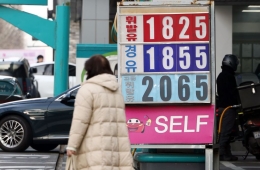
The government has drawn up an additional supplementary budget (extra budget) of 26.2 trillion won this year, following last year's 31.8 trillion won. This supplementary budget includes justified items such as support for industries affected by high oil prices and targeted aid for vulnerable groups. However, the support fund for damages caused by high oil prices is of a different nature. Under the pretext of alleviating the triple burden of high oil prices, a strong won, and high inflation caused by the Middle East war, the government plans a large-scale cash transfer of 4.8 trillion won, distributing between 100,000 and 600,000 won per person to 32 million people, or 70% of the population, according to a tiered system. There are concerns that these widespread cash transfers, repeatedly implemented since the COVID-19 disaster relief payments, could become normalized. Behind the cheers of "the burden has been eased," remains a weighty, unasked question: What is the goal of this expenditure, and is it truly worth it?
The government emphasizes, "There will be no increase in national debt as it will be financed by excess tax revenue and funds, without the issuance of new government bonds." However, this response misses the essence of the issue. According to the Ricardian equivalence theorem in economics, whether a certain level of government spending is funded by taxes or by government bonds, the behavior of rational economic agents does not change. If rational consumers perceive today's tax cuts or transfer income as future tax increases, the stimulus effect of subsidies funded by debt is also limited. The same logic applies to excess tax revenue and government funds. These surpluses are resources that could have been used to repay national debt, and the funds are assets accumulated for future purposes. The key point is not that government spending itself is ineffective, but that the method of securing financial resources does not change the behavior of rational agents.
Let us consider an analogy. Suppose a dual-income newlywed couple comes home from work one day, and one spouse has impulsively purchased a luxury sports car. Which is the more rational question to ask: "Is it appropriate to buy this car when we are saving for a house?" or "Did you use our savings to buy it, or did you buy it on installment?" Clearly, the more fundamental question is the former. The core issue is whether the expenditure is truly worthwhile, rather than the size of the fiscal deficit or how the funds were raised.
Korea's public finances are often assessed as "still having room," but this is no free lunch. The fiscal space enjoyed today was made possible by the discipline of previous generations who maintained balanced budgets under strict fiscal rules. However, this space is being rapidly depleted. The national debt-to-GDP ratio, which was around 35% ten years ago, has already reached about 50%, and is projected to exceed 100% in twenty years. Justifying deficit spending by comparing this ratio to lower levels in advanced economies is tantamount to passing the bill to future generations. Even without invoking the classic crowding-out effect of deficit spending, research has shown that when the debt-to-GDP ratio exceeds a certain threshold, the fiscal multiplier itself declines. Ultimately, only if funds raised via government bonds are invested in expanding potential growth and the future tax base, thereby increasing GDP (the denominator), can the debt ratio be stabilized. A one-off cash transfer of 4.8 trillion won is far removed from such denominator-expanding expenditure.
The timing must also be considered. In last year's economic downturn, when growth was at 1%, consumption coupons issued through the supplementary budget were a reasonable stimulus measure. However, in the first quarter of this year, quarterly growth surprisingly reached 1.7%, and buoyed by a surge in AI-driven semiconductor demand, the stock market is booming. Is it really appropriate to use a fiscal policy card intended for a cooling economy at a time when signs of recovery are already apparent? Cash-based aid for 32 million people is too broad to be considered welfare policy, and the timing is off for it to be regarded as economic stimulus. The moment a temporary response becomes habitual, it is no longer crisis management but the rigidification of public finances.
No matter how the funds are sourced, the burden ultimately falls on someone. Rational economic agents must ask themselves: Are we truly buying a car worth its price right now?
Hot Picks Today
 "Only Two Per Person" Garbage Bag Crisis Was Just Yesterday... Japan Also Faces Shortage Anxiety
- "Samsung Electronics Employee with 100 Million Won Salary Receiving 600 Million Won Bonus... Estimated Tax Revealed"
- Lived as Family for Over 30 Years... Daughter-in-Law Cast Aside After Husband's Death
- 'Will Demand Finally Decline Due to High Prices?'... "I'll Just Enjoy Nearby Trips" as Japan and China See a Surge
- "Wore It Once, Then This? White Spots All Over 4.15 Million Won Prada Jacket... 'Full Refund Ordered'"
Kwack Noseon, Professor of Economics at Sogang University (Former President of the Korean Finance Association)
© The Asia Business Daily(www.asiae.co.kr). All rights reserved.