Seoul Intensifies Crackdown on Fugitive Dust at Construction Sites... 16 Violations Detected
Crackdown on 220 Sites Over Four Months, Fugitive Dust Overlooked
Lack of Dust Control Covers, Barriers, and Wheel Washing Facilities
"We Will Continue Investigations to Minimize Harm to Citizens"
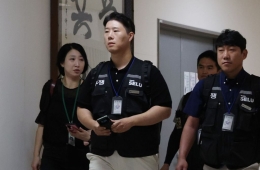
The Seoul Metropolitan Government's Civil Affairs Special Judicial Police announced on May 7 that, as a result of an inspection of over 220 construction sites where fugitive dust was being generated, 16 sites were found to have violated management obligations.
The Civil Affairs Special Judicial Police selected 220 sites with a high likelihood of violations through online monitoring and field inquiries, then conducted a focused crackdown over four months, including on-site surveillance. The targeted sites were mainly locations where initial processes such as demolition and excavation—which generate large amounts of fugitive dust—were underway, and many were situated on the outskirts of the city, where monitoring is relatively weak.

A redevelopment site in Seoul without dust covers installed on stockpiled soil and cut slopes. Seoul City
View original imageThe violations detected include: 10 construction sites that failed to install fugitive dust suppression facilities such as dust control covers or dust barriers; 5 sites that did not operate wheel washing (facilities that wash dust off the wheels of vehicles entering and leaving construction sites) or water spraying systems; and 1 site that did not report the generation of fugitive dust.
Fugitive dust refers to dust that is released directly into the atmosphere without a fixed emission outlet. Businesses that generate fugitive dust are subject to strict legal controls to manage air quality. According to the Clean Air Conservation Act, businesses generating fugitive dust must report to the district office and take necessary measures for each process, such as installing and operating dust barriers, dust control covers, wheel washing facilities, and water spraying systems to suppress the generation of fugitive dust.
The Civil Affairs Special Judicial Police have referred those responsible at the cited construction sites for criminal prosecution. Under the Clean Air Conservation Act, failure to comply with these obligations is punishable by a fine of up to 3 million won.
Hot Picks Today
 "Samsung and Hynix Were Once for the Underachievers"... Hyundai Motor Employee's Lament
- "Was This Delicious Treat Enjoyed Only by Koreans?"... The K-Dessert Captivating Japan
- "Iran Considers Usage Fees From Surface to Seabed, Eyes $15 Billion Annual Revenue"
- Fair Trade Commission Fines "Big Five" Couriers Including Coupang and CJ 3 Billion Won for Shifting Safety Accident Liability to Agencies
- "That? It's Already Stashed" Nightlife Scene Crosses the Line [ChwiYak Nation] ③
The Seoul Metropolitan Government will award up to 200 million won in rewards, following a review in accordance with the “Ordinance on Protection and Support for Public Interest Whistleblowers in Seoul,” to informants who provide decisive evidence regarding acts of environmental pollution. Byun Gyeongok, Director of the Civil Affairs Special Judicial Police, stated, “We hope this investigation will raise awareness of environmental crime,” and added, “We will continue to investigate sources of air pollutants so that citizens can feel safe from fine dust.”
© The Asia Business Daily(www.asiae.co.kr). All rights reserved.