[AK View]The Person Who Became the Path Where the Road Ends
![[AK View]The Person Who Became the Path Where the Road Ends](http://www.asiae.co.kr/news/img_view.htm?img=2024082210273493009_1724290054.jpg)
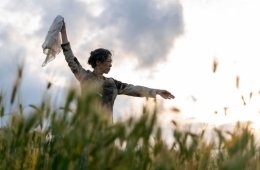
Seomyeong-suk, the creator of the Jeju Olle Trail, lived a very different life as a journalist—her motto was "Take a ride if it's more than three steps away." She would often take a taxi even for the 200-meter distance from the subway station to her office. Perhaps, with article deadlines looming like the Grim Reaper, she felt every minute spent walking was too precious to waste. As a fiercely driven member of the first generation of female political reporters, she became the first woman to serve as both the political editor and editor-in-chief at a weekly current affairs magazine. She climbed to the pinnacle of her journalism career, but her body broke down and her spirit became brittle—like a dried branch. She suffered from severe burnout, feeling as if she might die if she continued on that path.
In September 2006, she decided to let go of everything and set out on the Camino de Santiago pilgrimage. Walking was hard for her, but she walked in order to save herself. On the road that stretched for more than 800 kilometers, she realized a profound truth: it is only when walking that people truly meet themselves. After collapsing from overwork, her time on the Camino helped her restart the life that had come to a standstill. And at the end of that journey, she made a resolution: "In my hometown of Jeju, I will create the world's most peaceful and beautiful trail, one that gives life to people."
After returning to Korea, she founded the Jeju Olle Foundation, and in September 2007, she opened Jeju Olle Course 1, which connects Seongsan, the easternmost point of Jeju and a UNESCO World Natural Heritage site. Today, the Olle Trail consists of 27 routes covering 437 kilometers. She did not use heavy machinery; instead, she built the trail with time and care, using only human hands and feet. She discovered hidden paths, reconnected broken ones, and revived those that had disappeared.

The funeral ceremony for Seomyung Sook, Chairman of Jeju Olle who created the Jeju Olle Trail, was held on the 10th at Seobok Park in Seogwipo City, Jeju.
Photo by Yonhap News Agency
The Olle Trail transformed the tourism culture of Jeju. Previously, a trip to Jeju meant driving quickly from one "view point" to another as part of a package tour. However, the Olle Trail revealed the island's hidden heart. It challenged visitors to "see as much of Jeju as you walk and stay," sparking a trend of living in Jeju for a month at a time. According to the Jeju Research Institute, as of 2025, more than 13 million people have visited the Jeju Olle at least once. Each year, more than 4,500 people complete all 27 courses. The economic impact generated by the Jeju Olle amounts to about 1.2 trillion won annually.
The Jeju Olle also sparked a nationwide walking craze. Local governments across Korea benchmarked the Olle Trail, creating their own paths. More than 100 trails—including the Haeparang Trail along the East Coast, the Gangneung Baugil, the DMZ Peace Trail, and the East-West Trail—have been established, connecting the entire country with a network of walking paths. The Jeju Olle model has even been exported abroad. In Japan, the Kyushu Olle and Miyagi Olle were created. In Mongolia, the Mongol Olle was developed through an official licensing agreement with the Jeju Olle, creating new trekking routes. In this way, a long-held Mongolian proverb—"Those who build walls perish, but those who make roads prosper"—was taught to Mongolia by a descendant of Jeju.
More important than the tangible achievements of the Olle Trail (the "Trail") is the message of healing and finding one's own way that the Olle Trail (the "Way") has imparted. "Olle" is a Jeju dialect word referring to the alley that connects one's house to the world outside. It means that the path does not begin far away, but right at the doorstep we cross every day. In her book "Nolmeong, Shuimeong, Geoleumeong: Jeju Olle Travels," Seomyeong-suk wrote, "As you walk the Olle Trail, look into the heart of Jeju. I hope you can heal your wounded heart and escape the rush of life, even for a moment."
Hot Picks Today
![Home Appliance Woes Mount, Yet 45 Trillion Won in Bonuses? Samsung's Risky Asymmetry [Why&Next]](https://cwcontent.asiae.co.kr/asiaresize/93/2022111609212518207_1668558086.jpg) Home Appliance Woes Mount, Yet 45 Trillion Won ...
Home Appliance Woes Mount, Yet 45 Trillion Won ...
- "Major Crash Is Coming... Buy Even If You Have to Skip a Meal" 'Rich Dad' Shares...
- "Parents Deposited 10 Million Won for Me"... Securities Accounts Surge 272% Amid...
- 500% Energy Efficiency... Samsung Electronics’ 'Energy Magic' to End the Fear o...
- "It Was Fantastic" Jensen Huang's Daughter Seals 'Robot Alliance' with LG throug...
She, who comforted those suffering from burnout by encouraging them to live more slowly, departed on her own "Heavenly Olle Trail" on April 7. Her final words are said to have been, "Be happy on the Olle Trail." Poet Jeong Hoseung wrote in "Spring Path," "Even where the road ends, there is a road / Even where the road ends, there are people who become the road." Seomyeong-suk was such a person. She said that the Olle Trail is "a path dedicated to those who are weary and exhausted." A person who becomes a path for others is truly a happy person.
© The Asia Business Daily(www.asiae.co.kr). All rights reserved.