"They're Making Money": Iranians Cross Borders to Buy Cooking Oil Amid Soaring Inflation
Cooking Oil Trade Surges at Iran's Border
War and Sanctions Drive Soaring Inflation
"People May Soon Resort to Stealing Food"
Iranians are crossing the border into Turkey in search of cooking oil. The combined effects of war and inflation have made it difficult even to procure daily necessities.

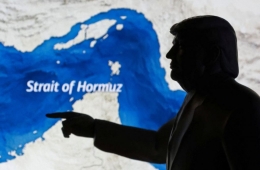
Iran's economy is facing dual hardships due to international sanctions and the war with the U.S. and Israel. In particular, since the government abolished subsidies for essential imports in January citing financial difficulties, the price of cooking oil has soared and supply shortages have worsened. Getty Images
View original imageAccording to Yonhap News Agency, on April 25 (local time), The New York Times (NYT) reported that "there has been a surge in the number of Iranians purchasing cooking oil at the Kapikoy checkpoint on Turkey’s western border with Iran." Previously, tobacco and small electronic devices were the main traded items, but recently, demand for cooking oils such as olive oil, sunflower oil, and corn oil has soared.
Iran's economy is facing a double burden due to international sanctions and the war with the U.S. and Israel. In particular, the government abolished subsidies for essential goods imports in January citing financial difficulties, leading to a sharp rise in cooking oil prices and worsening supply shortages. One Iranian citizen told NYT, "The policy of abolishing subsidies did help crack down on hoarding mafias," but added, "Cooking oil prices have risen so much that I came to Turkey to buy some."

A photo of a flea market in Tehran, the capital of Iran, to help understand the article. Photo by AP Yonhap News Agency
View original imageThe International Monetary Fund (IMF) projects Iran’s inflation rate this year to be 68.9%, the highest since 1980. One citizen told NYT, "In the past, I could buy 5 to 6 chickens for 5 million rials, but now I can only buy 3 chickens even if I pay 22 million rials."
Meanwhile, merchants near the border are seeking opportunities amid war and economic crisis. For example, it is reported that if one buys a 5-liter bottle of cooking oil for 10 dollars (about 15,000 won) in the Turkish border area and brings it into Iran, they can make a profit of 2 dollars (about 3,000 won) per bottle. Considering that the minimum monthly wage in Iran is about 108 dollars (about 160,000 won), this is a significant gain. One Iranian merchant told NYT, "I plan to buy four bottles of cooking oil and sell them in my hometown," adding, "The profit on cooking oil is higher than on cigarettes."
The sense of crisis among local residents has reached its peak. Iranians interviewed by NYT expressed concern that "if the current economic situation continues, many Iranians will start stealing food to feed their families." A couple working in the garment manufacturing industry said, "Even before the war, employment was so unstable that we spent nearly half the year unemployed."

People from Iran crossing the border heading toward Turkey. Photo by AP Yonhap News
View original imageMeanwhile, U.S. sanctions pressure on Iran is intensifying. According to Yonhap News Agency, on April 24 (local time), the U.S. government imposed additional sanctions on about 40 Chinese refiners and shipping companies involved in the transportation and trading of Iranian crude oil. This marks the full-scale implementation of "secondary sanctions" targeting third-country companies trading with Iran, aiming to structurally block Iran's crude oil exports, which are a key source of foreign currency. Before the war, China was known to be the largest importer, absorbing 80–90% of Iran’s total crude oil exports.
Hot Picks Today
 Lingering at the Olive Young Shelf, Then Straig...
- Silently Climbing to the Top... Will Samsung Electronics Become the World's Most...
- Old Town Residents Say 'We Envy This Place'... Nearly 60% of Residents in Their ...
- "I Want to Sleep Here"... The Reason a Girl Lay Beside Her Grandparents' Grave a...
- Once a Leading 'Outdoor Legend'...Is Nepa Headed Down the Same Path as Homeplus?...
The human toll from the war is also significant. In 40 days of warfare, Iran was subjected to approximately 13,000 airstrikes from the U.S. and 4,000 from Israel, with civilian and military casualties estimated at up to 2,000 each.
© The Asia Business Daily(www.asiae.co.kr). All rights reserved.