[K-Defense, Targeting the Future]①KAI Privatization Begins... Accelerating the "Korean-Style Lockheed Martin"
Hanwha Secures 4.99% Stake
Defense Industry Shifts Toward "Scaling Up"
Package Exports and Long-Term Maintenance Contracts
Hanwha Closest Among Domestic Defense Firms
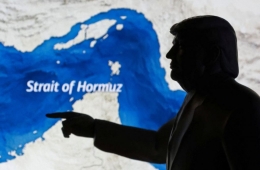
Before the echoes of the Russia-Ukraine war had even faded, a new conflict between the United States-Israel and Iran has once again turned the Middle East into a war zone. The world has not stopped waging war, and neither has the demand for weapons. Amid this upheaval, Korea's K2 main battle tank, K9 self-propelled howitzer, and FA-50 fighter jet have proven both their performance and price competitiveness, emerging as new powerhouses in the global defense industry market. However, excelling at manufacturing is different from excelling at sales. The global defense industry market has already reorganized so that only companies with both scale and integration survive. The United States, for example, consolidated dozens of defense contractors into five major corporations—including Lockheed Martin and Boeing—after the end of the Cold War. This is why there are growing warnings that Korea’s defense industry will find it difficult to survive in export competition if it remains fragmented in its military procurement structure.
![[K-Defense, Targeting the Future]①KAI Privatization Begins... Accelerating the "Korean-Style Lockheed Martin"](http://www.asiae.co.kr/news/img_view.htm?img=2026042710210341418_1777252863.jpg)
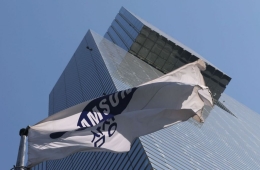
It was Hanwha that fired the signal for this change. After seven years, Hanwha began reacquiring shares in Korea Aerospace Industries (KAI), steadily increasing its holdings since October of last year to reach 4.99%. Industry insiders interpret this investment not just as a simple stake acquisition, but as a strategic move aimed at the privatization of KAI, igniting discussion of a restructuring within Korea’s defense industry.
KAI is a 'company without an owner,' with major shareholders including the Export-Import Bank of Korea (26.41%) and the National Pension Service (8.3%). On the surface, it appears to have a stable governance structure, but critics have consistently pointed out that it is difficult to make long-term investment decisions under such a system.
Jeong Kyeongdoo, former Minister of National Defense and current head of the Institute for Cyber Security, explained, "Since KAI does not have an owner, it is difficult to make long-term investment decisions, leading to a focus on short-term results. In the global competitive environment, this structure has its limits."
In fact, over the past few years, KAI has been assessed as lagging behind competitors in investments for next-generation fighter jets, drones, and other future growth engines. The repeated criticism is that an ownerless governance structure leads to 'delayed decision-making.'
Shim Soonhyung, Research Fellow at the Korea Institute for Industrial Economics and Trade and head of the Defense Industry Research Task Force, stated, "A government-centered structure inevitably delays investment decisions. If transferred to the private sector, the speed and scale of investment would increase significantly, resulting in a clear difference in technology development and export responsiveness."
The issue is not just the speed of investment. The defense export market itself is changing. The global market has already shifted from competition at the 'weapon unit' level to the 'defense system unit' level. It is not just about delivering a finished product—long-term profit structures are created by bundling maintenance and follow-up support. Experts commonly conclude that it is difficult to win orders with a fragmented structure in this environment.
The alternative that experts point to is vertical integration that unifies land, sea, air, and space into a single system. They argue that dispersed capabilities must be integrated to enable package exports and long-term maintenance contracts.
![[K-Defense, Targeting the Future]①KAI Privatization Begins... Accelerating the "Korean-Style Lockheed Martin"](http://www.asiae.co.kr/news/img_view.htm?img=2026042708420940999_1777246929.jpg)
Currently, among Korean defense companies, Hanwha is considered the closest to meeting these conditions. If privatization is realized and Hanwha Aerospace (land), Hanwha Ocean (sea), and KAI (air and space) are merged, vertical integration encompassing land, sea, air, and space will be achieved. This is the so-called 'Korean Lockheed Martin.' Professor Hong Seokcheol of Seoul National University's Department of Economics commented, "Defense is a representative industry where economies of scale are vital due to large initial investments. Considering the structure is expanding to include the space industry, Hanwha’s approach is a natural progression."
The economic ripple effects are also substantial. According to the Korea Institute for Industrial Economics and Trade, defense exports in 2025 are estimated to generate approximately 46.4 trillion won in production inducement effects, 13.7 trillion won in added value, and employment for around 100,000 people. Given the industry’s nature, which combines machinery, electronics, materials, and ICT, the establishment of an integrated system is expected to expand the entire ecosystem even further.
Hot Picks Today
 Lingering at the Olive Young Shelf, Then Straig...
- "Mom, Did You Buy Stocks in My Name Too?"... 3 Trillion Won Accumulated in Child...
- "Provided as a Courtesy, Ended Up at the Police Station": Why a Cafe Owner Stopp...
- "I Want to Sleep Here"... The Reason a Girl Lay Beside Her Grandparents' Grave a...
- Once a Leading 'Outdoor Legend'...Is Nepa Headed Down the Same Path as Homeplus?...
The remaining variable is the method of privatization. Various scenarios are being discussed, including phased stake sales, bulk sales, and maintaining the current system, but a dispersed sale centered on strategic investors is considered the most realistic option. The possibility of Hanwha securing additional shares is also seen as most likely under this scenario.
© The Asia Business Daily(www.asiae.co.kr). All rights reserved.