Gyeonggi Provincial Office of Education Accelerates Elementary Education Innovation with Curriculum-Instruction-Assessment Integrated Design
Training Program for Over 50 Elementary Education Professionals
Strengthening Collaboration Among Provincial Office, Training Institute, and Regional Education Professionals
Exploring Professional Linkages from Policy Formulation to On-Site Implementation
The Gyeonggi Provincial Office of Education (Superintendent: Lim Taehee) is holding a two-day professional training program on April 24 and 25, titled "Understanding and Practice of the 2026 Elementary Curriculum-Instruction-Assessment Integrated Design," to enhance the policy implementation capabilities of educational professionals.

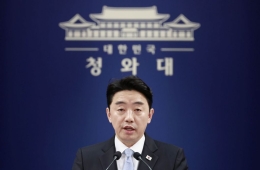
Gyeonggi Provincial Office of Education building. Provided by Gyeonggi Provincial Office of Education
View original imageThis training program has been organized to strengthen the competencies of educational professionals so that the "Elementary Curriculum-Instruction-Assessment Integrated Design" policy, which the Gyeonggi Provincial Office of Education is prioritizing, can be implemented consistently in schools.
In particular, the program emphasizes raising the coherence of policy execution by bringing together more than 50 participants, including: ▲ officials from the policy departments of the provincial office who plan and establish policy; ▲ staff from the Educational Training Institute who design and operate training programs; and ▲ educational professionals from regional education support offices who directly assist schools at the local level.
The provincial office plans to actively utilize the pool of 120 integrated design experts previously trained, based on the professional supervisory support system that will be strengthened through this training. Through these efforts, the "On-Site Integrated Design Training Program" and field consulting will be further enhanced to provide more robust support for school education.
The main content of the training includes: ▲ in-depth understanding of the 10-step process for elementary curriculum-instruction-assessment integrated design; ▲ strategies for utilizing classroom thinking design tools (Thinking Blocks, Thinking Bricks); ▲ sharing checklists for field consulting and advice; and ▲ building a support system for integrated design policy through collaboration among institutions.
Participants will thoroughly explore the principles of "curriculum-instruction-assessment integrated design," which connects curriculum design to assessment in a seamless flow, and will focus on discussing ways to bring about real change in schools through effective inter-institutional cooperation.
The provincial office expects that, through this training, educational professionals will share the core values of the policy and be able to deliver consistent messages and support services to schools regardless of region or department.
Hot Picks Today
 "I Just Want to Sleep": Prime Minister Takaichi...
- "You Can Only Have This in Korea": Which National Museum Cafe Menu Is Captivatin...
- "This Has Never Happened to Me in Korea"... Gwangjang Market Stall That Charged ...
- Iran Begins Collecting Hormuz 'Transit Fee' in Cash, Not Cryptocurrency
- "Never Hike Alone as a Woman" "Even Two Are at Risk"... Growing Fear of Crime on...
Lee Mungu, Director of Elementary Education at the provincial office, stated, "Close communication and consistent practice between policy-making and policy-implementing bodies are essential for the successful establishment of the curriculum-instruction-assessment integrated design policy," adding, "Educational professionals will work together to ensure that integrated learning takes firm root in schools."
© The Asia Business Daily(www.asiae.co.kr). All rights reserved.