Oh Se-hoon Signals Full-Scale Election Campaign, Vows "Zero Casualties and Property Damage" at Deep Underground Site
Inspection of the Gwanghwamun Deep Underground Rainwater Tunnel
Shifting Focus from "Post-Disaster Recovery" to "Prevention"
Six Tunnel Sites Planned in Seoul... Phase 1 Completion Targeted for 2030
Mayoral Candidate Registration Scheduled for April 27
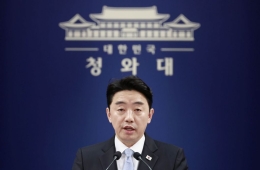
With the Seoul mayoral election approaching in June, Seoul Mayor Oh Se-hoon visited the Gwanghwamun deep underground rainwater drainage tunnel construction site on the 24th and pledged to achieve zero casualties and property damage. After registering as a candidate on the 27th, Mayor Oh is set to officially enter the campaign, aiming to make Seoul a "Special City with a Healthier and Warmer Quality of Life."
On the morning of April 24, Mayor Oh visited the Gwanghwamun deep underground rainwater drainage tunnel construction site to check the overall status of the project. He personally inspected the underground excavation process and toured both the above-ground and underground sites. In addition, he reviewed the "smart safety technology" applied at the site and observed demonstrations of the smart integrated control system for monitoring worker and equipment locations, on-site CCTV, and wearable devices.

This visit was intended to inspect a key site for the large-scale disaster prevention infrastructure projects that Seoul has been pursuing since the record-breaking rainfall in 2022, and to proactively review flood prevention measures for the summer.
In August 2022, after record-breaking rainfall totaling 515mm across Seoul, the city announced a major upgrade of its disaster prevention performance targets, raising them from 95mm per hour to 100mm per hour (110mm per hour in the Gangnam Station area), and launched the "deep underground rainwater drainage tunnel" project to overcome the limitations of existing disaster prevention facilities. At that time, extreme rainfall was concentrated in Dongjak District at 141mm per hour (a 1-in-500-year event) and in Gangnam District at 116mm per hour (a 1-in-150-year event). There were eight casualties and an estimated 20,083 cases of facility damage, totaling about 68.3 billion won.
Since then, Seoul has shifted its water management policy from post-disaster recovery to preventive measures, strengthening disaster prevention capabilities by establishing region-specific disaster prevention systems. The city is currently pursuing the construction of a total of six deep underground tunnels, divided into Phase 1 (Gangnam Station, Gwanghwamun, and Dorimcheon areas) and Phase 2 (Sadang Station, Hangang-ro, and Gildong areas).
The completion target for Phase 1 of the deep underground tunnel project is 2030. Once Phase 1 is finished, including the already operational Sinwol deep tunnel, a total of four sites will be able to store 1.328 million tons of rainwater. The Sadang Station area is being developed as a public-private partnership (Isu to Gwacheon combined tunnel), targeting completion in 2031. For the remaining Phase 2 areas, including Hangang-ro and Gildong, a "feasibility study and basic planning service" began in May 2025, with construction scheduled for completion by March 2027.
Mayor Oh said, "Once the deep underground project, which was rapidly launched after the limitations of our existing infrastructure became clear in 2022, is completed in 2030, we will have a much safer disaster prevention system. We will achieve our policy goals of zero casualties and minimal property damage this year by focusing on managing areas vulnerable to storm and flood damage, expanding public-private governance, and strengthening data-driven forecasting."
Meanwhile, Mayor Oh will register as a candidate on April 27 and join the Seoul mayoral election race. The campaign office will be set up in Daewang Building, Gwanchul-dong, Jongno District. This location was chosen to highlight both his original intentions and his commitment to developing the old downtown area. A member of Mayor Oh's team stated, "Selecting the campaign office in an area symbolizing the urgent need for old city center development demonstrates our commitment to balanced urban development and revitalizing areas like Jongno. By starting from the citizens' perspective rather than showing off, it also symbolizes a campaign that is field-oriented and closely connected to everyday life."
Hot Picks Today
 "I Wish I Could Get Some Sleep" Frozen Meals an...
- The Quoted 800,000 Won, the Bill Was 5 Million... Bereaved Families of 'No-Funer...
- "You Can Only Have This in Korea": Which National Museum Cafe Menu Is Captivatin...
- Samsung Electronics Faces Production Disruption: Foundry Output Plunges 58% on D...
- "Never Hike Alone as a Woman" "Even Two Are at Risk"... Growing Fear of Crime on...
Mayor Oh will operate his campaign with a focus on youth policies. The campaign events will also be prepared for and led by young people. A key official from Mayor Oh's camp stated, "While the 8th popularly elected Seoul administration has focused on inclusivity and boosting urban competitiveness under the 'Companion·Attractive Special City' vision, this election campaign will highlight the goal of making Seoul a 'Special City with a Healthier and Warmer Quality of Life.'"

Interior of the Sinwol Rainwater Storage and Drainage Facility. Yangcheon District Office
View original image© The Asia Business Daily(www.asiae.co.kr). All rights reserved.