"Reducing Caregiving Costs and Improving Medical Quality"... Expansion of Integrated Nursing Care Service at Regional Tertiary Hospitals Outside the Seoul Metropolitan Area
8th Health Insurance Policy Deliberation Committee Convenes
Key Agendas Approved Including "Easing the Caregiving Burden on the Public"
Medical Material Reimbursement Increased by 2% Reflecting High Exchange Rates
Pharmaceutical Reimbursement Reassessment Upgraded with Focus on Clinical and Social Value
The government has decided to fully allow regional tertiary general hospitals outside the Seoul metropolitan area to participate in the integrated nursing care ward service, while also expanding dedicated wards for critically ill patients. To support the medical device industry struggling with high exchange rates, the government will raise reimbursement prices for medical materials and rationally reform the system for reassessing the adequacy of pharmaceutical reimbursements.

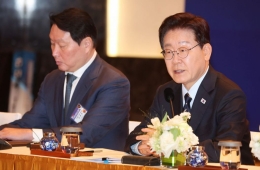
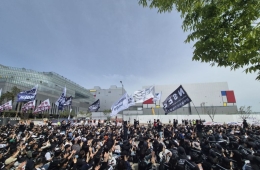
Lee Hyeonghun, Second Vice Minister of the Ministry of Health and Welfare, is speaking at the '8th Health Insurance Policy Deliberation Committee Meeting in 2026' held on the 23rd at the International Electronics Center in Seocho-dong, Seocho-gu, Seoul. Ministry of Health and Welfare
View original imageThe Ministry of Health and Welfare announced on the 23rd that it had deliberated and resolved these agenda items at the "8th Health Insurance Policy Deliberation Committee in 2026."
First, as part of the national policy to "ease the burden of medical expenses for the public," institutional improvements are being made to expand the integrated nursing care service. The integrated nursing care service is a system in which hospital staff, such as nurses and nurse assistants, are responsible for patient care during hospitalization, eliminating the need for guardians or private caregivers. Previously, due to concerns about the concentration of nursing personnel, the number of participating wards in tertiary general hospitals was limited to four.
However, moving forward, there will be no restrictions on the number of wards participating in this service at regional tertiary general hospitals outside the Seoul metropolitan area. As a result, the number of participating wards, which was previously limited to an average of four, can now be increased without limit. Typically, the daily hospital charge, including caregiving fees for inpatients, is around 130,000 won, but under the new system, patients will only need to pay 22,000 won for hospitalization, which is expected to reduce caregiving expenses by more than 100,000 won.
In addition, the participation requirements for "critical care inpatient wards," which focus on the intensive management of patients requiring high levels of nursing care—such as those undergoing major surgery, or suffering from dementia, delirium, or complex diseases—will be significantly eased, but only for hospitals located outside the Seoul metropolitan area. This is intended to improve the quality of inpatient services for critically ill patients.
The Ministry of Health and Welfare explained, "Through these institutional improvements, more patients in non-metropolitan areas will be able to be admitted to integrated nursing care wards, thereby receiving safe and high-quality inpatient services while reducing the burden of caregiving. We have also taken into account the policy direction of narrowing the regional gap in medical services."
In addition, reflecting international circumstances and the current high exchange rate situation, the reimbursement prices for approximately 27,000 separately assessed medical materials—most of which are highly dependent on imports—will be raised by an average of 2%.
Separately assessed medical materials are subject to price caps that are adjusted according to exchange rate fluctuations, in consideration of the fact that both raw materials and finished products are imported and thus affected by currency changes. This measure adjusts the previous price cap criteria, which were set at an exchange rate in the 1,100 won range, to the 1,300 won range, reflecting the average exchange rate of 1,365 won over the past three years. In particular, to ensure stable medical material supplies for healthcare institutions, this measure will be implemented immediately starting from the 27th.

The system for reassessing the adequacy of pharmaceutical reimbursements, which aims to improve the efficiency of health insurance finances, will also be upgraded. The approach will move away from simply following foreign reimbursement practices and will instead comprehensively consider the realities of domestic clinical practice and social needs.
For the 2026 reassessment, three substances have been selected: "Ginkgo biloba extract (for cognitive dysfunction)," "Calcium dobesilate monohydrate (for vascular strengthening)," and "Silymarin (for liver disease)." Drugs whose clinical usefulness is proven will remain reimbursed; however, if evidence is insufficient, the government plans to apply selective reimbursement or differentiate co-payment rates to manage spending structures more precisely.
Hot Picks Today
 Chilling Timing "Did They Know Again?"... $640 ...
- [Exclusive] SK hynix Becomes First Korean Semiconductor Firm to Win IEEE Innovat...
- "If You Have This at Home, Remove It Immediately"... 'This Item' Is as Harmful a...
- "Why Are They Doing This?" Bizarre 'Streetlight Challenge' Involving Leg-Wrappin...
- Foreign Vessels Once Swept Up the Seas Every Season... Now Face Fines of Up to 1...
Lee Hyunhoon, Chair of the Health Insurance Policy Deliberation Committee (Second Vice Minister of Health and Welfare), stated, "This institutional reform is intended to eliminate regional disparities in healthcare and to substantially reduce the caregiving burden on patients and their families. In the second half of this year, we will prepare and announce additional nationwide measures, including for the Seoul metropolitan area."
© The Asia Business Daily(www.asiae.co.kr). All rights reserved.