Mayor Shin Sangjin: "Seongnam's 'Five Burdens of Real Estate' Are an Administrative Disaster... Presidential Action Needed"
Seongnam City Proposes Policy to President Lee to "Alleviate the Five Burdens of Real Estate"
Strong Call to Protect Single-Home Residents and Eliminate Excessive Overlapping Regulations
"Freezing Bundang at 12,000 Units Is Reverse Discrimin
On April 23, Seongnam City (Mayor Shin Sang-jin) announced that it had proposed policies to President Lee Jae-myung for 'Resolving the Five Burdens of Real Estate,' aiming to protect primary homeowners and ease excessive real estate regulations.

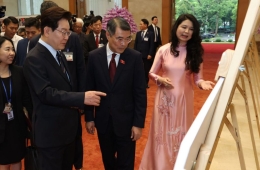
Seongnam City (Mayor Shin Sang-jin) proposed a policy to President Lee Jae-myung to 'resolve the five burdens of real estate' in order to protect residents who live in a single house and to ease excessive real estate regulations. Provided by Seongnam City
View original imageThis proposal was drafted as an official letter in the name of Mayor Shin Sang-jin and was submitted to the Presidential Secretariat on the same day.
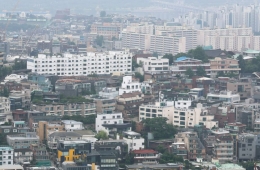
In an open letter addressed to President Lee Jae-myung, Seongnam City stated, "As a core self-sufficient city in the Seoul metropolitan area, including Bundang, the first-generation new town, Seongnam is facing a serious threat to citizens' property rights and housing stability due to the overlapping application of various real estate regulations."
Seongnam City pointed out that three types of regulations—speculative zone designation, adjustment target area, and land transaction permission zone—are currently applied simultaneously, stating, "After the implementation of these regulations, apartment transactions have decreased by approximately 51 percent, marking the largest decline in Gyeonggi Province." The city also emphasized that "regulations that should have been temporary measures during periods of market overheating are now excessively restricting transactions and residential mobility even for genuine homebuyers."
Regarding Bundang's reconstruction policy, Seongnam City argued that "while other regions that cannot even meet their allocated supply due to insufficient business viability have been allowed to expand their quotas by up to five times, Bundang—where the number of applications for leading districts has reached 7.4 times the original quota and the approval rate is over 90 percent, demonstrating proven feasibility—has had its supply frozen at only 12,000 units. This is a clear case of reverse discrimination." The city further suggested, "If the unallocated supply that other regions cannot absorb (approximately 17,000 units) is redistributed to Bundang, it would also help the government achieve its housing supply goals."
On the issue of officially assessed property values and tax burdens, the city stated, "The officially assessed price increase rate for Seongnam's apartment complexes stands at 21.86 percent, far exceeding the national average, resulting in a sharp increase in the number of households subject to comprehensive real estate tax, with some households expected to see their tax burden rise by more than 400 percent year-on-year."
The city also pointed out, "Punitive taxes imposed on homeowners will lead to a severe shortage of lease properties and rising rental prices, ultimately passing the tax burden onto non-homeowning tenants and causing a chain reaction of soaring housing costs."
Regarding financial regulations, the city explained, "The rigid and overlapping lending rules—such as the 40 percent loan-to-value (LTV) cap and the application of the stress debt service ratio (DSR)—are making it even more difficult for genuine homebuyers, including the homeless, young people, and newlyweds, to purchase their own homes."
Additionally, regarding President Lee Jae-myung's recent discussion about reducing or abolishing the long-term ownership special deduction for single-home owners, the city stated, "If the ownership period deduction is abolished, the capital gains tax burden for single-home owners could increase by up to four times compared to the current level, which would hinder the elderly and retirees from securing funds for retirement and restrict citizens' freedom to relocate." The city added, "There is also a high likelihood that the lease market will experience a decrease in available properties and an increase in rental prices."
Seongnam City defined these circumstances as the 'five burdens of real estate': triple area-based regulations, limits on Bundang reconstruction supply, a steep rise in officially assessed property values, expanded property tax burdens, and tightened lending regulations.
Accordingly, Seongnam City proposed to the government: a thorough review and phased removal of the triple overlapping regulations; ensuring fairness between Bundang and other first-generation new towns in reconstruction and redevelopment policies; alleviating property tax burdens and devising protection measures for genuine homebuyers; and easing financial regulations and supporting residential mobility with a focus on non-homeowners and genuine buyers.
Hot Picks Today
 Chilling Timing "Did They Know Again?"... $640 ...
- 'Sea of Black' Sweeps Pyeongtaek... 40,000 Samsung Union Members Unite in Call t...
- "I Spent Money in a Truly Meaningful Way"... How an SK hynix Employee Donated 10...
- "If You Have This at Home, Remove It Immediately"... 'This Item' Is as Harmful a...
- Foreign Vessels Once Swept Up the Seas Every Season... Now Face Fines of Up to 1...
Mayor Shin Sang-jin stated, "The hardship experienced by Seongnam citizens is not a reasonable burden stemming from asset growth, but rather an administrative calamity caused by uniform regulations and a steep rise in officially assessed property values." He respectfully urged, "I sincerely request President Lee Jae-myung to make a bold and wise decision so that Seongnam citizens can break free from the unreasonable 'five burdens' and regain a peaceful daily life."
© The Asia Business Daily(www.asiae.co.kr). All rights reserved.