Insurance Industry Mobilizes for Full-Scale Energy Conservation Amid Middle East Crisis
Implementation of Five-Day Vehicle Rotation and Workplace Energy Reduction Measures
Flexible Work Arrangements Including Staggered Hours and Remote Work
The insurance industry has joined efforts to practice energy conservation to overcome the energy supply crisis stemming from the aftermath of the Middle East conflict.

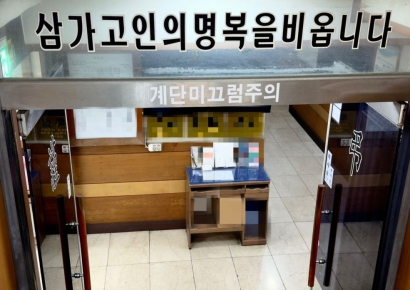
To address energy supply uncertainties such as rising international oil prices amid the prolonged US-Iran war, a two-shift system for public institutions and a five-shift system for public parking lots will be implemented starting from the 8th. On April 6, an announcement regarding the two-shift system was posted at the entrance of the Government Seoul Office in Jongno-gu, Seoul. Photo by Cho Yongjun
View original imageAccording to the Korea Life Insurance Association and the General Insurance Association of Korea on April 23, both associations and insurance companies are taking the current situation seriously and are voluntarily implementing energy-saving measures tailored to the circumstances of each workplace, in line with the government's emergency energy response policy.
In response to the "alert" level declared for crude oil-related resource security risks, a five-day vehicle rotation system is being implemented in collaboration with public institutions. Some insurers have expanded this to a two-day vehicle rotation system depending on the situation. In addition, to promote greater use of public transportation and disperse traffic demand, flexible work arrangements such as staggered working hours and working from home are being adopted.
Various measures are also being taken to reduce energy consumption within workplaces. During non-working hours, as well as during lunch breaks and nighttime, lights in common and unused areas are switched off, and PCs are turned off at the end of the workday, as part of daily energy-saving practices. Efforts are also being made to minimize energy waste by maintaining appropriate indoor temperatures for efficient heating and cooling, and by refraining from operating unnecessary equipment.
Practical measures, such as adjusting elevator operating hours, changing the switch-off times for outdoor signs, and improving the efficiency of lighting systems, are also being implemented. Some insurers are conducting power-saving campaigns for their employees.
Kim Cheoljoo, Chairman of the Korea Life Insurance Association, stated, "With the prolonged Middle East situation, energy conservation is now a necessity, not a choice. The life insurance industry, as a pillar of the social safety net, will embed energy-saving practices throughout its management to help overcome the energy crisis and ensure a sustainable future."
Lee Byungrae, Chairman of the General Insurance Association of Korea, said, "Overcoming the energy crisis is a key task for national economic stability. The non-life insurance industry will focus on fulfilling its social responsibility and public value, actively cooperate with government policies, and contribute to spreading a culture of energy conservation."
Hot Picks Today
 The Quoted 800,000 Won, the Bill Was 5 Million....
- [Exclusive] Did Samchundang Pharmaceutical Disclose Only Favorable Information?....
- They Say They'd Rather Go to Japan Than Travel Domestically... But a 'Surprising...
- Tragedy in Luxury Apartment: Woman in Her 20s Found Dead, Suspect Identified
- "Never Hike Alone as a Woman" "Even Two Are at Risk"... Growing Fear of Crime on...
The associations and insurance companies plan to continue identifying and actively implementing energy-saving measures that can be practiced in daily life.
© The Asia Business Daily(www.asiae.co.kr). All rights reserved.
![The 'Epic' 1,500 Trillion Won Bill... In the End, the Poor Pay the Price [Data Pick]](https://cwcontent.asiae.co.kr/asiaresize/307/2026042310001637425_1776906017.jpg)