Samsung SDS Reports Q1 Operating Profit of 78.3 Billion Won, Down 71% Year-on-Year Due to Retirement Benefit Expenses
Revenue at 3.3529 Trillion Won, Down 3.9% Year-on-Year
Cloud Business Revenue Hits 690.9 Billion Won, Highest Among IT Services
10 Trillion Won Investment Planned by 2031 for AI Infrastructure and M&A
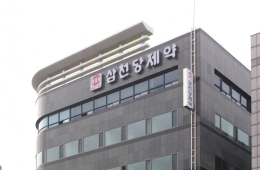
Samsung SDS recorded a year-on-year decline in operating profit for the first quarter of this year, mainly due to a one-time reflection of retirement benefit payments.
On April 23, Samsung SDS announced in a regulatory filing that its consolidated operating profit for the first quarter of 2026 was provisionally calculated at 78.3 billion won, down 70.8% from the same period last year. Revenue for the same period fell by 3.9% to 3.3529 trillion won.

Samsung SDS explained that the decrease in first-quarter operating profit was the result of a change in the retirement benefit calculation standard, which led to a one-time provision of 112 billion won in retirement benefit expenses.
Breaking down revenue by business segment, the IT services segment posted revenue of 1.6105 trillion won, a slight increase from the same period last year. Cloud business revenue grew 5.8% year-on-year to 690.9 billion won, accounting for the highest share within the IT services segment.
Within the cloud business, the Cloud Service Provider (CSP) business based on Samsung Cloud Platform (SCP) achieved 12% growth year-on-year, driven by increased demand for GPU-as-a-Service (GPUaaS) in the public sector AX and the expansion of cloud network services. The Managed Service Provider (MSP) business grew 4% compared to the same period last year, due to rising sales to the financial and public sectors and strengthened cooperation with global partners.
In the logistics business, revenue from Cellosquare increased by more than 30%. However, overall logistics revenue decreased by 7.8% year-on-year to 1.7424 trillion won, mainly due to lower cargo volume and falling freight rates.
Samsung SDS forecasts that its performance will improve in the second quarter of this year, driven by the expansion of the cloud business, including increased GPUaaS demand from the public sector, higher sales in the financial sector, and the spread of government-wide intelligent AI services.
Samsung SDS plans to invest 10 trillion won by 2031, utilizing 1.2 trillion won in new funds secured through cooperation with global investment firm KKR and 6.6 trillion won in cash and cash equivalents. The investment will be used to implement a full-stack AI strategy and pursue mergers and acquisitions (M&A).
Specifically, the company will invest 5 trillion won in AI infrastructure for new AI data centers, including the Gumi AI Data Center and the National AI Computing Center. Another 1 trillion won will be invested to strengthen the business competitiveness of AX·AI services, AI platforms, and solutions, while 4 trillion won will be allocated to strategic M&A activities.
Hot Picks Today
 "How Do Six People Sleep in a 44㎡ Apartment?" ...
- Despite Claims That “Korea Is a Price-Gouging Heaven, I'd Rather Go to Japan”....
- The Quoted 800,000 Won, the Bill Was 5 Million... Bereaved Families of 'No-Funer...
- "You Can Only Have This in Korea": Which National Museum Cafe Menu Is Captivatin...
- "Never Hike Alone as a Woman" "Even Two Are at Risk"... Growing Fear of Crime on...
Meanwhile, Samsung SDS stated that its newly launched data center Design·Build·Operate (DBO) business, announced in January, is currently underway, having secured a contract for the conceptual design of a data center project being developed by a major domestic asset management company.
© The Asia Business Daily(www.asiae.co.kr). All rights reserved.

![The 'Epic' 1,500 Trillion Won Bill... In the End, the Poor Pay the Price [Data Pick]](https://cwcontent.asiae.co.kr/asiaresize/307/2026042310001637425_1776906017.jpg)