President Orders "Permanently Expel Colluding Companies from the Market"... Ultra-Fast Measures Announced in Just Two Months
Lee Orders "Permanent Expulsion," Measures Announced Within Two Months
Personal and Structural Expulsion Plus Stronger Economic Sanctions
Scope of Butane Fuel Tax Reduction Expanded to 25%
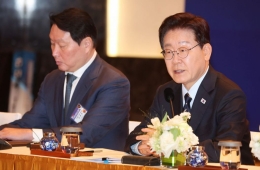
The reason the Fair Trade Commission has decided to implement an extremely strong measure, including the "personal and structural expulsion" of companies involved in collusion, is closely related to President Lee Jaemyung's determination to eradicate collusion. In February of this year, President Lee instructed that "if anti-market practices are repeated, we should actively consider permanently expelling the offenders from the market." Since then, he has repeatedly emphasized his intention to impose severe punishment on companies engaged in collusion.
If Collusion Is Repeated, Fines Will Double... Leniency Program Tightened

The ultra-fast measures announced just two months after the president's instruction include significantly strengthened economic penalties. First, the guidelines will be revised so that if a company repeats collusion even once within 10 years, the surcharge will be increased by 100%. Previously, surcharges were increased by 10–80% depending on the number of violations within five years, but now, in the case of a repeat offense, companies will be required to pay double the fine.
The leniency program, which allows for the reduction of fines when companies voluntarily report collusion, will also become much stricter. Currently, leniency benefits are excluded for repeat offenses within five years. In addition, if collusion is repeated after five years but within ten years, leniency benefits will be reduced by half (exemption of fines for the first voluntary reporter will be reduced from 100% to 50%, and for the second reporter from 50% to 25%). This is intended to fundamentally eliminate the moral hazard of companies thinking, "We can escape through voluntary reporting and do it again later."
Restrictions on public bidding will also be expanded across the board. Previously, restrictions by the Public Procurement Service and other agencies were limited to "bid rigging," but moving forward, companies caught colluding on price or production volume will also have their bidding qualifications restricted. The restriction period will also be increased: initiators will be restricted for 1 year and 6 months (previously 1 year), and simple participants for 1 year (previously 6 months), which is expected to deal a severe blow to companies heavily dependent on the public market. In addition, currently, there are cases where bidding restrictions are not requested even when collusion is repeated, but the penalty point system will be revised so that restrictions must be requested in all such cases.
The monitoring system will also be further strengthened. Companies with a history of collusion will be required to implement a Fair Trade Compliance Program (CP). They must operate internal audit systems and report the results to the board of directors or other top decision-making bodies. In addition, corrective measures will require these companies to regularly report price fluctuation trends to the Fair Trade Commission.
The Scope of Butane Fuel Tax Reduction Will Be Expanded from 10% to 25%... 2.1 Million Tons of Naphtha to Be Introduced Sequentially
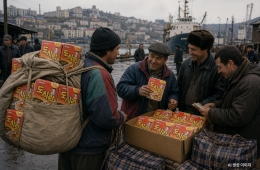
Meanwhile, to stabilize the cost of living, the government will expand the reduction of the fuel tax on liquefied petroleum gas (LPG) butane from the current 10% to 25% for two months, from May 1 to June 30. This is expected to lower fuel costs by about 51 won per liter, easing the burden for small truck owners and other working-class citizens.
To stabilize food prices, the government will provide a total of 32 billion won in discounts for agricultural, livestock, and fisheries products through June. The government will also implement quota tariffs and diversify imports, focusing on fruits and livestock products, and increase supply by importing fresh eggs from the United States and Thailand and hatching eggs from Spain and Belgium. Additionally, rice will be supplied in an extra amount of 50,000 tons, if necessary, to curb price surges.
Furthermore, to prepare for instability in the Middle East, starting at the end of this month, the government will sequentially import a total of 2.1 million tons of naphtha from Saudi Arabia, Oman, and other countries to stabilize the supply of petrochemical raw materials. The government also plans to ensure the smooth implementation of measures to protect people's livelihoods across education, telecommunications, and housing, such as recovering unfair profits from private tutoring fees, introducing a data safety option for communication charges, and increasing transparency in the management fees of residential buildings.
Hot Picks Today
 Chilling Timing "Did They Know Again?"... $640 ...
- Trump: "Iran in a Crazy Situation... Orders to Fire on Mine-Laying Vessels in th...
- "If You Have This at Home, Remove It Immediately"... 'This Item' Is as Harmful a...
- "Why Are They Doing This?" Bizarre 'Streetlight Challenge' Involving Leg-Wrappin...
- Foreign Vessels Once Swept Up the Seas Every Season... Now Face Fines of Up to 1...
In the area of construction materials, the government will continue to conduct nationwide special site inspections to strengthen responses to supply instability factors. Any supply disruptions caused by unreflected cost increases will be promptly addressed by adjusting construction costs, and in the mid- to long-term, the government will support the development of alternative raw material technologies and the diversification of supply chains.
© The Asia Business Daily(www.asiae.co.kr). All rights reserved.