LPG Butane Fuel Tax Cut Expanded to 25%... Government Ramps Up Efforts to Stabilize Livelihood Prices
51 Won Per Liter Price Cut for May and June
The government has decided to expand the reduction of the fuel tax on liquefied petroleum gas (LPG) butane to 25% and maintain the freeze on residential gas rates. These measures are aimed at preventing the transmission of rising international energy prices to domestic inflation and alleviating the burden on vulnerable groups.
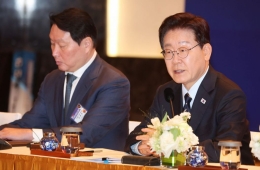
Yoonchul Koo, Deputy Prime Minister for Economic Affairs and Minister of Economy and Finance, announced these measures as part of the "Response Plan for Special Management Items Related to Livelihood Prices" at the "Livelihood Price Special Management Ministerial Task Force (TF)" meeting held at the Seoul Government Complex on the 23rd.
From May 1 to June 30, the government will increase the fuel tax reduction on LPG butane from the current 10% to 25%. As a result, the price of butane is expected to decrease by about 51 won per liter, with an additional reduction of approximately 31 won compared to the current level. Considering that LPG butane is commonly used as fuel for small trucks and other essential transport vehicles, the focus is on reducing burdens for low-income households. Despite the rising trend in spot natural gas prices, the government will continue to freeze residential gas rates to lessen the financial burden on ordinary people.
In the food sector, large-scale discount support will be implemented to stabilize the prices of agricultural, livestock, and fishery products. The government plans to offer a total of 32 billion won in discount support from this month through June, over a three-month period, to help reduce perceived consumer prices. The support will be focused particularly on fruits and livestock products, which are prone to high price volatility, and for items facing unstable supply, tariff quotas and diversification of import sources will be introduced in parallel.

On the 12th, when the government’s temporary 20% fuel tax reduction for six months began, a gas station in downtown Seoul was quiet. According to government authorities, from this day forward, the fuel tax levied on gasoline has been reduced from 820 won per liter to 656 won, diesel from 582 won to 466 won, and LPG butane from 204 won to 164 won. It is expected to take about one to two weeks for the fuel tax cut to be reflected in consumer prices. Photo by Mun Honam munonam@
View original imageTo address the instability in egg supply, the government will promote the import of fresh eggs from the United States and Thailand, while expanding the supply base for chicken by introducing hatching eggs from Spain and Belgium in preparation for peak demand seasons. For rice, the government plans to flexibly supply an additional 50,000 tons depending on market conditions to curb sharp price increases.
In the processed food sector, measures will be taken to ease input cost pressures. The government will apply tariff quotas to 22 types of food ingredients and encourage regulatory easing and the use of alternative materials to cope with packaging material supply disruptions. In the service sector, measures to reduce the burdens of education, communication, and housing costs will continue.
For excessive tuition fees charged by private academies, the government will implement a system to recover unfair gains and impose administrative fines, while greatly increasing reporting rewards. For telecommunications, the government is pursuing the inclusion of unlimited data options in all rate plans. The obligation for external accounting audits will be further expanded to ensure transparency in the management fees of residential buildings.
To alleviate the burden of airfares, the government will temporarily defer financial improvement measures for airlines and implement indirect support measures, such as reducing airport facility usage fees. The aim is to reduce airlines' cost structures and ease upward pressure on consumer fares.
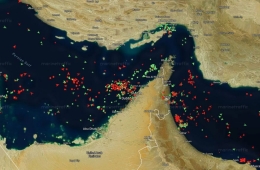
The government is also strengthening its response to raw material supply issues caused by instability in the Middle East. Starting at the end of this month, a total of 2.1 million tons of naphtha will be sequentially imported from Saudi Arabia, Oman, and other countries to stabilize the supply of petrochemical feedstocks. For automotive urea, the government will preemptively release public reserve stocks and promote a support program to compensate for differences in import prices.
In the construction materials sector, nationwide special on-site inspections will be intensified to address supply instability. The government will maintain a constant communication system between construction sites and material industries and share supply and demand information through weekly briefings. If market-disrupting activities such as hoarding or price manipulation are detected, immediate action will be taken in cooperation with the Fair Trade Commission and other relevant agencies.
Along with short-term responses, institutional improvements are also being pursued. To resolve supply disruptions caused by material costs not being reflected in construction expenses, the government will accelerate the adjustment of unit prices and devise additional measures to stabilize raw material prices.
Hot Picks Today
 Chilling Timing "Did They Know Again?"... $640 ...
- Trump: "Iran in a Crazy Situation... Orders to Fire on Mine-Laying Vessels in th...
- "If You Have This at Home, Remove It Immediately"... 'This Item' Is as Harmful a...
- "Why Are They Doing This?" Bizarre 'Streetlight Challenge' Involving Leg-Wrappin...
- Foreign Vessels Once Swept Up the Seas Every Season... Now Face Fines of Up to 1...
In the mid- to long-term, the focus will be on improving supply chain structures. The government will expand research and development of alternative technologies for construction material feedstocks and consider introducing a system for specialized management of construction costs and material supply. Through these efforts, the aim is to reduce dependence on specific raw materials, diversify supply chains, and strengthen resilience against external shocks.
© The Asia Business Daily(www.asiae.co.kr). All rights reserved.