Will the OPCON Transfer Timeline Align with the Current Administration's Term? [Yang Nakgyu's Defence Club]
Brunson, Commander of US Forces Korea: "First Quarter of 2029"
Final Decision Could Fall to Next US Administration Depending on Trump's Stance
The timeline for the transfer of wartime operational control (OPCON) between South Korea and the United States is being aligned with the term of the Lee Jaemyung administration. This comes after General Xavier Brunson, Commander of United States Forces Korea, officially announced that the necessary conditions would be met by the first quarter of 2029. However, observers note that the timing and actual implementation of the transfer could be affected by the political situation in the United States, as it coincides with a potential change in U.S. administration.

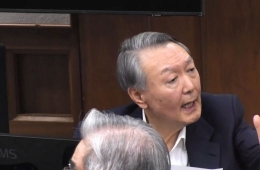
On April 22 (local time), General Brunson stated at a House Armed Services Committee hearing, "We have submitted a roadmap to the Department of Defense to achieve the required conditions before the second quarter of fiscal year 2029 (the first quarter of 2029 in South Korea)." This schedule aligns with the South Korean government's aim to complete the transfer of OPCON within President Lee's term in office.
Operational control refers to the authority to command designated units within a specific time and space for certain operations. Currently, peacetime OPCON is exercised by the Chairman of the South Korean Joint Chiefs of Staff (a four-star general), while wartime OPCON is held by the Commander of the ROK-US Combined Forces Command, a four-star U.S. general. If the transfer of wartime OPCON takes place, a four-star South Korean general will exercise operational control even in wartime.
The Target Date Set by the U.S. Comes After the U.S. Presidential Election
There are several variables to consider in meeting the conditions for the transfer of wartime OPCON by the target date. One significant factor is that the timing presented by General Brunson extends beyond the term of U.S. President Donald Trump (ending January 20, 2029). Depending on how actively the Trump administration pursues the OPCON transfer issue during its tenure, the timeline could be advanced or delayed.
In particular, as the target date is set for the first quarter of 2029 (January to March), there are projections that the actual achievement of conditions may occur after President Trump's term concludes. In that case, the final decision on the transfer would fall to the next U.S. president. Furthermore, if the security policy stance of the incoming U.S. administration changes depending on the results of the U.S. presidential election in November 2028, the OPCON transfer schedule could also be affected.
Brunson Emphasizes 'Meeting Conditions' Over 'Political Timelines'
The conditions for the transfer of OPCON are also crucial. General Brunson stated at the Senate Armed Services Committee the previous day, regarding OPCON authority, "Political expediency must not take precedence over meeting the conditions." This reaffirms the principle that the OPCON transfer should be determined based on South Korea's military readiness and fulfillment of conditions, rather than political schedules.
Accordingly, there are indications that the United States could apply stricter standards to the conditions for the transfer of OPCON going forward. In 2014, South Korea and the United States agreed on three main conditions for the OPCON transfer: ▲ the military capabilities required to lead the combined defense; ▲ comprehensive allied capability to respond to North Korea's nuclear and missile threats; and ▲ a security environment on the Korean Peninsula and in the region conducive to a stable transfer of OPCON.
The assessment and verification process for the transfer of OPCON is conducted in three stages: ▲ Initial Operational Capability (IOC), ▲ Full Operational Capability (FOC), and ▲ Full Mission Capability (FMC). Currently, the FOC assessment has been completed and the verification process is underway. Once this process is finished, South Korea and the United States will set a target year for the OPCON transfer, conduct the final FMC stage, and determine a more concrete date for the transfer.
Severe Shortage in Our Military's Ammunition Stockpiles
Some point out that South Korea's ammunition stockpiles remain woefully insufficient for the transfer of OPCON. According to the "Status of Wartime Ammunition for OPCON Transfer," South Korea and the United States jointly selected types of substitute munitions last year. Currently, the U.S. Forces Korea's Multiple Launch Rocket System (MLRS) should be substituted with the Cheonmu guided rocket, and the Army Tactical Missile System (ATACMS) should be replaced with the Hyunmoo-II.
However, the actual stockpiles in the South Korean military are lacking. The Cheonmu guided rocket stock is at only 73%, the FA SCAM (artillery-delivered scatterable mines) at 74%, and 155mm high-explosive shells at 81%. Securing key military assets necessary for the OPCON transfer also remains inadequate. Out of 20 core military capabilities, four are still being prepared for deployment, and out of six nuclear and weapons of mass destruction (WMD) response assets, three are still in the process of being operationalized. The military's goal for full deployment of these assets is 2032.
However, this only sets a target date for meeting the conditions for the OPCON transfer; the actual transfer will ultimately depend on whether the conditions are fulfilled and on the final decision by the leaders of South Korea and the United States, who hold supreme command authority.
Hot Picks Today
 The Quoted 800,000 Won, the Bill Was 5 Million....
- "How Do Six People Sleep in a 44㎡ Apartment?" Subscription Point System Controv...
- They Say They'd Rather Go to Japan Than Travel Domestically... But a 'Surprising...
- Came to Shop for Clothes, Ended Up Singing and Getting an Eye Exam... Inside Mus...
- "Never Hike Alone as a Woman" "Even Two Are at Risk"... Growing Fear of Crime on...
It is also being discussed that the target year for the joint OPCON transfer may be presented at the 58th ROK-U.S. Security Consultative Meeting (SCM) scheduled to be held in Washington, D.C., this October. According to sources in the South Korean government, 2028 is likely to be proposed as the target year. However, as General Brunson stated the "first quarter of 2029" as the goal for meeting the conditions, how the two sides will coordinate the timing is expected to be a key issue in future discussions.
© The Asia Business Daily(www.asiae.co.kr). All rights reserved.

![The 'Epic' 1,500 Trillion Won Bill... In the End, the Poor Pay the Price [Data Pick]](https://cwcontent.asiae.co.kr/asiaresize/307/2026042310001637425_1776906017.jpg)