"AI to Review Investments Instead of Humans"... Bigbang Angels to Begin Beta Testing Next Month [VC Now]
Interview with Bigbang Angels CEO Byungseon Hwang
"AI Associate Will Handle Unwanted Tasks"
Emphasizing Support for 10,000 Startups, Not Just One Unicorn
Cross-border accelerator Bigbang Angels is set to begin beta testing of its artificial intelligence (AI) associate, which is currently undergoing in-house alpha testing, as early as next month. During a recent meeting at the Gangnam Startup Hub Center in Yeoksam-dong, Gangnam-gu, Seoul, Hwang Byungseon, CEO of Bigbang Angels, shared, "Every company has a playbook or work manual, and the challenge lies in teaching this to AI." He continued, "Our goal is to enable individuals to perform their work with the support of the AI associate, which will analyze their activities and semi-automatically organize work manuals."

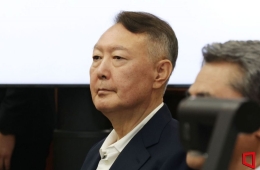
Hwang Byungseon, CEO of Big Bang Angels, is being interviewed by The Asia Business Daily. Photo by Dongjoo Yoon
View original imageDreaming of Change in the VC Industry with AI Associates
CEO Hwang previously worked as a software engineer at Samsung Electronics, a consultant at LG CNS, a mobile service platform director at LG Electronics, and an adjunct professor at the Korea Advanced Institute of Science and Technology (KAIST). Alongside his impressive corporate background, he also experienced a painful entrepreneurial failure that led him to personal bankruptcy proceedings. In 2012, while at KAIST, what began as business consulting as a hobby soon became his profession. Hwang said with a smile, "Having gone through the failure of six companies, I thought the advice of someone with experience would be valuable, which led me to enter the investment industry."
In 2012, CEO Hwang started investing, believing that helping entrepreneurs without focusing on profit was meaningful. At a time when even tax authorities were unfamiliar with AC funds, he established one and invested in over 10 companies. The last company he invested in at the time, by luck, was Lezhin Comics. Hwang explained his investment philosophy, saying, "There are so many unpredictable variables that it's impossible to know which company will succeed. However, you must have faith in the direction."
Currently, the direction Hwang believes in is IT, especially AI. He said, "Perhaps because I come from a software background, I believe software will change the world. I'm constantly thinking about how AI agent technology can change things and which industries it can transform first."

Hwang Byungseon, CEO of Bigbang Angels, is giving an interview to The Asia Business Daily. Photo by Yoon Dongju
View original imageThe AI associate being developed in-house is also aimed at creating change in the industry. The AI associate, being developed by a portfolio company, is currently in the alpha testing phase and will enter beta testing as early as May. Hwang remarked, "We've been talking about AI associates since last year, but you can think of them as agents that take care of the tasks that people in our industry—or any knowledge-based industry—don't want to do. However, we won't limit these unwanted tasks to just one specific area."
To demonstrate, Hwang opened his email inbox on his mobile phone. When emails arrive in the inbox managed by the AI, the AI automatically suggests and classifies projects. Users can communicate with the AI associate within the inbox to ask questions such as "What is the content?" or "What are the attachments?" Within the same window, they can also chat directly with colleagues about the related work. In this way, work is organically connected within a single email space.
The AI associate automatically learns work processes and even creates a playbook. Hwang explained, "Anyone in the company can create know-how on how to work. As employees perform their tasks, their experiences are accumulated by the AI. This enables the company to reduce the costs associated with handing over tasks or training successors." Hwang also has plans to turn the AI associate into a platform and grow it into a venture studio.
"ACs Should Aim for 10,000 One-Person Companies, Not Just One Unicorn"
Hwang argued that for the AC industry to be sustainable, ACs should focus not only on unicorns (companies valued at over 1 trillion won), but also on small businesses that can operate steadily over time. He said, "ACs invest small amounts at an early stage, so even if the company’s value rises significantly, the performance fees are not large. Given how unlikely it is for unicorns to emerge, I question whether this should really be the model that ACs aspire to." He added, "If you compare the probability of a unicorn emerging out of 10,000 startups to the probability of 10,000 one-person startups surviving, the latter is much higher."

Hwang Byungseon, CEO of Big Bang Angels, is being interviewed by The Asia Business Daily. Photo by Yoon Dongju.
View original imageHe also emphasized that the government should support a diverse range of startups, not just unicorns. Hwang stated, "Support for youth entrepreneurship shouldn't focus solely on the expectation of unicorn companies. Balanced support across various fields is necessary." He further explained, "Even if a small business doesn’t grow to 10 billion won in sales, building a company capable of supporting its employees is not a bad thing. Simply put, which is better: having 10,000 companies generating 3 billion won in sales each, or one company generating 1 trillion won in sales?"
As a cross-border accelerator, Bigbang Angels is planning to help Korean startups expand globally. However, its plan hit a snag after the outbreak of the Middle East war, just before finalizing a partnership agreement with Hub71, a UAE state-owned accelerator. Hwang explained, "The contract would have given Bigbang Angels the right to recommend Korean companies selected by us to join Hub71’s incubation program—a kind of Korean version of TIPS. If Korean startups enter the local market, they can secure investment."
Hwang added, "If it takes six months just to open a bank account when entering the Middle East, having Hub71’s parent company as a shareholder—which is similar to our National Pension Service—means companies can also obtain long-term visas, making life much easier. However, for this to become a reality, we need to see signs that the war is coming to an end."
Hot Picks Today
 The Quoted 800,000 Won, the Bill Was 5 Million....
- "Suspicions Confirmed: 130,000 Syringes Hoarded?32 Companies Caught Hoarding Syr...
- They Say They'd Rather Go to Japan Than Travel Domestically... But a 'Surprising...
- [Exclusive] "Reported Sexual Assault But No Charges?"... Retaliatory 'Kidnapping...
- "Never Hike Alone as a Woman" "Even Two Are at Risk"... Growing Fear of Crime on...
Bigbang Angels, a subsidiary of Platform Labs, began in 2012 as an angel investment club. It has invested in over 130 companies and currently supports more than 200 portfolio companies. Notable portfolio companies include ‘Permit’, a smart farm company, and ‘Promedius’, an AI firm specializing in aging and metabolic diseases.
© The Asia Business Daily(www.asiae.co.kr). All rights reserved.

![The 'Epic' 1,500 Trillion Won Bill... In the End, the Poor Pay the Price [Data Pick]](https://cwcontent.asiae.co.kr/asiaresize/307/2026042310001637425_1776906017.jpg)