[Insight & Opinion] Questioning the Rationale for the Existence of the Preferred Stock System
Governance Reform to Match Quantitative Growth
Complex Capital Structures Undermine Efficiency
"One Share, One Vote" Is Key to Financial Advancement
![[Insight & Opinion] Questioning the Rationale for the Existence of the Preferred Stock System](http://www.asiae.co.kr/news/img_view.htm?img=2024040207272925423_1772064485.jpg)
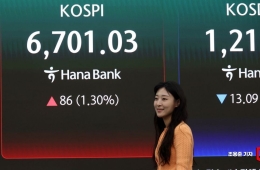
The Korean stock market has made history. On April 27, the KOSPI index, buoyed by an explosive semiconductor boom, surpassed the 6,600 mark during trading hours. This is the first time ever that the KOSPI has crossed the 6,600 threshold.
The market remains heated with expectations for further gains. However, it is difficult to attribute this rally solely to improved performance in a specific sector. The unprecedented tightening of real estate regulations has driven a surge of idle capital into the stock market, and the government's revision of the Commercial Act and major companies' share buybacks and cancellations—progressive shareholder return policies—have fundamentally changed the market's underlying strength.
Amid this backdrop, there is a critical issue that must be addressed: the preferred stock system. As the market matures and corporate governance reform becomes a key topic, it is time to reconsider whether we should leave preferred stocks—relics of the past—untouched. Preferred stocks differ clearly from common stocks. While common stocks grant shareholders the right to participate in management through voting rights at general meetings, preferred stocks offer greater or priority dividends in exchange for lacking voting rights. With increasing emphasis on the transparency of corporate governance, the need to reform preferred stocks has become more pronounced. The specific reasons can be summarized into four main points.
First, preferred stocks undermine the democratic capitalist principle of "one share, one vote." The owners of a company are its shareholders, and their rights should be proportional to the number of shares they hold. However, preferred stocks without voting rights strip shareholders of their ability to monitor management for the sake of fundraising convenience—a distorted practice. In an era where shareholder democracy is paramount, the existence of non-voting shares has lost its legitimacy. Second, preferred stocks exacerbate the opacity of corporate governance. In the past, they were often misused as a means for controlling shareholders to raise capital while reducing the cost of defending their control. This practice is a product of the desire to dominate a company with a minimal stake, and it is a key reason why foreign investors perceive Korean corporate governance as complex and opaque.
Third, the complexity of capital structures makes them inefficient. For example, when a company like Hyundai Motor has multiple types of preferred stock, it complicates corporate valuation, creates information asymmetry, increases management costs, and ultimately undermines capital market efficiency. Fourth, preferred stocks are weak in protecting minority shareholders. While they are supposed to guarantee dividend priority, if a company decides not to pay dividends, preferred shareholders have no recourse. Without voting rights, they cannot hold management accountable or demand increased dividends, risking their status as "half-shareholders."
During the era of rapid growth, when preferred stocks were introduced, companies desperately needed large sums for facility investment but were wary of diluting the controlling shareholder’s power. At the time, raising capital was the top priority, so preferred stocks were a useful, if imperfect, solution. But times have changed. Leading domestic companies now hold vast cash reserves, and capital efficiency and governance transparency have become more important than capital raising. Even from a global standards perspective, the gap between the prices of common and preferred stocks in the domestic market varies widely by stock, and even market participants cannot clearly explain the causes of these discrepancies.
This uncertainty suggests there is still much room for improvement in the governance of our stock market. The prevailing standard in global financial markets is moving toward a single-class share structure. In more advanced markets, shares with separated voting rights are gradually disappearing. The new chapter in KOSPI’s history symbolizes the quantitative growth of our capital market. Now, we must pursue qualitative growth to match. From the perspective of improving corporate governance, it is time for a decisive policy move to either reform the opaque and complex preferred stock system or encourage conversion to common shares. This is a crucial task for Korea to become a true financial powerhouse that meets genuine global standards.
Hot Picks Today
 "Driven by Samsung and SK hynix: Korean Stock M...
- "Pay for the Postpartum Care Center with My Card"... Grandparents Open Their Wal...
- "Forged IDs Easily Bypass Convenience Stores, Bars, and Motels... Delinquency En...
- "Skipping Diamond Rings... Gen Z in the US Opts for Finger Tattoos"
- Back After 3 Years and 5 Months with a 'Shark Nose Surgery'... Hyundai Unveils T...
Wonkyung Cho, Professor of Economics at Sejong University
© The Asia Business Daily(www.asiae.co.kr). All rights reserved.