[Law & Story] The Fundamental Question Raised by the Lawyer President: "The Essence of Punishment"
President Lee Orders Review of 10,000 Punitive Provisions
Success of Economic Penalty Reform Lies in the Details
Expectations for a Judicial Foundation Favorable to Business

"What is the purpose of punishment?"
This is perhaps one of the oldest topics discussed in the field of criminal law.
The starting point was 'retributivism,' symbolized by the Lex Talionis—"an eye for an eye, a tooth for a tooth." The aim of punishment was considered to be retribution against criminals who disrupted the peace of the state or society by inflicting on the perpetrator the same harm suffered by the victim, thereby achieving justice.
With the advent of the Enlightenment in the 18th century, the 'general prevention theory' emerged, which held that the purpose of punishment lay not in retaliation against offenders but in defending society by preventing crimes among the general public. The so-called deterrence function—instilling in the undefined majority of potential criminals the awareness that the pain of punishment outweighs the pleasure of crime—was viewed as the purpose of punishment. Then, since the late 19th century, the 'special prevention theory' appeared, asserting that the aim of punishment is to rehabilitate offenders and reintegrate them into society to prevent recidivism.
Currently, the mainstream global view is that the purpose of punishment is a combination of retribution and prevention. Furthermore, there is active discourse on 'restorative justice,' which seeks to heal the victim's pain and restore relationships between the perpetrator and the community.
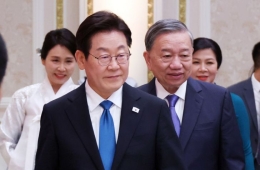
On April 14, President Lee Jaemyung presided over a cabinet meeting and emergency economic review session at the Blue House and ordered a thorough and careful review of more than 10,000 criminal penalty provisions.
President Lee stated, "When reviewing an article, experts or trained individuals must be tasked to make proper comparative assessments; it should not be done arbitrarily," and added, "It feels reckless otherwise."
During the meeting, ministers responsible for the government's ongoing "Rationalization Plan for Economic Criminal Penalties" since last year gave status reports. President Lee's remarks pointed out the tendency to mechanically amend penalty provisions by simply converting imprisonment to fines or fines to administrative penalties, under the mistaken notion that this alone constitutes 'rationalization of punishment.'
President Lee emphasized, "One must have a fundamental understanding of sanctions. You cannot have a few front-line officials gather and decide, 'Since it's one year, let's make it 10 million won.' There are 10,000 such provisions, so it is not something to be done carelessly."
He continued, "We must create a review committee or similar body to scrutinize each and every provision in detail. For each article, we need to examine the reason it was enacted, the reason for the penalty, the rationale behind the sentencing, the aspects of general prevention, special prevention, retribution, and balance with other provisions. All these must be considered carefully, and we must not rush just because there are many provisions."
As a former legal professional, President Lee has clearly devoted more thought to this matter and shown a stronger determination to rectify it than any other cabinet member at the meeting, including the Minister of Justice, the Minister of the Interior and Safety, and the Minister of Economy and Finance.
That day, President Lee pointed out the excessive number of penalty provisions in Korea, criticizing the situation as creating an unpredictable society where the proliferation of ex-convicts is inevitable.
President Lee noted, "Germany has penalty provisions in 250 statutes, while we have 1,060; when counting individual rules, there are 11,165 penalty provisions. That is five times more than Germany. Investigating and prosecuting for a 3 million won fine, which has no deterrent effect, is a social waste."
Meanwhile, President Lee highlighted a case from the Ministry of Economy and Finance where a 300 million won fine was reduced to 150 million won, and remarked, "For financial crimes, since the proceeds from crime are significant, fines should be much higher than for ordinary crimes." He made it clear that the reform aims not simply to reduce penalties, but to impose appropriate and proportionate sanctions corresponding to the offense.
After fulfilling his pledge for the "KOSPI 5000 era" and calling for reform of the crime of breach of trust, President Lee has once again introduced a significant issue that could help advance Korean society to the next level.
Hot Picks Today
 "Over 20 Times More Than Overseas": 104.5 Milli...
- “Nothing Left to Protect” as Japan Drops Its “Peace State” Banner... Lifts B...
- After India Visit, President Lee Arrives in Vietnam... Nuclear Power and Supply ...
- "Even Luxury Cars Drive Off Without Paying"... UK Sees Surge in Fuel Theft at Ga...
- "Please Launch It in Korea!" After All the Hype... This Coffee Finally Arrives i...
It is hoped that President Lee's directive will provide an opportunity to establish appropriate penalties corresponding to crimes, thereby making society safer, ensuring that criminals cannot profit from their offenses, and creating an environment where businesses can operate freely without fear of punishment.
© The Asia Business Daily(www.asiae.co.kr). All rights reserved.