'Capital Gains Tax Exemption for Overseas Investors Returning by May'... Three Laws for Exchange Rate Stability Passed at Cabinet Meeting
31 Bills and Other Legislative Measures Reviewed and Approved at Cabinet Meeting
"Ban on Hoarding of Petrochemical Products" Also Passed
One-Month Toll Exemption for Route Buses and Others on Expressways
Individual investors who have invested in overseas stock markets will be eligible for up to a 100% deduction on capital gains tax if they return to the domestic stock market by May.
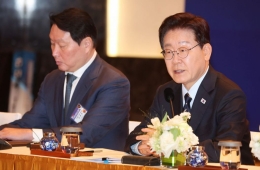
On April 14, at a Cabinet meeting held at the Blue House and presided over by President Lee Jae-myung, the government reviewed and approved the so-called "Three Foreign Exchange Stabilization Bills" (including revisions to the Restriction of Special Taxation Act and the Special Taxation Act for Rural Development), along with 31 bills to be promulgated, 12 presidential decrees, and 5 general agenda items.

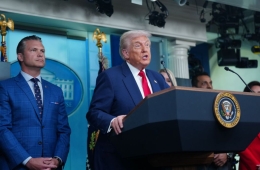
President Lee Jae-myung is speaking at the Cabinet meeting and Emergency Economic Inspection Meeting held at the Blue House on April 14, 2026. Photo by Yonhap News
View original imageThe core of the Three Foreign Exchange Stabilization Bills is tax incentives aimed at encouraging the return of investment funds that have flowed into overseas stock markets back to the domestic market. Individual investors who sell overseas stocks held before December 23 of last year and transfer the proceeds to a "Return to Domestic Market Account" (RIA), then invest in the domestic stock market for one year, will be eligible for a capital gains tax deduction of up to 100%.
Additionally, a new tax exemption has been introduced for those investing in "currency-hedged derivatives" designed to hedge foreign exchange rate fluctuation risks this year, thereby alleviating the tax burden. The percentage of "non-inclusion of gross income"—the portion of dividend income from overseas subsidiaries received by domestic parent companies that is excluded from taxable income—will be temporarily raised from 95% to 100%.
Furthermore, the government approved the "Emergency Adjustment Measures for the Supply of Petrochemical Products," which explicitly prohibits hoarding of raw materials for petrochemical products. This measure prohibits hoarding and sets forth regulations related to emergency supply adjustments, with the aim of stabilizing the petrochemical product supply chain and establishing fair trade practices.
The Cabinet also passed an agenda item granting a one-month temporary exemption from fiscal expressway tolls, operated by Korea Expressway Corporation and others, for route buses and late-night cargo trucks. This measure is intended to mitigate the impact of high oil prices on the transportation and logistics industries.
Hot Picks Today
 KOSPI Hits All-Time High, but "Why Is My Accoun...
- "If You Have This at Home, Remove It Immediately"... 'This Item' Is as Harmful a...
- Trump: "Iran in a Crazy Situation... Orders to Fire on Mine-Laying Vessels in th...
- "I Want to Be as Beautiful as Korean Women": Foreigners Flock to Korea as Number...
- "I Spent Money in a Truly Meaningful Way"... How an SK hynix Employee Donated 10...
Meanwhile, with the proposal and public announcement of the constitutional amendment, the government decided to allocate 19.57 billion won from the reserve fund for personnel expenses and operating costs related to preparations for managing the national referendum on the constitutional amendment.
© The Asia Business Daily(www.asiae.co.kr). All rights reserved.