Differentiated Drug Price Compensation Based on R&D Investment Ratio... "New 'Quasi-Innovative' Category to Boost Pharmaceutical Motivation"
Strengthening "Selective Price Cuts and Incentives" Over Mass Low-Cost Production
Lowering Prices from the 13th Generic to Prevent Oversupply
Annual Health Insurance Fund Savings of KRW 2.4 Trillion Expected by 2036
The core of the "Drug Pricing System Improvement Plan" announced by the government on March 26 is not simply about post-management measures such as lowering the prices of generics (copy drugs), but rather focuses on creating incentives for pharmaceutical companies to invest in new drug development and the localization of raw materials.

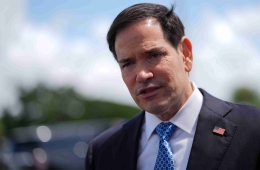
Lee Hyunhoon, Second Vice Minister of the Ministry of Health and Welfare, is speaking at the "6th Health Insurance Policy Deliberation Committee Meeting for 2026" held at the International Electronics Center in Seocho-gu, Seoul on the 26th. Ministry of Health and Welfare.
View original imageThere have been ongoing concerns that, compared to major overseas countries, the prices of generics in Korea are high, which in turn increases the financial burden of medications for the public. In particular, a significant number of pharmaceutical companies have become complacent with generic sales and tend to rely on rebates to doctors and hospitals. This, in turn, has been seen as a cause of financial leakage in the National Health Insurance Fund—a perspective that is reflected in the government’s latest measures.
Accordingly, the revised drug pricing system aims to create a structure where the prices at which generics are sold are differentiated based on how much of a company’s generic sales revenue is reinvested into new drug research and development (R&D). This is intended to directly link R&D spending to corporate profitability, thereby encouraging new drug development and reducing the financial burden on the health insurance system.
'Beyond "Innovative" to "Quasi-Innovative"... R&D Ratio Equals Drug Price Competitiveness'
To this end, the government has introduced a new category called "quasi-innovative pharmaceutical companies" in addition to the existing "innovative pharmaceutical companies."
For example, if Company A, which has a high R&D-to-sales ratio, lists a new generic, it will be guaranteed a price of 60% of the original product, higher than the 53.55% offered to general companies. Meanwhile, a mid-sized Company B, which may not meet the standards for innovative companies but is actively investing in facilities and R&D, can be designated as "quasi-innovative" and receive a preferential rate of around 50%.
This sends a strong message from the government to companies: "Reinvest profits from simple generic sales into new drug development." Previously, companies were guaranteed similar drug prices regardless of whether they developed new drugs or only sold generics, but going forward, the proportion of R&D investment will be directly tied to company profitability.
Price Reductions from the 13th Generic Onward to Prevent Market Saturation
Measures to prevent the chronic issue of "generic market saturation" have also been strengthened. First, the price-setting rates for generics and off-patent drugs will be adjusted from the current 53.55% to 45%.
For drugs already listed, prices will be adjusted based on the time of listing (using 2012 as the reference), and in consideration of industry impact, the adjustment will be phased in over about ten years. However, innovative and quasi-innovative pharmaceutical companies will be given preferential price-setting rates of 49% and 47%, respectively, along with special grace periods of four years and three years.
To prevent dozens of generics from being released for a single original drug, the "staggered price reduction" will now apply from the 13th generic onward, much earlier than before. In the previous system, the same price was guaranteed for up to the 20th generic product entering the market with the same active ingredient. Now, starting from the 13th generic, the price must be set lower than previously listed drugs, meaning that latecomer pharmaceutical companies will have less incentive to enter the market.
The government expects that, by dividing the price reductions into two groups based on listing dates, annual health insurance fund savings will reach KRW 1.1 trillion by the end of the first stage and KRW 1.3 trillion by the second stage, totaling KRW 2.4 trillion after 11 years.

More Than 10 Years of Price Preferences for Use of Domestic Ingredients
Bold incentives have also been introduced to address the reality that the localization rate for pharmaceutical raw materials in Korea remains at around 20%.
Going forward, if a company uses or produces domestic raw materials for active pharmaceutical ingredients, the price of such drugs can be set as high as 68% of the original price, and this benefit will be guaranteed for more than ten years. For instance, if a hypertension drug previously relied on imported ingredients but is replaced with domestic raw materials, the pharmaceutical company can secure stable profits and offset increased costs through price incentives.
Given the growing uncertainties such as the U.S. drug tariff policy and the trade environment crisis stemming from the Middle East, this has been interpreted as a strategic choice for health security, designed to prevent a supply crisis in the event of a global pharmaceutical supply chain disruption.
'Flexible Drug Price Contract System' for Post-Management... Introduction of RWE
The "Flexible Drug Price Contract System," designed to facilitate market entry for new drugs, has been further detailed compared to the government’s initial plans announced in November last year. Under this scheme, the official price is maintained at a high level, but actual health insurance spending is managed through rebates, encouraging global pharmaceutical companies to prioritize launching new drugs in the Korean market.
In addition, a post-evaluation system utilizing real-world evidence (RWE) from actual clinical data will be established so that a drug can be quickly listed, but if its effectiveness is not proven afterward, the price may be adjusted or the payment may be clawed back, fully implementing a "list first, evaluate later" system.
Existing post-management systems will be reorganized to enhance predictability in drug price adjustments and to ensure consistency with the selective listing principle. Expansion of indications, relaxation of administration conditions, and increases in usage scope will continue to be managed on an as-needed basis, but "volume-price linkage" will align the timing of price adjustments and will be regularized twice a year.

The reassessment of reimbursement appropriateness will now also include drugs listed under the selective listing system, focusing on those where a re-examination of clinical usefulness is deemed necessary—in line with the selective listing principle.
Furthermore, the government plans to establish a system for the regular and comprehensive assessment and adjustment of the number of items, market structure, and major country drug prices by ingredient, in order to enhance the predictability of drug prices while managing drug expenditure more stably.
Hot Picks Today
 "Only Two Per Person" Garbage Bag Crisis Was Just Yesterday... Japan Also Faces Shortage Anxiety
- "Samsung Electronics Employee with 100 Million Won Salary Receiving 600 Million Won Bonus... Estimated Tax Revealed"
- Lived as Family for Over 30 Years... Daughter-in-Law Cast Aside After Husband's Death
- 'Will Demand Finally Decline Due to High Prices?'... "I'll Just Enjoy Nearby Trips" as Japan and China See a Surge
- "Wore It Once, Then This? White Spots All Over 4.15 Million Won Prada Jacket... 'Full Refund Ordered'"
Kwon Byungki, Director of Health Insurance Policy at the Ministry of Health and Welfare, said, "Since the 22nd Health Insurance Policy Deliberation Committee in November last year, we have been listening to a wide range of opinions from National Assembly forums, pharmaceutical associations, patient groups, labor organizations, policy symposiums, and expert discussions, and have refined our improvement measures to finalize this plan." He added, "From 2036, when the drug price reductions are completed, we expect annual health insurance fund savings to reach around KRW 2.4 trillion."
© The Asia Business Daily(www.asiae.co.kr). All rights reserved.