"Removing Insolvent Companies and Introducing Promotion System... KOSDAQ Needs a 'Major Governance Overhaul'"
Market Cap Up 84-Fold While Index Rises Only 16%
Time to End Exchange's Monopoly
Establishing Independent Operations and Competitive Systems
As the KOSDAQ market marks its 30th anniversary, efforts are underway to redesign exchange governance so that it can shed its reputation as the "second division of KOSPI" and be reborn as a growth platform for innovative companies. As part of this initiative, voices in the National Assembly have called for strengthening delisting requirements to remove insolvent companies and introducing a three-tier league system to segment the market and restore its dynamism.

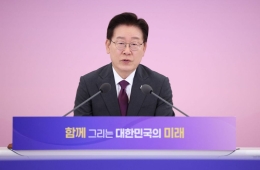
Participants are taking a commemorative photo at the 'Major Shift in Exchange Governance for Productive Finance Discussion' held at the National Assembly on the 26th.
View original imageOn the 26th, at the 'Major Shift in Exchange Governance for Productive Finance Discussion' held at the National Assembly, Taenyon Kim, a member of the Democratic Party of Korea, emphasized, "For KOSDAQ to once again function as a growth platform for innovative companies, the market structure and exchange governance must be fundamentally redesigned." He added, "It is necessary to establish an independent operating system and transform KOSDAQ into a market where innovative companies can be properly evaluated and grow." He further stated, "The exchange itself must also become a subject of competition and innovation," and noted, "With the emergence of alternative exchanges and changes in the environment, the existing single structure can no longer sustain market competitiveness."
Kwon Daeyoung, Vice Chairman of the Financial Services Commission, remarked, "This is a pivotal moment for qualitative change in Korean finance, with the exchange at the center." He continued, "We must critically assess whether we have sufficiently met the needs of investors and companies, and whether we have grown complacent in our monopoly structure, lacking in self-innovation."
There was an assessment that, despite KOSDAQ's quantitative growth over the past 30 years, it has failed to regain qualitative trust. Go Youngho, Director of the Capital Market Division at the Financial Services Commission, stated, "The KOSDAQ market has not fully restored market confidence." He pointed out, "Since its launch, market capitalization has increased 84-fold, but the index has risen by only 16% over 30 years." Jin Sunghoon, Head of the Research Policy Group at the KOSDAQ Association Policy Business Headquarters, commented, "Since the opening of the KOSDAQ market, a total of 105 companies have moved from KOSDAQ to KOSPI," adding, "The perception that remaining companies are in the second division has grown stronger, diminishing the market's appeal."
Experts proposed specific reform measures for KOSDAQ to evolve into an innovation platform similar to NASDAQ. Changrae Cho, Director at the Korea Venture Capital Association, suggested, "To improve the investor base toward institutional investors, there is a need to establish a 'KOSDAQ Activation Fund' totaling 30 trillion won over three years, with 10 trillion won each year." Huihwal Seong, Professor at the Graduate School of Law at Inha University, stated, "For KOSDAQ to be like NASDAQ, it is essential to create an ecosystem where global technology companies can be born and grow." He added, "Introducing a promotion and relegation segment system with three tiers—premium, standard, and management—will contribute to both retaining large companies and enhancing market dynamism."
The Korea Exchange has also announced forthcoming changes. Jiwoo Choi, Deputy Head of the KOSDAQ Market Division at Korea Exchange, stated, "We will introduce a segment system as a measure to vitalize the KOSDAQ market." He added, "We will streamline the disclosure system and diversify indices, including the introduction of an index for top representative companies, to expand the investment base of institutional investors."
Sohyun Kang, Head of Capital Markets at the Korea Capital Market Institute, explained, "The current KOSDAQ market faces the complex challenge of supporting both growth-oriented innovative companies and nurturing mid-sized, high-quality companies." She emphasized, "There is a need for a clear redefinition of these dual functions."
As measures to strengthen the competitive system between markets, Kang proposed the design of a clear system of responsibilities and authorities by function, enhancing operational autonomy through competition between markets, and ensuring regulatory consistency through unified supervisory frameworks. For strengthening management through the promotion and relegation system, she presented the need for a design that emphasizes linkage between markets and growth pathways to minimize stigmatization, ensures transparency in promotion and relegation criteria, and creates differential listing and maintenance requirements reflecting the characteristics of innovative companies.
Hot Picks Today
 At President Lee's Call to "Give Enough to Shock," Whistleblower Rewards Become a Real Lottery
- "If Both Spouses Work There, How Much Would They Make?" "They Earn More Than Me, and I'm a Doctor"... Envy Erupts Over Samsung Electronics' Bonus
- Lived as Family for Over 30 Years... Daughter-in-Law Cast Aside After Husband's Death
- "Going to Work Every Day Is Terrifying"... Starbucks Frontline Workers Vent Frustration Amid 'Tank Day' Backlash
- "Who Is Visiting Japan These Days?" The Once-Crowded Tourist Spots Empty Out... What's Happening?
Meanwhile, this discussion was hosted by Democratic Party lawmakers Taenyon Kim, Junhyeong Kang, Namgeun Kim, Seungwon Kim, Youngjin Kim, Hankyu Kim, Byungduk Min, Gihyung Oh, Dongsu Yoo, Kwanghee Lee, Taeho Jung, and Young Heo.
© The Asia Business Daily(www.asiae.co.kr). All rights reserved.