Foreign Affairs Committee Urges Government to Exercise Caution on Naval Deployment
Emergency Inquiry on the Middle East Crisis
On March 17, during an emergency inquiry regarding the Middle East situation, the National Assembly's Foreign Affairs and Unification Committee called on the government to handle requests for Korean military deployment with caution.

Foreign Minister Cho Hyun is responding to lawmakers' questions at the Foreign Affairs and Unification Committee plenary session held at the National Assembly on the 17th. Photo by Yonhap News.
View original imageAt the plenary session held in the morning, key issues related to the Middle East crisis were discussed, with Foreign Minister Cho Hyun and others in attendance.
Previously, on the night of March 16, Minister Cho held a phone conversation with Marco Rubio, the U.S. Secretary of State and White House National Security Advisor, to discuss "multinational cooperation to ensure safety in the Strait of Hormuz."
During the committee session, Minister Cho stated, "We discussed the importance of safety and freedom of navigation in the Strait of Hormuz, emphasizing that these issues align with the interests of multiple countries. We also talked about ways to cooperate and contribute."
According to the Ministry of Foreign Affairs, Secretary Rubio said, "In the long term, cooperation among various countries is more important than ever in securing safety in the Strait of Hormuz and stabilizing the global economy and international oil prices."
Minister Cho responded, "Peace in the Middle East and safe, free navigation in the Strait of Hormuz are extremely important for the security and economy of all countries, including Korea."
Although Secretary Rubio did not directly request the dispatch of a warship during this call—which was made at the request of the U.S.—it appears that the conversation served as an opportunity for the U.S. side to explain issues related to the possible deployment of naval vessels by Korea.
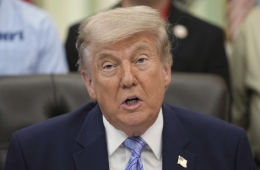
Kim Sangwook, a lawmaker from the Democratic Party of Korea, raised concerns about President Donald Trump's request for Korean troop deployment, stating, "Article 5, Paragraph 1 of the Constitution of the Republic of Korea stipulates that Korea shall endeavor to maintain international peace and denies aggressive war." He added, "A war between the U.S. and Iran could be viewed as an act of aggression, so if a wrong judgment is made, it could be deemed unconstitutional."
Regarding the Strait of Hormuz, he noted, "More than 70% of our crude oil imports pass through this area. If we become hostile toward Iran, even after this Middle East conflict ends, the Strait of Hormuz may no longer be freely accessible to us, which could deal a serious and permanent blow to our economy."
Hot Picks Today
 "Only Two Per Person" Garbage Bag Crisis Was Just Yesterday... Japan Also Faces Shortage Anxiety
- "Samsung Electronics Employee with 100 Million Won Salary Receiving 600 Million Won Bonus... Estimated Tax Revealed"
- Lived as Family for Over 30 Years... Daughter-in-Law Cast Aside After Husband's Death
- 'Will Demand Finally Decline Due to High Prices?'... "I'll Just Enjoy Nearby Trips" as Japan and China See a Surge
- "Wore It Once, Then This? White Spots All Over 4.15 Million Won Prada Jacket... 'Full Refund Ordered'"
In response, Minister Cho emphasized, "How we respond to safety issues and the demands of our allies is extremely important. All decisions will be made in accordance with the Constitution and the law." However, regarding the suggestion to utilize the United Nations, Minister Cho remarked, "Realistically, that seems somewhat out of reach."
© The Asia Business Daily(www.asiae.co.kr). All rights reserved.