[This Week's Column] KEPCO: Despite Disappointing Results, Expectations Focus on "Nuclear Power"
Share Price Rally Stalls on Earnings Miss
Securities Industry Focuses on Overseas Nuclear Potential
Domestic Electricity Tariff Policy Under Close Watch
Expectations in the securities market for Korea Electric Power Corporation (KEPCO) are intensifying. Although the company's share price, which had been on the rise, declined after last year's fourth-quarter results fell short of expectations, optimism surrounding potential overseas nuclear power plant orders by "Team Korea," centered around the United States, is seen as a key value driver.
Disappointing Performance and Dividend Results
KEPCO closed at 58,500 won on February 27, down 7.58% from the previous session. While the company's stock hit a 52-week high of 69,500 won on January 21, the announcement of last year's fourth-quarter results, which missed market expectations, triggered a wave of selling.
![[This Week's Column] KEPCO: Despite Disappointing Results, Expectations Focus on "Nuclear Power"](http://www.asiae.co.kr/news/img_view.htm?img=2026030309091758652_1772496557.jpg)
On a consolidated basis, KEPCO reported sales of 23.688 trillion won in the fourth quarter of last year, up 1% year-on-year, while operating profit fell 18% during the same period to 1.9834 trillion won. These figures were deemed to have fallen short of market expectations. Although revenue (23.9006 trillion won) was largely in line with forecasts, operating profit was significantly lower than the anticipated 3.4264 trillion won. This shortfall is attributed to one-off costs, such as losses from overseas businesses of subsidiaries.
The company also carries a heavy debt burden. On a consolidated basis, KEPCO's debt stands at approximately 206 trillion won, with borrowings around 130 trillion won. The company incurs daily interest expenses of 11.9 billion won from these borrowings. As a result, KEPCO plans to focus on restoring financial soundness through payment of interest on borrowings and principal repayment.
While last year's dividend payout ratio disappointed, there is growing sentiment that this year will be different. Last year, KEPCO announced a per-share dividend (DPS) of 1,540 won (a dividend yield of 3.2%, and a standalone payout ratio of 13.7%). Moon Kyungwon, a researcher at Meritz Securities, commented, "Even though standalone net profit exceeded our expectations, the payout ratio fell short of our 20% forecast and declined compared to 2024." However, he added, "We expect an increase in the payout ratio this year, as dividend-related indicators will be reflected in the management evaluation rating and the financial structure is further improving."
Spotlight on 'Nuclear Power'

Despite results that fell short of expectations, the securities industry continues to rate KEPCO's potential highly based on prospects in the nuclear power segment. There is anticipation that "Team Korea," composed of KEPCO and other public and private companies related to nuclear power, will lead the expansion of overseas nuclear markets, especially in the United States. The U.S. plans to increase its current nuclear generation capacity from 100 GW to 400 GW by 2050. This is a response to the surge in power demand resulting from the development of industries such as artificial intelligence (AI). U.S. Secretary of Commerce Howard Lutnick has also proposed Korean participation in "large-scale nuclear power plant construction in the U.S." as one of the Korea-U.S. tariff negotiation projects.
Sung Jonghwa, a researcher at LS Securities, stated, "In overseas markets, there are many projects with additional order potential in the medium to long term, such as the Dukovany Units 5 and 6 in the Czech Republic, Temelín Units 1 and 2 in the Czech Republic, BNPP Units 5 and 6 in the UAE, and Duwaihin Units 1 and 2 in Saudi Arabia. In the long term, KEPCO possesses strong potential for participating in the reconstruction of large-scale nuclear projects in the United States." He further added, "Since large-scale nuclear projects in the U.S. have been halted for a long time, undermining the industrial base, cooperation with Team Korea is essential."
Should KEPCO win an order for the U.S. AP1000 nuclear power plant, the project is estimated to be worth around 20 trillion won. Heo Minho, a researcher at Daishin Securities, explained, "If KEPCO (Korea Hydro & Nuclear Power) takes charge of 'reactor and turbine building construction plus auxiliary equipment EPC' for the AP1000, the contract amount for two reactors would be 18.8 trillion won. If the company is responsible for 'reactor building construction plus turbine building and auxiliary equipment EPC,' the total would be 23.1 trillion won. For a Korean-type nuclear plant, the expected order value is 26 trillion won."
In addition, the power generation mix is improving in a direction that increases the share of nuclear energy. As nuclear power, which has a lower generation cost, takes up a larger portion, KEPCO's operating margin could rise. This year, the commercial operation of Saeul Units 3 and 4 is expected to push the nuclear utilization rate up to 89%. The global drop in energy prices last year, resulting in lower fuel costs, is also a positive factor.
Closely Watching Electricity Rate Policy
![[This Week's Column] KEPCO: Despite Disappointing Results, Expectations Focus on "Nuclear Power"](http://www.asiae.co.kr/news/img_view.htm?img=2026030309091858653_1772496558.jpg)
This year's electricity rate policies are also expected to have a direct impact on KEPCO's profitability. Through a series of government rate hikes that raised the sales price per unit, KEPCO managed to return to operating profit in the third quarter of 2023 for the first time in ten quarters.
Views in the securities industry are divided regarding the impact of the "time-of-use rate system" to be introduced for industrial electricity rates. The government is reportedly considering a reform that would lower rates during daytime hours with high consumption and increase rates during the evening. Jeong Hyejeong, a researcher at KB Securities, commented, "The key factor for KEPCO's future performance is the direction of the electricity rate reform. If the reform is implemented, it could serve as a factor lowering electricity rates in the short to medium term."
On the other hand, Jo Jaewon, an analyst at Kiwoom Securities, noted, "The time-of-use rate reform is expected to somewhat ease the electricity bill burden for industrial customers, but for KEPCO, the reduced variation in power demand by time of day could lead to lower generation costs." Yoo Jaeseon, a researcher at Hana Securities, evaluated the reform as "a policy that could be interpreted as a measure to defend revenues as demand outflow becomes visible due to a sharp increase in industrial electricity rates."
Hot Picks Today
 The Quoted 800,000 Won, the Bill Was 5 Million....
- [Exclusive] Did Samchundang Pharmaceutical Disclose Only Favorable Information?....
- They Say They'd Rather Go to Japan Than Travel Domestically... But a 'Surprising...
- Tragedy in Luxury Apartment: Woman in Her 20s Found Dead, Suspect Identified
- "Never Hike Alone as a Woman" "Even Two Are at Risk"... Growing Fear of Crime on...
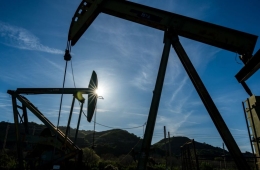
The aftermath of U.S. airstrikes in the Middle East also warrants attention. On March 2, the Ministry of Climate, Energy and Environment held an "Energy Situation Review Meeting" with KEPCO and others to assess the impact of Middle East tensions on domestic power supply and countermeasures. So far, projects being pursued by KEPCO and its generation subsidiaries in the Middle East have not been directly affected. However, if instability continues, such as Iran blocking the Strait of Hormuz, international oil prices could rise and become a negative factor. As fuel procurement costs increase, KEPCO's profits could also decrease.
© The Asia Business Daily(www.asiae.co.kr). All rights reserved.


![The 'Epic' 1,500 Trillion Won Bill... In the End, the Poor Pay the Price [Data Pick]](https://cwcontent.asiae.co.kr/asiaresize/307/2026042310001637425_1776906017.jpg)