Introduction of 'Pre-Planning Review' After Abolishing Pre-Feasibility Studies...Major Overhaul of R&D Evaluation System
O Taeseok: "Accelerating the Process, but Safeguards Against Overspending Are Essential"
With the amendments to the National Finance Act and the Framework Act on Science and Technology set to pass the National Assembly's plenary session, the preliminary feasibility study (pre-feasibility study or "pre-feasibility") for research and development (R&D) is expected to be abolished, and a new "pre-planning review" system will be introduced.
As a result, the method for reviewing large-scale R&D budgets will fundamentally change, and the responsibilities and workload of the Korea Institute of S&T Evaluation and Planning (KISTEP), the nation's science and technology policy think tank, are expected to increase significantly.
On November 25, O Taeseok, President of KISTEP, held a press conference at a restaurant in Jung-gu, Seoul, stating, "If the law passes, it will take effect immediately, and we will need to prepare the 2027 R&D budget under this new system. While we will accelerate the process, we are also introducing checks and balances such as the pre-planning review and reporting to the National Assembly to prevent budget overspending."

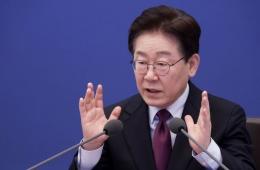
O Taeseok, President of the Korea Institute of S&T Evaluation and Planning (KISTEP), is speaking at a press conference on the 25th. Photo by Kim Jonghwa
View original image"Abolishing Pre-Feasibility Studies Will Speed Up the Process...But Overspending Safeguards Are Essential"
Until now, large-scale projects with at least 50 billion won in government funding or a total project cost of 100 billion won or more could only be included in the budget after passing the pre-feasibility study. However, once the amendments take effect, budgets can be allocated immediately after the pre-planning review.
President O explained, "The pre-feasibility study has been criticized for taking an average of two to three years, causing it to lag behind technological and market changes. The new system is intended to improve timeliness." He added, "There is a clear possibility that ministries will submit more new project proposals. Therefore, we have included a mechanism to officially report the review results to the National Assembly to control overspending."
He also predicted, "Since strict limits will be imposed on the total budget and on spending by each ministry, it will be inevitable to reorganize existing projects and adjust priorities accordingly."
"KISTEP's Role: From Independent Pre-Feasibility Evaluator to Budget Process Partner"
The abolition of the pre-feasibility study is expected to change KISTEP's status and role. Previously, KISTEP served as an independent evaluation agency that determined whether projects passed or failed. Going forward, it will become a partner in the budget process, operating the pre-planning review together with the Office for Science and Technology Innovation and external experts.
President O stated, "While we are still coordinating with the government regarding KISTEP's specific authority and responsibilities, KISTEP will become a key pillar in operating the pre-planning review. However, existing pre-feasibility projects must continue to be carried out by law, so it will be difficult to reassign personnel in the short term."
He continued, "This year, we need to adapt to the new system with our current staff and refine our processes. In the first year of the new system, both ministries and institutions are expected to face considerable burdens."

"From R&D to R&I...A Structure Connecting Research to Innovation Is Needed"
President O stressed that the institutional reform should serve as an opportunity to shift the government's overall R&D policy to an "R&I (Research & Innovation)" system. He explained, "Basic, applied, and development research should not remain disconnected from industry and the market. Only package policies that connect demonstration, commercialization, and market entry can drive technology-led growth."
KISTEP plans to expand strategy forums and policy research to incorporate the R&I perspective at the budget allocation and adjustment stages. President O emphasized, "The era when science and technology agencies and industrial policy agencies operated separately is over. For technological achievements to translate into industrial outcomes, industry, finance, defense, and regulatory agencies must all work together."
He also pointed out, "We need to improve the current structure, where the results of R&D execution are only confirmed two years later. There must be a foundation for integrated analysis of key data such as talent, employment, and regional innovation."
"A Deep Tech Financial Ecosystem Is Essential"
He also highlighted the need for structural connections with the financial sector to support deep tech fields such as quantum technology, small modular reactors (SMRs), and nuclear fusion, which require large-scale and long-term investments. "While venture capital abroad boldly invests in high-risk, high-cost areas, the Korean financial sector is still unprepared. A system is needed in which the science community and financial sector understand and connect with each other," he said.
Hot Picks Today
 "If Your Age and Years of Service Total Over 70...
- "Did Trump Anticipate This?" Export Orders Surge Amid War... Record-High Export ...
- "Be Quiet, Pig": Jimmy Kimmel Live! Wins 'Broadcasting Pulitzer' After Sharp Sat...
- "Using Company Funds Like a Personal Piggy Bank"... Musk Turned to SpaceX Whenev...
- "Surviving 17 Days on Rainwater Without Food"... Ukraine Shocked by Photos of Ma...
President O concluded, "Abolishing the pre-feasibility study is not just about changing the review procedure; it is about restructuring R&D governance. KISTEP will responsibly play a central role during this transition period."
© The Asia Business Daily(www.asiae.co.kr). All rights reserved.