[The Editors' Verdict] Korea's Moment of Reassessment
![[The Editors' Verdict] Korea's Moment of Reassessment](http://www.asiae.co.kr/news/img_view.htm?img=2023110808414944627_1699400509.jpg)
Until quite recently, "Korea Discount" was the most common term used to describe the undervaluation of South Korea's stock market. In diplomatic affairs, the phrase "Korea Passing" would surface whenever important international discussions, such as those concerning North Korea's nuclear program, took place without Korea's involvement. In the industrial sector, Korea's competitiveness was often likened to being "sandwiched" between Japan and China.
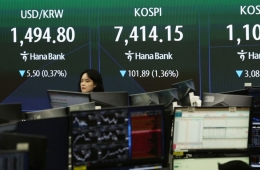
Recently, a wave of reassessment has been sweeping across Korean society. South Korea, once labeled as an "undervalued nation," is now entering a new phase of transformation. For example, the KOSPI, which had fallen to the 2,400 level during the December 12·3 Martial Law crisis last year, has now climbed past the 4,000 mark for the first time in history. There are growing expectations that it may even reach the 5,000 level, a goal pledged by President Lee Jaemyung since his candidacy.
On the diplomatic stage, the 2025 Asia-Pacific Economic Cooperation (APEC) Summit held in Gyeongju has made South Korea's presence more prominent. Once seen as the symbol of tightrope diplomacy between the United States and China, Korea has now demonstrated through a series of trilateral summits with the U.S. and China that it can serve as a reliable bridge in setting new milestones for the global order. Given that Korean diplomacy has shouldered the burden of "balancing among major powers" for over 140 years since the 1882 Korea-U.S. Treaty of Peace, Amity, Commerce and Navigation, Korea's presence at this APEC summit is far from insignificant.
This is clearly a time of reassessment, as the world's perspective on South Korea is changing. However, it is important to critically examine whether this reassessment marks the beginning of a sustainable transformation or is merely a temporary illusion. While the KOSPI 4,000 is a symbolic figure for a stock market long stuck in a narrow range, we must consider whether this achievement is truly supported by strengthened shareholder returns and structural reforms in industry to enhance global competitiveness-both crucial to overcoming the Korea Discount. Amid fierce global competition in future industries such as artificial intelligence, semiconductors, secondary batteries, and biotechnology, productivity, labor efficiency, and institutional innovation across Korea's industrial ecosystem remain stagnant.
National strength must also be enhanced to ensure that the diplomatic prominence highlighted by recent events endures. Although the long-standing trade negotiations were concluded at the recent Korea-U.S. summit, it was evident that Korea's role in the process was more about minimizing losses than taking the lead. It has become clear that robust industrial competitiveness and innovative capacity are essential for maintaining strategic diplomatic balance. Without technological, economic, and military strength, as well as social cohesion, diplomatic standing can quickly falter. President Lee also remarked to his aides after the Korea-U.S. summit on the 29th, following the conclusion of trade and security negotiations, "We need to strengthen our national power."
Hot Picks Today
!["Rather Than Endure a 1.5 Million KRW Stipend, I'd Rather Earn 500 Million in the U.S." Top Talent from SNU and KAIST Are Leaving [Scientists Are Disappearing] ①](https://cwcontent.asiae.co.kr/asiaresize/93/2026051414165763158_1778735817.jpg) "Rather Than Endure a 1.5 Million KRW Stipend, I'd Rather Earn 500 Million in the U.S." Top Talent from SNU and KAIST Are Leaving [Scientists Are Disappearing] ①
"Rather Than Endure a 1.5 Million KRW Stipend, I'd Rather Earn 500 Million in the U.S." Top Talent from SNU and KAIST Are Leaving [Scientists Are Disappearing] ①
- [Breaking] Park Sukeun, Central Labor Relations Commission Chair: "Some Gaps Narrowed Between Samsung Electronics Labor and Management"
- Is This the Peak? As Others Hesitate..."The Answer Is Clear for Surviving the KOSPI 10,000 Era"
- "If That's the Case, Why Not Just Buy Stocks?" ETFs in Name Only, Now 'Semiconductor-Heavy' and a Playground for Short-Term Traders
- "No Cure Available, Spread Accelerates... Already 105 Dead, American Infected"
If the past growth model was one of compressed industrialization, the future demands that Korea enhance its competitiveness through industrial upgrading and build the capacity to protect national interests through expanded multilateral cooperation amid rapidly changing global dynamics. Transitioning to a sustainable, innovative society is also necessary. Reassessment can only be sustained when it is underpinned by internal structural innovation, not merely changes in external perception. Now, as the world focuses on Korea, is the perfect time to turn this period of reassessment into an era of reconstruction.
© The Asia Business Daily(www.asiae.co.kr). All rights reserved.