[Political Reset] The Pros and Cons of Diplomacy by Chiefs and Politics by Aides
![[Political Reset] The Pros and Cons of Diplomacy by Chiefs and Politics by Aides](http://www.asiae.co.kr/news/img_view.htm?img=2025102407255179229_1761258351.jpg)
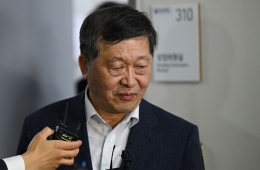
The roles of the Chief of Staff, Chief Policy Officer, and Chief Security Officer at the Presidential Office have become increasingly prominent. Typically, they are at the forefront of diplomacy. On October 22, all three of these key officials were simultaneously absent from their posts-a rare occurrence. The Chief of Staff was in Europe, the Chief Policy Officer was in the United States, and the Chief Security Officer was in Japan. It would not be an exaggeration to describe their activities as dynamic.
Chief of Staff Kang Hoonshik recently returned from a tour of Germany, Poland, Romania, and Norway as a "Special Envoy for Strategic Economic Cooperation." The Presidential Office announced, "We plan to carry out the duties of a presidential special envoy for strategic economic cooperation three times by the first half of next year." Chief Policy Officer Kim Yongbeom departed for the United States on October 22 and returned early on the 24th, holding last-minute negotiations with the U.S. side on tariffs. Chief Security Officer Wi Seongrak visited Japan to coincide with the election of Sanae Takaichi as the new Prime Minister of Japan.
Their appearances in the media and on YouTube have also increased. For example, Chief Kang appeared on "Humility Is Difficult, Kim Eojun's News Factory" (August 29), JTBC (October 2), and "Maebul Show" (October 4). Chief Kim appeared on "KBS Sunday Diagnosis" (July 31), "Maebul Show" (September 1), and "Sampro TV" (October 15). Chief Wi gave interviews with Channel A (September 27), JTBC Newsroom (August 28), "CBS Kim Hyunjung's News Show" (August 29), "KBS Radio Jeong Kwan-yong's Current Affairs Headquarters" (August 31), and participated in a joint interview with Presidential Office correspondents (September 30). Through these appearances, they promoted the results of the Korea-U.S. tariff negotiations and communicated the Presidential Office's positions on economic and diplomatic relations.
President Lee Jaemyung and these three key officials are actively engaged at the forefront of trade and diplomacy. In contrast, the Prime Minister and Deputy Prime Minister for Economic Affairs are less visible. In the past, it was generally said that "advisors should remain silent." Since their primary function is to support the president, it was considered proper for them to quietly fulfill their roles as advisors. However, times have changed. The president has given them space to speak and roles that require active engagement. This marks a clear departure from the past, highlighting the distinctive character of the "Lee Jaemyung Presidential Office." It demonstrates a shift from passive advisors who merely talk with their arms folded to proactive advisors who take action and execute plans.
How should we interpret the "active roles of the three chiefs"?
There was a time when the phrase "Blue House Government" was popular, referring to a government in which power is concentrated in the Presidential Office. This is usually used in a critical context, contrasting it with the idea of power sharing with the legislature or the cabinet. However, in a presidential system, the concentration of power in the Presidential Office is a practical reality. In particular, Korea has experienced rapid industrialization and democratization within a short period, and national division also plays a role. Since this administration is still in its early days, with ongoing initiatives and high global instability, there are inevitable aspects to this concentration of power. The president's pragmatic style, which emphasizes results, is also noteworthy.
Hot Picks Today
 "Stocks Are Not Taxed, but Annual Crypto Gains Over 2.5 Million Won to Be Taxed Next Year... Investors Push Back"
- [Breaking] Samsung Electronics Union: "Mediation Ends Due to Management's Rejection... General Strike Tomorrow"
- "Not Jealous of Winning the Lottery"... Entire Village Stunned as 200 Million Won Jackpot of Wild Ginseng Cluster Discovered at Jirisan
- "Looks Even More Like Him in Person": Crowds Gather to See 'Trump Lookalike' Albino Buffalo
- "Even With a 90 Million Won Salary and Bonuses, It Doesn’t Feel Like Much"... A Latecomer Rookie Who Beat 70 to 1 Odds [Scientists Are Disappearing] ③
The real question is how much power the Presidential Office should exercise, and in what form. It must not become mired in "diplomacy by chiefs and politics by advisors." The future must also be considered. Recently, President Lee used the phrase "nakjibudong" (literally, "octopus immobility") to criticize the current state of public officials. On October 21, he stated, "The public sector is not just stagnant; it is like an octopus that does not move at all. Sensitivity has become extremely dull." The administration must consider how to empower the cabinet and invigorate the public sector. If the public sector simply waits for decisions from the Presidential Office and follows orders, there can be no new Korea.
© The Asia Business Daily(www.asiae.co.kr). All rights reserved.