'China-Targeted Tax Cut Bill' Passes U.S. House... "K-Battery Uncertainty Down, Need to Reduce China Dependence"
Despite Concerns Over EV and ESS Market Contraction,
Barriers Rise for Chinese Batteries Entering the U.S.
Domestic Battery and Material Companies See 'Opportunities'
The passage of a tax bill in the U.S. House of Representatives, aimed at fulfilling President Donald Trump's tax cut pledges, has brought a sense of relief to the domestic battery industry. While some voices express concern that the bill could have negative effects on the electric vehicle and energy storage system (ESS) sectors overall, domestic battery companies are offering a positive assessment, noting that uncertainty has been somewhat alleviated compared to initial worries.

According to industry sources on May 26, the tax cut bill includes a provision to move up the expiration date of the Advanced Manufacturing Production Credit (AMPC) by one year, from 2033 to 2032. The amount of production subsidies for battery cells and modules remains unchanged. The industry views this as having avoided the worst-case scenario, especially when compared to earlier discussions about eliminating the subsidies entirely or ending them early in 2028.
In addition, the Foreign Entity of Concern (FEOC) regulation, which excludes certain foreign companies such as those from China, is expected to make it even more difficult for Chinese-made batteries to enter the U.S. market. An industry insider commented, "With the direction to keep Chinese companies in check becoming clearer, this is an opportunity for domestic companies to further solidify their position in the U.S. market. Strategies to reduce dependence on Chinese materials and strengthen the North American supply chain will gain even more momentum."
However, there are concerns that the tax bill, which generally reduces incentives for electric vehicle purchases and other eco-friendly initiatives, could dampen demand for electric vehicles and ESS in the U.S. If tax benefits are reduced, the cost burden of electric vehicles increases, which could impact the growth drivers for the entire upstream and downstream industries.
Experts agree that the key challenge for domestic battery companies going forward is to secure market leadership through technological competitiveness, even as U.S. government subsidies are reduced, and to make additional investments and restructure production to lower dependence on Chinese materials.
Moon Hakhoon, a professor at Osan University’s Department of Future Electric Vehicles, stated, "The domestic battery industry faces the challenge of finding alternative materials or regions to replace China and lower raw material costs. Now is the time to expand the market and pursue technological innovation through negotiations with electric vehicle and ESS manufacturers." An industry insider also noted, "Among battery materials, graphite is still heavily reliant on China, and the industry as a whole is grappling with this issue. Everyone in the industry is working to diversify supply chains."
Hot Picks Today
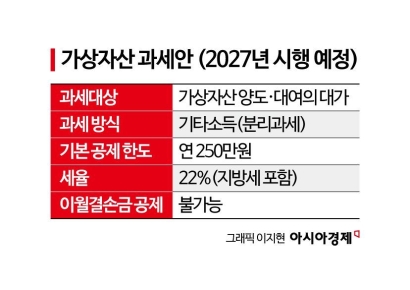 "Stocks Are Not Taxed, but Annual Crypto Gains Over 2.5 Million Won to Be Taxed Next Year... Investors Push Back"
- "Not Jealous of Winning the Lottery"... Entire Village Stunned as 200 Million Won Jackpot of Wild Ginseng Cluster Discovered at Jirisan
- "Rather Than Endure a 1.5 Million KRW Stipend, I'd Rather Earn 500 Million in the U.S." Top Talent from SNU and KAIST Are Leaving [Scientists Are Disappearing] ①
- "How Did an Employee Who Loved Samsung End Up Like This?"... Past Video of Samsung Electronics Union Chairman Resurfaces
- "Even With a 90 Million Won Salary and Bonuses, It Doesn’t Feel Like Much"... A Latecomer Rookie Who Beat 70 to 1 Odds [Scientists Are Disappearing] ③
Meanwhile, since the bill still needs to be reviewed and passed by the Senate, the industry is closely monitoring the situation. An industry insider said, "The tax bill has not been finalized, and given the many variables since the Trump administration, we are still watching carefully. Rather than focusing solely on the U.S. market, we are also looking to expand into the European market and accelerate technological innovation, including the development of next-generation batteries."
© The Asia Business Daily(www.asiae.co.kr). All rights reserved.







