[SCMP Column] The Year of the Waning Dollar... What Can Replace It?
Signs of Decline in Dollar Hegemony
Trump Administration Seeks a Weaker Dollar
Considering a New Plaza Accord
![[SCMP Column] The Year of the Waning Dollar... What Can Replace It?](http://www.asiae.co.kr/news/img_view.htm?img=2025040314522496203_1743659544.jpg)
How much further will the value of the dollar fall? Barry Eichengreen, a professor of economics and political science at UC Berkeley and author of Exorbitant Privilege: The Rise and Fall of the Dollar, recently pointed out in a Financial Times (FT) article that the US dollar, which has been the central pillar of the postwar international economic system, may be entering a fundamental period of decline. However, it is uncertain whether this weakening of dollar dominance can be prevented.
In Washington, there are talks that the Trump administration is considering a bold new international monetary agreement at a time when decisive policy action is needed. This could be a new attempt decades after the 1985 Plaza Accord signed at the Plaza Hotel in New York. The Plaza Accord at that time focused on lowering the dollar’s value to reduce the US trade deficits with Germany, Japan, and others. This time, it might be called the “Mar-a-Lago Accord,” named after President Donald Trump’s Florida residence.
While this may seem like a good idea on the surface, it is contradictory that President Trump wants a weaker dollar to boost US export competitiveness while still hoping the dollar remains the world’s top reserve currency. Experts like Wei-Ching Sing, an economics professor at the National Graduate Institute for Policy Studies in Tokyo, are skeptical about the likelihood of the Mar-a-Lago Accord becoming a reality. At a recent Foreign Correspondents’ Club of Japan (FCCJ) seminar, he stated, “It is naive to think that China and Japan, which together hold over $1 trillion in US Treasury bonds, would agree to a plan that devalues their own assets.” He also warned, “Such measures would severely undermine confidence in the dollar as an international currency.”
Economist Jesper Koll also dismissed the possibility of a new Plaza Accord-like agreement at the seminar, calling it “impossible.” He pointed out that during the original Plaza Accord, the US Federal Reserve (Fed), the German Bundesbank, and the Bank of Japan (BOJ) dominated the foreign exchange market, but now, with foreign exchange trading volumes having increased at least fivefold, it is practically difficult for central banks to artificially adjust currency values. Moreover, with the Trump administration engaged in tariff wars with major trading partners, it is nearly inconceivable that central banks would cooperate to lower the dollar’s value.
If the international community does not move to cooperate in lowering the dollar’s value, what does the future hold for the dollar? BRICS countries, including China and Russia, want to weaken the dollar’s status, but they are cautious because too rapid a shift could cause instability in financial markets. Similarly, financial markets do not want a sharp drop in the dollar’s value.
In a world where the global economy is fragmenting, a new international monetary system is needed, but what form could it take? The likelihood of a US-led agreement like the Mar-a-Lago Accord coming to fruition is low. A new system requiring cooperation among BRICS countries, the US, Europe, and other major economies is necessary.
Ultimately, this depends on whether world leaders can abandon a mindset focused solely on national interests and recognize that the world is a single community of shared destiny. However, considering that countries are currently concentrating more on national security and defense than economic policy, there is a risk that the global economy could spiral into a new Great Depression without agreed-upon monetary and trade policies.
Although the US stock market is shaken by the Trump administration’s tariff policies, the US dollar remains relatively stable. This is not so much due to absolute trust in the Federal Reserve and the US Treasury but because there are few viable alternatives for investing foreign reserves.
The largest financial market in the world today is the bond market. According to data from the Securities Industry and Financial Markets Association (SIFMA), the global bond market size reached $140.7 trillion as of 2023. Among this, the US bond market accounts for the largest share at $55.3 trillion. While the bond markets in Europe, China, and Japan are also large, they are smaller and less liquid compared to the US market. In particular, China’s market is less attractive for investment due to strict capital controls. On the other hand, the European Union (EU) is promoting capital market integration, which could increase the euro’s appeal in the future.
The stock market shows a similar pattern. The total value of the global stock market surged from $65 trillion in 2013 to $125 trillion in 2023, with the US holding an overwhelming share.
Thus, investors are inevitably destined to live within an imperfect international monetary system. Ultimately, the current system is likely to persist until global economic policies mature further.
The Trump administration’s idea of maintaining dollar confidence by issuing 100-year Treasury bonds is a symbolic example of the shallow thinking in current US economic policy.
The US dollar is gradually fading. However, there is still no clear certainty that a new dawn will emerge.
Anthony Rolly, former editor-in-chief of Feirstein Economic Review
Hot Picks Today
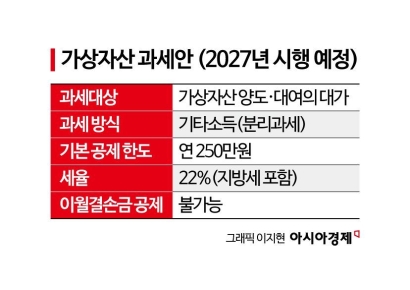 "Stocks Are Not Taxed, but Annual Crypto Gains Over 2.5 Million Won to Be Taxed Next Year... Investors Push Back"
- "Not Jealous of Winning the Lottery"... Entire Village Stunned as 200 Million Won Jackpot of Wild Ginseng Cluster Discovered at Jirisan
- "Rather Than Endure a 1.5 Million KRW Stipend, I'd Rather Earn 500 Million in the U.S." Top Talent from SNU and KAIST Are Leaving [Scientists Are Disappearing] ①
- "How Did an Employee Who Loved Samsung End Up Like This?"... Past Video of Samsung Electronics Union Chairman Resurfaces
- "Even With a 90 Million Won Salary and Bonuses, It Doesn’t Feel Like Much"... A Latecomer Rookie Who Beat 70 to 1 Odds [Scientists Are Disappearing] ③
※This article is a translation by Asia Economy of the South China Morning Post (SCMP) column titled “The sun is setting on the US dollar, but what could replace it?”
© The Asia Business Daily(www.asiae.co.kr). All rights reserved.







