Korea Institute of Finance: "Household and Corporate Loans Should Shift from Real Estate Focus to Business Feasibility Focus"
Household Loans Centered on Real Estate Lead to Reduced Consumption
Corporate Loans Should Shift to a Business Viability-Focused Approach
Strengthened Risk Management Is Needed to Achieve This

There have been calls to shift household and corporate loans, which are currently centered on real estate, to a business viability-focused approach. To achieve this, it is explained that risk management, including capital-based regulations, must be strengthened.
Lee Gyubok, Senior Research Fellow at the Korea Institute of Finance, stated this during a presentation on "Measures to Improve Real Estate Credit Concentration" at the "Joint Policy Conference for Improving Real Estate Credit Concentration" held on the 3rd at the Bankers' Hall in Jung-gu, Seoul.
When comparing household loans and corporate loans in the real estate and construction sectors compiled by the Korea Institute of Finance with those of major countries, the proportion relative to GDP was found to be high across the board.
The researcher pointed out, "When household debt accumulates excessively, the burden on households can lead to rising delinquency rates and reduced consumption," adding, "This can affect the real estate market, employment, and investment, creating a vicious cycle that increases household burdens and undermines financial stability."

In particular, the proportion of corporate loans in the real estate and construction sectors relative to GDP has been rising sharply. Of all corporate loans, 72.4% were secured loans, and 94.3% of these secured loans were backed by real estate collateral. The researcher said, "The high dependence of corporate loans on real estate also causes both financial institutions and borrowers to focus excessively on real estate, raising concerns about weakening corporate competitiveness."
At a time when the potential growth rate is entering the 1% range, the financial industry cannot continue to develop sustainably without a rebound in the real economy. Currently, domestic finance evaluates loans based on the past value of real estate and relies on real estate collateral to avoid risks.
Therefore, the researcher emphasized the need to move away from real estate-centered finance and activate business viability-focused finance that supports corporate growth. Business viability-focused finance evaluates loans based on the value of the business and accepts risks while generating profits through risk management.
The researcher explained, "It is necessary to strengthen risk management to prevent excessive expansion of real estate finance," adding, "Measures to strengthen risk management may include capital-based regulations, borrower-based regulations, and macroprudential policies."

However, strengthening risk management could lead to rising interest rates and a contraction in loans to low-income households and small and medium-sized enterprises. Therefore, complementary measures such as adjusting risk weights for medium-term loans, win-win finance, and diversifying banks' revenue structures are needed.
The researcher said, "To activate business viability-focused finance, measures can be considered to strengthen financial institutions' capabilities to evaluate business viability and incentivize their use in lending, as well as support financial institutions in utilizing these capabilities to respond effectively when defaults occur."
Hot Picks Today
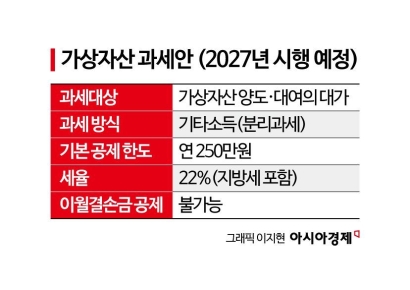 "Stocks Are Not Taxed, but Annual Crypto Gains Over 2.5 Million Won to Be Taxed Next Year... Investors Push Back"
- "Not Jealous of Winning the Lottery"... Entire Village Stunned as 200 Million Won Jackpot of Wild Ginseng Cluster Discovered at Jirisan
- "Even With a 90 Million Won Salary and Bonuses, It Doesn’t Feel Like Much"... A Latecomer Rookie Who Beat 70 to 1 Odds [Scientists Are Disappearing] ③
- General Strike D-1: Final Negotiations Between Samsung Electronics Labor and Management Over One Key Issue
- "How Did an Employee Who Loved Samsung End Up Like This?"... Past Video of Samsung Electronics Union Chairman Resurfaces
He added, "As a measure to expand creditors' authority to control companies in the event of defaults, options such as introducing an absolute priority principle instead of a relative priority principle in corporate rehabilitation, and implementing a blanket collateral system that allows setting and handling both tangible and intangible movable assets of companies as collateral, can be considered."
© The Asia Business Daily(www.asiae.co.kr). All rights reserved.