India Moves to Appease Trump... Plans to Abolish 'Google Tax' Ahead of Reciprocal Tariffs
Bill to Abolish 'Online Advertising Revenue Tax' Submitted
Move Seen as Attempt to Appease U.S. Ahead of Reciprocal Tariffs
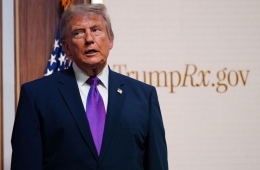
As the announcement of reciprocal tariffs predicted by U.S. President Donald Trump approaches, the Indian government has begun efforts to appease the United States by pushing for the abolition of the digital services tax, commonly known as the 'Google tax.'
On the 25th (local time), according to the Economic Times of India and others, the Indian Ministry of Finance submitted a financial bill to parliament proposing the abolition of the digital services tax, which imposes a 6% tax rate on advertising revenue earned by multinational information technology (IT) companies.

Previously, in 2016, India introduced the digital services tax, known as the 'Google law,' claiming that multinational digital platforms such as Google, Facebook, and Amazon were not properly paying taxes on money earned from online advertising.
Accordingly, these companies must pay 6% tax on advertising revenue if they generate more than 100,000 rupees (approximately 1.72 million Korean won) annually from online advertising with Indian companies, similar to the digital services tax introduced by the European Union (EU) and the United Kingdom.
Local media reported that the Indian parliament is expected to pass this law within this week and have it take effect immediately from next month. The Indian government's move to abolish the digital tax is interpreted as an attempt to appease the United States before the U.S. announces reciprocal tariffs on the 2nd of next month.
India currently records a trade surplus of 45 billion dollars (approximately 65 trillion Korean won) annually against the United States. Because of this, U.S. President Donald Trump referred to India as a "very big villain in trade" during the last presidential election and hinted that it would be subject to reciprocal tariffs.
Indian Prime Minister Narendra Modi held an early summit with President Trump and took conciliatory measures on trade and immigration but failed to secure a tariff promise. India has already reduced tariffs on bourbon whiskey and luxury motorcycles, and it is known to be considering tariff reductions on automobiles, some agricultural products, and chemical products.
Hot Picks Today
!["Rather Than Endure a 1.5 Million KRW Stipend, I'd Rather Earn 500 Million in the U.S." Top Talent from SNU and KAIST Are Leaving [Scientists Are Disappearing] ①](https://cwcontent.asiae.co.kr/asiaresize/93/2026051414165763158_1778735817.jpg) "Rather Than Endure a 1.5 Million KRW Stipend, I'd Rather Earn 500 Million in the U.S." Top Talent from SNU and KAIST Are Leaving [Scientists Are Disappearing] ①
"Rather Than Endure a 1.5 Million KRW Stipend, I'd Rather Earn 500 Million in the U.S." Top Talent from SNU and KAIST Are Leaving [Scientists Are Disappearing] ①
- [Breaking] Park Sukeun, Central Labor Relations Commission Chair: "Some Gaps Narrowed Between Samsung Electronics Labor and Management"
- Is This the Peak? As Others Hesitate..."The Answer Is Clear for Surviving the KOSPI 10,000 Era"
- "If That's the Case, Why Not Just Buy Stocks?" ETFs in Name Only, Now 'Semiconductor-Heavy' and a Playground for Short-Term Traders
- "No Cure Available, Spread Accelerates... Already 105 Dead, American Infected"
Amit Maheshwari, partner at accounting firm AKM Global, told Reuters, "This decision is an attempt to ease trade tensions with the United States," adding, "However, it is unclear whether this measure and ongoing diplomatic efforts will help soften the U.S. stance."
© The Asia Business Daily(www.asiae.co.kr). All rights reserved.