MBK "Utilization of SMC Mutual Share Restrictions, Chairman Choi Yoon-beom Already Aware of the Issue"
Claiming to Have Avoided Issues in Advance
MBK: "An Admission of the Problem Itself"
MBK Partners claimed that before Choi Yoon-beom, chairman of Korea Zinc, used the subsidiary Sun Metal Corporations (SMC) in a 'mutual share restriction' manner for a management rights dispute, he recognized the potential illegality and resigned from the company's board in advance.
On the 23rd, MBK Partners announced that Chairman Choi stepped down from the board on the 10th. According to MBK Partners' confirmation with the Australian Securities and Investments Commission (ASIC), among the four board members of the company, only Chairman Choi and Michael Choi (Korean name Choi Joo-won) from the Choi family resigned. Choi Joo-won is the CFO of SMC. He is the eldest son of Choi Chang-gyu, chairman of Youngpoong Precision, and also a cousin of Chairman Choi. The remaining directors are Park Ki-duk, president of Korea Zinc, and Lee Sung-chae, CEO of SMC.
MBK Partners stated, "It appears they left the board in advance because SMC had to engage in activities not beneficial to the company, such as using 57.5 billion KRW of company funds to purchase non-voting shares," adding, "Chairman Choi and the CFO took this step to avoid issues related to treasury stock transactions under commercial law and fiduciary duties of directors."
This suggests that Chairman Choi himself was aware in advance that problems could arise if Youngpoong Precision and the Choi family’s shares in Youngpoong were purchased by SMC.
Earlier, Korea Zinc sold a 10.33% stake in Youngpoong, held by the Choi family and Youngpoong Precision (one of Korea Zinc’s shareholders), to its Australian subsidiary SMC through an over-the-counter sale for 57.5 billion KRW.
As a result, a circular shareholding structure was formed: ‘Korea Zinc → Sun Metal Corporation Holdings (SMH) → SMC → Youngpoong → Korea Zinc.’ In this case, the companies become 'mutual shareholders' and cannot exercise voting rights over each other, according to Chairman Choi’s side. Under the commercial law’s ‘mutual share restriction’ system, if two companies hold more than 10% of each other’s shares, they cannot exercise voting rights in the counterpart company. This strategy aims to block the voting rights of about 25% of Youngpoong’s shares out of the approximately 40% Korea Zinc shares held by MBK and Youngpoong.
MBK and Youngpoong opposed this, calling it a 'trick.' They argued that the mutual share restriction applies only to domestic corporations and stock companies, so it cannot be applied to SMC, a foreign company established in Australia and a limited company.
Hot Picks Today
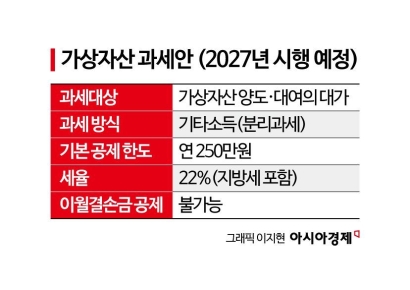 "Stocks Are Not Taxed, but Annual Crypto Gains Over 2.5 Million Won to Be Taxed Next Year... Investors Push Back"
- "Not Jealous of Winning the Lottery"... Entire Village Stunned as 200 Million Won Jackpot of Wild Ginseng Cluster Discovered at Jirisan
- "Even With a 90 Million Won Salary and Bonuses, It Doesn’t Feel Like Much"... A Latecomer Rookie Who Beat 70 to 1 Odds [Scientists Are Disappearing] ③
- General Strike D-1: Final Negotiations Between Samsung Electronics Labor and Management Over One Key Issue
- "How Did an Employee Who Loved Samsung End Up Like This?"... Past Video of Samsung Electronics Union Chairman Resurfaces
Meanwhile, the Korea Zinc extraordinary shareholders' meeting scheduled to be held at 9 a.m. at the Grand Hyatt in Yongsan-gu, Seoul, has not been convened until 2 p.m. due to the proxy verification process.

On the 23rd, the day of the Korea Zinc extraordinary general meeting of shareholders, Korea Zinc shareholders are lining up to enter the shareholders' meeting hall at the Grand Hyatt Seoul in Jung-gu, Seoul. Photo by Jo Yong-jun
View original image© The Asia Business Daily(www.asiae.co.kr). All rights reserved.