Last Year's New Car Sales Hit Lowest Since 2013 "Excise Tax Reduction Must Be Maintained"
New Car Sales Drop 6.5% to 1.63 Million Units
Commercial Vehicle Sales Plummet as Self-Employed Hold Back
Average New Car Purchase Price Reaches 50.5 Million KRW
Last year, domestic new car sales were the lowest since 2013. This was due to a significant decline in new car demand among self-employed individuals and young people in their 20s amid the economic downturn.
According to the "2024 Domestic Automobile Market Analysis" report released on the 23rd by the Korea Automobile Mobility Industry Association, new car sales in 2024 totaled 1,635,000 units, a 6.5% decrease compared to the previous year. Domestic cars decreased by 7.3% to 1,346,000 units, while imported cars fell by 2.5% to 288,000 units.

New Vehicle Registration Trends (Source: Ministry of Land, Infrastructure and Transport Vehicle Registration DB)
View original imageThe new car market continued its downward trend after COVID-19. The decline intensified from the second half of 2023 due to shrinking consumer sentiment caused by increased household debt, the end of new car purchase support, and a slowdown in electric vehicle demand.
On average, 408,000 units were sold quarterly last year, falling below the recent five-year average sales volume of 443,000 units. The average purchase price of new cars rose 2.3% from the previous year to 50.5 million KRW.
The used car market maintained its level at 2,428,000 units, showing a slight decrease of 0.6% compared to the previous year.
In particular, new car demand declined among the self-employed and both young and older adults. Sales of commercial vehicles such as trucks dropped 21.4% compared to the previous year, underperforming passenger cars, which fell by 3.9%. The 1-ton truck segment (-26.3%) failed to fully absorb demand from diesel models despite the launch of eco-friendly models, due to higher prices and charging inconveniences compared to diesel models.
By age group, new car sales significantly decreased among people in their 20s and older adults in their 50s and 60s, while used car sales increased only among those aged 60 and above. This is analyzed as a result of reduced purchasing power and increased preference for used cars due to price burdens.

Sales of full hybrid vehicles (excluding mild HEVs) increased by 29.2% year-on-year to 389,000 units, raising the penetration rate from 17% in 2023 to 23.5% last year.
Electric vehicle sales declined for the second consecutive year, with 1-ton truck sales dropping by more than half compared to the previous year. The penetration rate fell by 0.3 percentage points to 9.0%. However, electric passenger cars sold 122,000 units, a 5.9% increase year-on-year due to the new car effect, and the average selling price dropped 17.2% to 55.9 million KRW due to an increase in affordable models.
Hot Picks Today
 "Stocks Are Not Taxed, but Annual Crypto Gains Over 2.5 Million Won to Be Taxed Next Year... Investors Push Back"
- "Don't Throw Away Coffee Grounds" Transformed into 'High-Grade Fuel' in Just 90 Seconds [Reading Science]
- Signed Without Viewing for 1.6 Billion Won... Jamsil and Seongbuk Jeonse Prices Jump 200 Million Won in a Month [Real Estate AtoZ]
- "Groups of 5 or More Now Restricted"... Unrelenting Running Craze Leaves Citizens and Police Exhausted
- "Even With a 90 Million Won Salary and Bonuses, It Doesn’t Feel Like Much"... A Latecomer Rookie Who Beat 70 to 1 Odds [Scientists Are Disappearing] ③
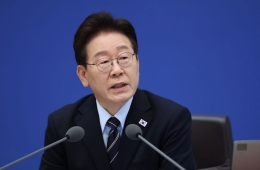
Gang Nam-hoon, chairman of the Korea Automobile Mobility Association, stated, "Domestic and export sales of Korean cars are facing more challenging conditions than ever due to weakened consumer sentiment and price competition in electric vehicles." He emphasized, "It is necessary to actively stimulate demand by maintaining the temporary individual consumption tax reduction within the year and providing individual consumption tax reductions when replacing old vehicles."
© The Asia Business Daily(www.asiae.co.kr). All rights reserved.