After Yoon's Detention, the Political Stability Compass 'Special Investigation Law on Internal Insurrection'... The Ruling and Opposition Parties' Positions Remain Polarized
Differences on Special Prosecutor Terms and Recommendation Process
Disagreement Over When Rebellion Ends
Ruling Party: "It Ends After Martial Law Is Lifted"
Opposition: "It Ends Only After Yoon's Arrest"
The Democratic Party of Korea has kept the possibility of negotiations open with the People Power Party regarding the passage of the so-called Special Prosecutor Act for the Investigation of the Truth about the Yoon Seok-yeol Government's Acts of Rebellion and Foreign Exchange Crimes, but they actively refuted claims of 'toxic provisions.'
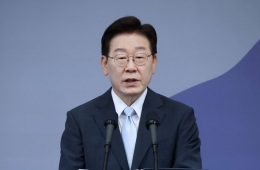
On the 15th, opposition members of the National Assembly's Legislation and Judiciary Committee held a press briefing to clarify the Special Prosecutor Act. Park Beom-gye, the Democratic Party's floor leader on the committee, rebutted each claim of toxic provisions.

Regarding the interpretation of incitement to rebellion, the People Power Party holds the position that it should be excluded. Kwon Seong-dong, the floor leader of the People Power Party, argued, "The crime of incitement to rebellion ended after the emergency martial law was lifted," and claimed, "It was politically proposed with the intention of destroying so-called conservatives." In response, Park explained, "The crime of rebellion is ongoing, and the Democratic Party's position is to resolve it when President Yoon is arrested and custody is secured by the Corruption Investigation Office for High-ranking Officials." This indicates a difference in opinion on the endpoint of the rebellion.
Regarding the crime of foreign exchange inducement, Park stated, "We are not trying to investigate all North Korea policies and diplomatic security policies from the start of the Yoon Seok-yeol government to the present through a special prosecutor," adding, "There is a limitation related to emergency martial law." In particular, Park expressed certainty about the drone that infiltrated Pyongyang, North Korea, saying, "The Democratic Party holds a firm position," and explained, "It is considered an act that could lead to war-like actions." The People Power Party strongly opposes the special prosecutor investigation related to the crime of foreign exchange inducement, stating, "We absolutely cannot accept it."
The opposition party believes that provisions related to cognizance investigations are necessary. Park said, "All special prosecutor laws include provisions allowing investigations on matters cognized during investigations," and added, "Removing this means not conducting a special prosecutor investigation."
There are also differences of opinion regarding the recommendation of the special prosecutor. While there is consensus on the direction of third-party recommendations, the People Power Party raised issues with the recommendation by the Chief Justice of the Supreme Court. Joo Jin-woo, a People Power Party lawmaker who prepared the special prosecutor law, proposed options including the Chief Justice of the Supreme Court as the recommender, as well as the head of the Court Administration, the president of the Association of Law Professors, and the director of the Council of Law Schools. Joo said, "The Chief Justice's recommendation method subjects the special prosecutor to the Seoul High Court's judgment if the investigation scope or targets are exceeded, which indirectly poses a conflict of interest." He criticized, "We have conceded a significant part regarding the fairness of the special prosecutor, and not agreeing even to this means there is no intention to conduct a special prosecutor investigation."
Additionally, the People Power Party raises issues about the special prosecutor for rebellion. Regarding the name of the special prosecutor law, the opposition party's use of the term 'Special Prosecutor Act for Rebellion and Foreign Exchange Crimes' is considered to prejudge guilt excessively, and they are preparing a proposal to soften it to 'Emergency Martial Law Special Prosecutor Act.'
Despite the arrest of President Yoon Seok-yeol, the People Power Party has indicated its position to propose the Special Prosecutor Act. Regarding the special prosecutor law, Kim Dae-sik, the People Power Party's chief floor spokesperson, told reporters on the morning of the same day, "The opposition said they would negotiate if we propose the special prosecutor law, so we need to see how the situation unfolds." Earlier on YTN Radio, Kim said, "More than 80% of the People Power Party's proposal is similar to the Democratic Party's." Regarding negotiation methods, he said, "Since the People Power Party said they would do it, (the Speaker and the opposition) can wait for a day or two."
Hot Picks Today
 "Stocks Are Not Taxed, but Annual Crypto Gains Over 2.5 Million Won to Be Taxed Next Year... Investors Push Back"
- "Don't Throw Away Coffee Grounds" Transformed into 'High-Grade Fuel' in Just 90 Seconds [Reading Science]
- Despite Warnings of "Do Not Enter, You May Not Make It Out Alive"... Foreign Tourist Stranded After Unauthorized Climb on Jeju Sanbangsan
- Signed Without Viewing for 1.6 Billion Won... Jamsil and Seongbuk Jeonse Prices Jump 200 Million Won in a Month [Real Estate AtoZ]
- "Even With a 90 Million Won Salary and Bonuses, It Doesn’t Feel Like Much"... A Latecomer Rookie Who Beat 70 to 1 Odds [Scientists Are Disappearing] ③
The Special Prosecutor Act for Rebellion has currently passed the Legislation and Judiciary Committee. Therefore, before it goes to the plenary session, it is expected that a revised bill will be discussed through negotiations between the ruling and opposition floor leaders. However, the Democratic Party has stated the principle that "negotiations are possible only if the People Power Party proposes the bill." Still, it remains questionable whether the People Power Party, which shows internal disagreements over the special prosecutor law, can propose it immediately after President Yoon's arrest.
© The Asia Business Daily(www.asiae.co.kr). All rights reserved.