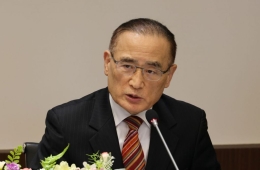
Vice Minister Park Minsu "Hopes for Dialogue to Resolve Medical Association Leadership Conflicts"
Chairing Central Disaster and Safety Countermeasures Headquarters Meeting Amid Doctors' Collective Action
Discussion on Non-Reimbursable and Actual Expense Reform Followed by Primary Care Innovation Debate
Park Minsu, the 2nd Vice Minister of Health and Welfare, expressed his desire to "promptly engage in dialogue to resolve medical-government conflicts" regarding the election of Kim Taekwoo as the new president of the Korean Medical Association (KMA) the day before.

On the 9th, Vice Minister Park presided over a meeting of the Central Disaster and Safety Countermeasures Headquarters (CDSCH) for doctors' collective action at the Government Seoul Office, stating, "The public hopes that the healthcare system will return to normal as soon as possible. Both the medical community and the government share the same desire for normalization." He added, "Rather than setting conditions, I hope we can meet soon and have an open and sincere dialogue."
The KMA, the only legally recognized organization for medical professionals, elected Kim as its new president through a by-election the day before. President Kim has advocated for resolving medical education issues arising from the increase in medical school admissions for the 2025 academic year and for the abolition of the Medical Reform Special Committee. He insists that "a progressive change in the government's attitude is a priority to resolve the current situation" and argues that the government should present a plan on whether normal medical education will be possible this year.
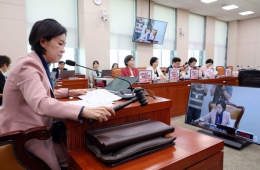
The government plans to hold a policy forum on improving non-reimbursable medical services management and reforming indemnity insurance in the afternoon, followed by a meeting of the Medical Reform Special Committee’s expert panel on the 10th to discuss primary healthcare innovation measures.
Vice Minister Park said, "Since there is significant public interest and diverse opinions regarding the reform of non-reimbursable services and indemnity insurance, we will prepare improvement measures through thorough discussions." He added, "We will establish educational programs and training systems to cultivate primary healthcare professionals suitable for the changing medical environment and concretize a fee system that can support these efforts."
Meanwhile, according to the CDSCH, influenza cases in the fourth week of December last year reached 73.9 per 1,000 people, marking the highest level in eight years since 2016. The average daily number of emergency room visits in the first week of January was 20,061, an increase of 1,624 compared to the previous week. Among the 3,244 influenza patients who visited emergency rooms, half were mild cases. As of December, about 90% of influenza patients visiting emergency rooms were discharged after treatment.
Vice Minister Park requested, "Considering the burden on emergency room operations, we ask the public to first visit nearby local clinics and fever clinics if symptoms are relatively mild." He also urged, "Local governments and 119 emergency services should revise transport guidelines to ensure that fever patients are first transported to regional emergency medical institutions."
Hot Picks Today
 "Now Our Salaries Are 10 Million Won a Month" Record High... Semiconductor Boom Drives Performance Bonuses at Major Electronic Component Firms
- Living the Homebody Dream? "I Was Shocked by My Spending" How to Cut Costs to 5,000 Won for Essentials [The Principles of Benefits]
- Is It Really Like an Illness? "I Can't Wait to Go Again"—Over 1 Million Visited in Q1, Now 'Busanbyeong' Takes Hold [K-Holic]
- "Heading for 2 Million Won": The Company the Securities Industry Says Not to Doubt [Weekend Money]
- Experts Already Watching Closely..."Target Price Set at 970,000 Won" Only Upward Momentum Remains [Weekend Money]
He continued, "We will closely cooperate with local governments and medical institutions and prepare meticulously for the Lunar New Year holiday emergency response period." He also emphasized, "Since the risk of fire is high during winter, local governments and medical institutions should thoroughly inspect fire prevention equipment such as sprinklers and familiarize themselves with safety protocols."
© The Asia Business Daily(www.asiae.co.kr). All rights reserved.