Oyster Export Value to Double by 2030
The government has decided to double oyster export revenue and increase production by 100,000 tons by 2030. In particular, it plans to expand the cultivation of ‘individual oysters,’ which are considered high-value gourmet ingredients in Europe, increasing their share to 30% of total oyster production by 2030.

Oysters are one of South Korea's key export items. According to agricultural and food export information, approximately 310,000 tons of farmed oysters were produced in 2023, with export revenue reaching 85.96 million USD. Export revenue has steadily grown, recording 80.07 million USD in 2021 and 79.59 million USD in 2022. Following seaweed and tuna?which achieved export revenues of 790 million USD and 563.1 million USD respectively in 2023?oysters remain one of the major export items.
View original imageAccording to the Ministry of Oceans and Fisheries on the 9th, the government announced the ‘Oyster Aquaculture Industry Development Plan’ with these details. Following seaweed, the ministry will focus on enhancing the added value of oysters to significantly increase export volume and revenue. Oyster production will be increased by 100,000 tons (from 300,000 tons in 2023 to 400,000 tons in 2030), and export revenue will also be doubled (from 80 million USD in 2023 to 160 million USD in 2030).
In particular, the ministry focused on expanding the production of ‘individual oysters.’ Unlike ‘egg oysters’ which are sold after removing shells and collecting the eggs, individual oysters are cultivated from seed as single units and sold with their shells intact. The ministry plans to support the conversion of general oyster farms to individual oyster production, increasing the share of individual oysters from about 1% of total oyster production to 30% by 2030.
In Korea, egg oysters, which are mixed into various dishes, are mainly consumed, leading to oysters being perceived as an inexpensive ingredient. However, in Europe, there are specialized restaurants that serve individual oysters as separate dishes, and large-egg individual oysters are regarded as premium ingredients with high added value. The ministry explained, “We will support entry into the European market, which prefers high-value individual oysters, to diversify export markets.”
Smartization of oyster production sites, which mostly rely on manual labor, will also be promoted. Conveyor belts and customized equipment (shell removers, washers, automatic sorters, etc.) will be supplied in shared workplaces, and work vessels capable of automatically harvesting oysters and performing primary washing at sea will be provided to improve working conditions. The ministry plans to establish oyster aquaculture clusters and is also considering the creation of dedicated fishing ports. About 400 oyster shucking processing plants (baksinjang) scattered across major oyster production areas such as Tongyeong and Geoje in Gyeongnam and Yeosu in Jeonnam will be relocated into these clusters and dedicated fishing ports to enhance efficiency in oyster production processes.
Hot Picks Today
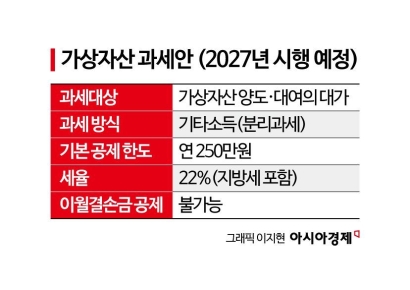 "Stocks Are Not Taxed, but Annual Crypto Gains Over 2.5 Million Won to Be Taxed Next Year... Investors Push Back"
- "Not Jealous of Winning the Lottery"... Entire Village Stunned as 200 Million Won Jackpot of Wild Ginseng Cluster Discovered at Jirisan
- "Jeong Yu-kyung Is a Neighbor"...Itaewon Standalone House with Record 23.2 Billion Won Appraisal Up for Auction [Real Estate AtoZ]
- "How Did an Employee Who Loved Samsung End Up Like This?"... Past Video of Samsung Electronics Union Chairman Resurfaces
- "Even With a 90 Million Won Salary and Bonuses, It Doesn’t Feel Like Much"... A Latecomer Rookie Who Beat 70 to 1 Odds [Scientists Are Disappearing] ③
Kang Do-hyung, Minister of Oceans and Fisheries, stated, “Unlike other seafood, oysters are widely consumed worldwide, presenting an opportunity for our companies to enter the global market,” and added, “Through this plan, we will strengthen industrial competitiveness to become the world’s number one oyster exporting country.”
© The Asia Business Daily(www.asiae.co.kr). All rights reserved.