Korea Zinc "Overcoming Profitability Crisis with Smelting Technology"
Profitability Crisis Due to Decline in Smelting Fees
Overcoming by Increasing Recovery Rates of Rare and Scarce Metals
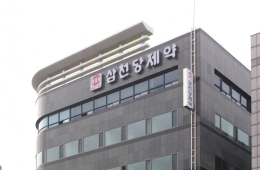
Korea Zinc has decided to overcome the profitability crisis through technological capabilities despite the challenging domestic and international business environment this year.
On the 5th, Korea Zinc stated, "Amid various adverse factors such as the recent global industry downturn, rising costs, and hostile takeover threats from MBK Partners and Youngpoong, the business outlook for 2025 is not promising."

Korea Zinc cited the decline in smelting fees as a difficult factor in this year’s business environment. Smelting fees are fixed smelting margins provided by smelting companies when mining companies entrust concentrates, and recently, as demand for zinc and lead concentrates from Chinese smelting companies has increased, these fees have sharply decreased. Additionally, industrial electricity rates have risen, and Korea Zinc’s electricity costs for next year are estimated to increase by about 28.6 billion KRW compared to this year.
To prepare for this, Korea Zinc has decided to focus its technical capabilities on improving profitability by increasing the recovery rates of rare and scarce metals with high profit margins, such as indium, and strategic mineral resources including antimony, bismuth, and tellurium.
Korea Zinc plans to maximize the recovery capacity of scarce and rare metals to increase gross profit by 25.3 billion KRW this year and achieve an increase of over 70 billion KRW in gross profit by 2027. The company aims to improve profitability by raising the recovery rates of rare metals by 20-30% or more for each item.
Furthermore, Korea Zinc will prepare to secure a unique competitive edge at the cycle recovery point through proactive investment in nickel, a key metal for cathode materials in secondary batteries. In November last year, Korea Zinc’s Technology Research Institute completed the development of a new nickel recovery process that significantly improves nickel recovery rates compared to existing processes.
For stable growth in the mid- to long-term, Korea Zinc will continue technological investments and expand production facilities. Following recent increased research investments to improve zinc and rare metal recovery rates, the company is also pursuing process redefinition to reduce smelting residue generation, along with strengthening operational standards and equipment.
Regarding semiconductor sulfuric acid, Korea Zinc will maintain its existing investment plan to achieve the production target of 500,000 tons of semiconductor sulfuric acid by 2030 to ensure stable industry operations.
Hot Picks Today
 The Quoted 800,000 Won, the Bill Was 5 Million....
- Tragedy in Luxury Apartment: Woman in Her 20s Found Dead, Suspect Identified
- They Say They'd Rather Go to Japan Than Travel Domestically... But a 'Surprising...
- "You Can Only Have This in Korea": Which National Museum Cafe Menu Is Captivatin...
- "Never Hike Alone as a Woman" "Even Two Are at Risk"... Growing Fear of Crime on...
A Korea Zinc official said, “The technological capabilities achieved through relentless efforts and the management skills that have made us the world’s number one non-ferrous metal company for 50 years were not accomplished overnight. The market and shareholders clearly know who has the vision to grow and develop Korea Zinc.”
© The Asia Business Daily(www.asiae.co.kr). All rights reserved.