The 2024 Korean Economy Beyond the Term 'Dasadanan'

The economy is collapsing and the lives of ordinary people are suffering due to the endless political battles such as impeachment, special investigations, and political strife. The tumultuous year of 2024, the Year of Gapjin, is coming to an end. Behind the National Assembly building in Yeouido, Seoul, the buildings of the securities and financial districts are brightly lit. In the upcoming 2025, the Year of Eulsa, we hope that politics, the economy, and the lives of the people will improve to the next level. Photo by Jo Yongjun
View original imageThis year, the South Korean economy faced so many difficulties that the phrase "dasa-danan (多事多難)"?meaning "full of troubles"?does not even begin to describe it. Throughout the year, domestic demand remained sluggish, and concerns over protectionism grew following the election of President Donald Trump, increasing downside risks to the economy. The situation worsened with the declaration of martial law at the end of the year, causing the stock market to plummet and the exchange rate to soar, truly a case of internal and external turmoil.
The KOSPI index started the year at 2669.81 and closed its last trading day at 2399.49, marking a 21.7% decline compared to the previous year-end. The won-dollar exchange rate surged 13.2%, from around 1300 won at the beginning of the year to 1472 won. This was the third-highest increase since the adoption of the floating exchange rate system, following the 1997 Asian financial crisis and the 2008 global financial crisis.
At the beginning of the year, expectations for the Korean economy were not bad. The first quarter GDP growth rate (quarter-on-quarter) recorded 1.3%, far exceeding market expectations and raising hopes for economic recovery. Until the first quarter, exports and domestic demand showed weak but simultaneous growth. Consumer prices also fell to the 2% range, significantly reducing inflation concerns compared to the previous year. Supported by a recovery in the semiconductor industry, the KOSPI index continued its upward trend in the first half of the year, and the won-dollar exchange rate remained stable in the low to mid-1300 won range.
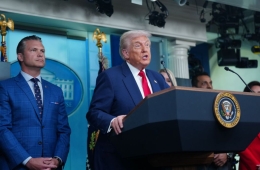
However, the mood deteriorated sharply in the second half. The third quarter GDP growth rate came in at 0.1%, below market expectations, rapidly spreading concerns about economic stagnation. Exports, which had supported the Korean economy, contracted for the first time since the fourth quarter of 2022, sharply raising fears of a recession. In early November, former U.S. President Donald Trump’s successful re-election heightened worries about protectionist policies under his second administration. The Bank of Korea attempted to reverse the trend by cutting the base interest rate twice, exceeding market expectations, but it was insufficient.
On December 3, President Yoon Suk-yeol’s declaration of martial law intensified economic concerns. Following the martial law incident and the ensuing impeachment crisis, the KOSPI fell below 2400, and the won-dollar exchange rate is approaching 1500 won, a level last seen during the financial crisis. Amid this turmoil, the Jeju Air disaster further dampened national spirits. Consumer sentiment ahead of the year-end sales season is at an all-time low. According to a survey by the Korea Federation of Micro Enterprise, 88.4% of small business owners reported a decline in sales following the martial law incident. This clearly demonstrated how politics can hinder the economy.
Is there any hope for the Korean economy next year? First and foremost, domestic political stability is crucial, and preparing countermeasures against the policies of the Trump second administration is essential. Professor Kwak Noh-sun of Sogang University’s Department of Economics expressed concern, saying, "Politics should support the economy, but it is moving in a direction that negatively affects it. To restore the economy, political stability must be achieved quickly, and urgent measures against Trump’s trade policies are needed."
Hot Picks Today
 KOSPI Hits All-Time High, but "Why Is My Accoun...
- "If You Have This at Home, Remove It Immediately"... 'This Item' Is as Harmful a...
- SK hynix Achieves 'Dream' 72% Operating Margin, Surpassing Nvidia and TSMC [1-Mi...
- Wall Street Expert: "Samsung Electronics Should Also List on the U.S. Stock Mark...
- "I Spent Money in a Truly Meaningful Way"... How an SK hynix Employee Donated 10...
The spirit of unity and cooperation to overcome the crisis is also important. Leaders of major domestic economic organizations voiced a unified message in their New Year addresses, emphasizing that Korea is a country with the resilience to overcome numerous adversities and that all economic actors must join forces to overcome the crisis.
© The Asia Business Daily(www.asiae.co.kr). All rights reserved.