"K-Battery Faced Greater Trials, Must Not Forget the Pioneer Spirit"
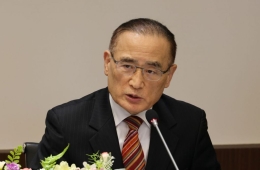
[Interview] Professor Lee Ji-hoon, Author of 'The 30-Year War of K-Battery'

"From the stories I've heard from the people I've met, there were many even greater trials than now. They have experienced states of being completely worn out. However, they turned crises into opportunities. I hope the battery industry today does not forget this pioneering spirit."
Following the concept of chasm, which refers to temporary growth stagnation, the Korean battery industry has faced overlapping adversities with former U.S. President Donald Trump's re-election campaign advocating for the abolition of electric vehicle subsidies. Recently, Professor Jihoon Lee of Sejong University’s College of Business Administration, who authored The 30-Year War of K-Battery, emphasized that the secondary battery industry must not forget the pioneering spirit and should turn crises into opportunities.
Professor Lee published this book based on interviews with dozens of current and former battery industry executives and researchers. He narratively explained the growth history of the Korean battery industry from its early days to the present in a way that general readers can easily understand.
He identified the driving forces behind K-Battery’s rise to the top of the global market as ‘vision’ and ‘will.’ "There were leaders who constantly held a vision for the future and, with the attitude of ‘geoanwisa’?considering crises even in times of comfort?always looked ten years ahead."
He was particularly impressed by how the POSCO Group, through the leadership transitions from Jeong Jun-yang (7th), Kwon Oh-joon (8th), Choi Jung-woo (9th), to the current Chairman Jang In-hwa, never lost sight of the vision for the secondary battery materials business and continuously invested in it.

Former LG Group Chairman Koo Bon-moo steadfastly supported the secondary battery business despite the group’s top executives urging to shut down the loss-making sector. Upon learning that Sanyo, a leading Japanese company in the secondary battery field, had 400 researchers?twice as many as LG?Chairman Koo instructed, "Hire as many as Sanyo." Lee Dong-chae, founder and senior advisor of EcoPro, also did not give up despite over ten years of losses in the cathode materials business.
Regarding the launch of the second Trump administration, Professor Lee explained the need to emphasize that Korea is a reliable partner capable of jointly responding to China’s expansion in advanced industries such as semiconductors and secondary batteries.
"The Trump administration’s tough stance on China will be no less, and possibly more severe, than the Biden administration’s. We need to effectively communicate that unlike China, we are a trustworthy strategic partner and contribute to job creation."
According to Professor Lee, Korean battery companies were well prepared for the potential repeal of the Inflation Reduction Act (IRA) before entering the U.S. market. Former LG Energy Solution CEO Kwon Young-soo reportedly said, "We considered the IRA a kind of lottery. We did not base our plans on the lottery."
Before deciding on large-scale investments in the U.S., LG Energy Solution divided into blue and red teams to engage in intense debates. They examined worst-case scenarios such as Trump winning re-election, the repeal of the IRA, and the U.S. becoming a fully competitive market with unlimited competition against China.
Despite various risks, the decision to invest in the U.S. was driven by a strategic judgment that they could not miss the golden opportunity to build trust with American customers. Instead, they entered through joint ventures to establish safeguards and included contingency clauses in contracts to prepare for emergencies. Korean battery companies have also secured a significant number of key patents to prepare for patent wars with China.
Professor Lee noted that looking back at the history of Korean batteries, there have been many cases where crises were turned into opportunities. A representative example is when Japanese battery companies were hesitant to enter the electric vehicle market due to successive laptop fire incidents, Korean battery companies quickly entered and secured a leading position in the EV market.
Hot Picks Today
 "Now Our Salaries Are 10 Million Won a Month" Record High... Semiconductor Boom Drives Performance Bonuses at Major Electronic Component Firms
- Experts Already Watching Closely..."Target Price Set at 970,000 Won" Only Upward Momentum Remains [Weekend Money]
- "Heading for 2 Million Won": The Company the Securities Industry Says Not to Doubt [Weekend Money]
- Living the Homebody Dream? "I Was Shocked by My Spending" How to Cut Costs to 5,000 Won for Essentials [The Principles of Benefits]
- "Truly a Different World"... The Realm of the Real 'Top 0.1%'—Exclusive Privileges Money Alone Can't Buy [Luxury World]
"K-Battery has continuously developed technology and overcome crises with vision and will. I hope the pioneering spirit is never forgotten."
© The Asia Business Daily(www.asiae.co.kr). All rights reserved.