Suspension of Payments for 3,000 Suspected Fraud Bank Accounts Annually... Some Refuse Due to Legal Gaps
Every year, there are more than 3,000 cases of payment suspension requests for suspected fraud accounts other than telecommunication financial fraud, but it has been found that there is insufficient legal basis to enforce these suspensions. Some financial institutions have refused to suspend payments because of this, or the responsible employees have had to endure complaints when such issues arise.

On the 24th, Kim Nam-geun, a member of the National Assembly's Political Affairs Committee from the Democratic Party of Korea, received data from the Financial Supervisory Service and various banks on the "Status of payment suspensions for suspected fraud accounts other than telecommunication financial fraud at six major commercial banks and three major internet-only banks over the past five years." The data showed that over the past five years, the total number of payment suspensions reached 18,494 cases. This means that on average, about 3,700 cases occur annually, with more than 10 payment suspension requests made daily.
Suspected fraud accounts other than telecommunication financial fraud refer to cases disguised as the supply of goods or provision of services, with typical examples including secondhand trading and investment solicitation fraud. When an account is suspected of such fraud, the police can request the bank to suspend payments.
However, since there is no enforceability, the financial sector can only hope for voluntary participation. For example, among the 19 banks including commercial, regional, and internet-only banks, NongHyup Bank is the only one that does not accept payment suspension requests for suspected fraud accounts other than telecommunication financial fraud.
Previously, around December last year, the authorities discussed this issue with Chief Customer Officers (CCOs) of the banking sector. As a result, banks such as Korea Development Bank, Jeju Bank, and Toss Bank, which had previously refused payment suspensions, changed their policies, but NongHyup Bank is still rejecting requests due to unresolved legal issues.
The NongHyup side stated, "There have been legal disputes in the past due to payment suspensions, and the legal basis is unclear when customers file complaints, which places a heavy burden on us," adding, "We plan to apply this within the year after internal discussions to fulfill our social responsibility." It is reported that when complaints arise due to payment suspensions, the employees involved bear the burden of these complaints.
To address this, the National Assembly and the National Police Agency attempted to enact the "Basic Act on Fraud Prevention," which would unify all fraud crime reception channels and establish a control tower function, but the bill failed to pass the Legislation and Judiciary Committee of the National Assembly and was discarded upon the expiration of the term. Currently, the bill is being reintroduced under the tentative name "Multi-Victim Fraud Prevention Act."
Hot Picks Today
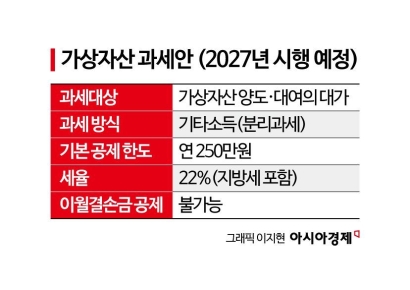 "Stocks Are Not Taxed, but Annual Crypto Gains Over 2.5 Million Won to Be Taxed Next Year... Investors Push Back"
- "Not Jealous of Winning the Lottery"... Entire Village Stunned as 200 Million Won Jackpot of Wild Ginseng Cluster Discovered at Jirisan
- "Even With a 90 Million Won Salary and Bonuses, It Doesn’t Feel Like Much"... A Latecomer Rookie Who Beat 70 to 1 Odds [Scientists Are Disappearing] ③
- "Rather Than Endure a 1.5 Million KRW Stipend, I'd Rather Earn 500 Million in the U.S." Top Talent from SNU and KAIST Are Leaving [Scientists Are Disappearing] ①
- "How Did an Employee Who Loved Samsung End Up Like This?"... Past Video of Samsung Electronics Union Chairman Resurfaces
Assemblyman Kim said, "Due to the lack of legal grounds, financial institution employees are suspending payments on suspected fraud accounts other than telecommunication financial fraud while bracing for legal actions and complaints," adding, "Since there is no prospect for legislation in the near future, the Financial Supervisory Service should take the lead in preparing guidelines and encouraging participation from the financial sector."
© The Asia Business Daily(www.asiae.co.kr). All rights reserved.







