NIS Pushes for Enactment of 'Korean-Style Foreign Agent Registration Act'
National Assembly Intelligence Committee Current Report... Need for FARA Introduction
Opposition Whip Park Seon-won "No Major Disagreement Among Ruling and Opposition Members"
The National Intelligence Service (NIS) has announced its plan to enact the 'Foreign Agents Registration Act (FARA)' adopted by major countries including the United States. This move is interpreted as a response to calls for improving counterintelligence systems following the so-called 'Sumi Terry' incident. The scope of espionage charges will be expanded from 'enemy states,' currently limited to North Korea, to 'foreign countries.' Since there is consensus in the political sphere, attention is focused on whether the law will be amended in the 22nd National Assembly.
On the 29th, the NIS announced that it will pursue legal amendments to expand the scope of espionage charges and begin work on enacting a 'Korean-style Foreign Agents Registration Act.' Park Seon-won, the Democratic Party whip of the National Assembly Intelligence Committee, reported that NIS Director Cho Tae-yong conveyed this policy during a closed-door briefing on intelligence issues. Director Cho stated in his report on key tasks for this year regarding strengthening external intelligence capabilities, "We will promote the enactment of the Foreign Agents Registration Act and the National Security Technology Research Institute Act, as well as amendments to the Criminal Act to expand the scope of espionage charges."

Cho Tae-yong, Director of the National Intelligence Service, is attending the full meeting of the National Assembly Intelligence Committee held at the National Assembly on the 29th. Photo by Hyunmin Kim kimhyun81@
View original imageArticle 98, Paragraph 1 of the current Criminal Act stipulates that "Anyone who spies for an enemy state or aids an enemy state's spy shall be punished by death, life imprisonment, or imprisonment for not less than seven years." The clause specifying 'enemy state' has remained unchanged since the law was enacted in 1953, and the concept of enemy state applies only to North Korea. This means there is no way to curb espionage activities conducted for foreign countries such as the United States, Japan, or China, as long as they are not North Korea.
Recently, the U.S. prosecution indicted Sumi Terry, a former CIA analyst and senior fellow at the Council on Foreign Relations (CFR), for violating the Foreign Agents Registration Act, prompting calls for South Korea to introduce a similar system. She was charged with working for Korea without notifying the government. Terry exchanged information with NIS agents dispatched to the U.S. Embassy in diplomatic status.
Park Seon-won explained that there is "no significant difference in stance between the ruling and opposition parties" regarding the plan to expand the concept of espionage charges and introduce a Korean-style Foreign Agents Registration Act.
Discussions on expanding the scope of espionage charges began as early as the early 2000s. Although there was political consensus, the bills failed to pass the National Assembly. In the 22nd National Assembly, both ruling and opposition parties have separately proposed amendments to the Criminal Act. The intent is the same: to expand the criteria for espionage charges from 'enemy state' to 'foreign country' in line with the ambiguous concept of enemy state in the current era and changes in the international situation.
Additionally, on the 23rd, Park Seon-won proposed an amendment to the Criminal Act to newly establish provisions based on the concept of the Foreign Agents Registration Act. This adds a provision to the espionage clause to punish "anyone who, for an enemy state or foreign country, performs acts without legal obligation or obstructs the performance of duties by public officials to influence domestic or foreign policy matters or diplomatic relations."
Counterintelligence Targets: The International Trend Is 'Foreign Countries,' Not 'Enemy States'

The U.S. Foreign Agents Registration Act requires individuals or organizations intending to influence U.S. policies or public opinion to register with the Department of Justice. While it does not restrict activities, it mandates regular reporting of activities related to the country represented.
Major countries have already introduced laws with the same concept as the U.S. FARA. Australia enforces the 'Foreign Influence Transparency Scheme (FITS),' requiring registration as foreign agents when acting on behalf of foreign governments. Interference in domestic affairs is subject to criminal penalties. The definition of 'influence' is broadly interpreted to include funding activities that affect policy processes. The United Kingdom has the 'Foreign Influence Registration Scheme (FIRS),' allowing the Home Secretary to designate specific foreign powers for registration if deemed necessary to protect security and national interests.
Hot Picks Today
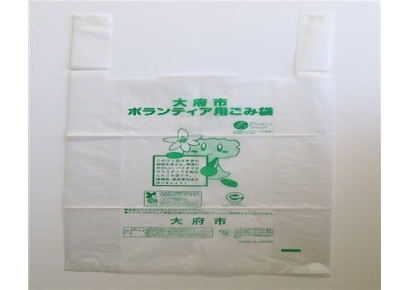 "Only Two Per Person" Garbage Bag Crisis Was Just Yesterday... Japan Also Faces Shortage Anxiety
- "Samsung Electronics Employee with 100 Million Won Salary Receiving 600 Million Won Bonus... Estimated Tax Revealed"
- Lived as Family for Over 30 Years... Daughter-in-Law Cast Aside After Husband's Death
- 'Will Demand Finally Decline Due to High Prices?'... "I'll Just Enjoy Nearby Trips" as Japan and China See a Surge
- "Wore It Once, Then This? White Spots All Over 4.15 Million Won Prada Jacket... 'Full Refund Ordered'"
The scope of espionage charges is also broadly interpreted as 'foreign countries' rather than 'enemy states,' with a trend toward strong responses. According to Title 18, Chapter 37 of the U.S. Federal Law, espionage charges apply to cases involving obtaining information used for foreign interests or delivering defense-related information to foreign governments, factions, or parties, punishable by death. Article 110 of the Chinese Criminal Law punishes those who join espionage organizations or are assigned missions with life imprisonment or imprisonment of not less than ten years. The same sentencing standards apply to charges of stealing, spying, or bribing for organizations or entities outside the borders.
© The Asia Business Daily(www.asiae.co.kr). All rights reserved.







