Lee Chang-yong "Considering Timing of Interest Rate Cut... Market Expectations Somewhat Exaggerated" [Q&A]
Bank of Korea July Monetary Policy Meeting Press Briefing
Appropriate Timing for Interest Rate Cut, Still in Deliberation Stage
Attention Needed on Household Debt and Real Estate Price Rise Due to Rate Cut
"High Interest Rate Stance Unavoidable for Price Stability"
![[Image source=Yonhap News]](http://www.asiae.co.kr/news/img_view.htm?img=2024071112441648048_1720669456.jpg)
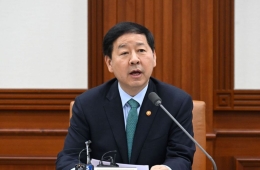
Lee Chang-yong, Governor of the Bank of Korea, evaluated on the 11th that "we are currently in a state of preparing for a change in direction regarding when to lower interest rates." However, he assessed that the market's current expectations for a rate cut are somewhat excessive.
At a press conference held immediately after the Bank of Korea's Monetary Policy Committee's 12th consecutive base rate freeze (at 3.50% per annum) on the same day, Governor Lee said, "In May, I said it was not a situation where the 'turn signal was on,' but rather a state of considering whether to change lanes in preparation for a rate cut," adding, "The current situation is that we are now preparing to change lanes and make a directional shift at an appropriate time."
Regarding concerns that lowering interest rates could stimulate household debt or real estate prices, he said, "Since housing prices in the Seoul metropolitan area have a significant impact on the rise in household debt and also affect financial stability, it is a time to be cautious," and added that all Monetary Policy Committee members agree that the Bank of Korea will not make policy mistakes such as excessively increasing liquidity or sending incorrect signals about rate cuts that could raise expectations and trigger housing price increases.
Regarding the impact of heavy rains in the second half of the year, he said, "From now on, weather changes can have a significant impact," and added, "We need to closely monitor agricultural product prices."
On the growing fatigue among the public due to the high interest rate stance, he explained, "The achievement of lower inflation was due to maintaining high interest rates," and said, "It was somewhat inevitable."
The following is a Q&A with Governor Lee.
- Inflation has dropped to 2.4%. Has your confidence in the slowdown of inflation strengthened? As mentioned in the previous monetary policy briefing, is it now time to turn on the 'turn signal' for a rate cut?
▲The stabilization of the inflation rate at 2.4% through June is a very positive change. It was a result consistent with expectations. In May, I said it was not a situation where the 'turn signal was on,' but rather a state of considering whether to change lanes in preparation for a rate cut. The current situation can be described as 'now the environment is set to change lanes and prepare for a directional shift at an appropriate time.' However, when to make the shift is uncertain due to many risk factors such as the foreign exchange market, Seoul metropolitan real estate, and household debt movements. It could take considerable time.
- In the U.S., rate cuts are being considered for September and December. Is it okay for South Korea to lower rates first?
▲I cannot specify the timing of monetary policy easing. We will decide based on the economic situation and financial stability. While U.S. policy decisions can affect the foreign exchange market and exchange rates, domestic financial stability considerations such as household debt and Seoul metropolitan real estate prices are equally important. We will make a comprehensive judgment and decision.
- What is your view on the possibility of a rate cut within three months?
▲Among the six Monetary Policy Committee members excluding myself, four expressed the view that rates would remain unchanged after three months, while the other two suggested keeping open the possibility of a cut below 3.5%.
▲The reason for this outlook is that although there has been significant progress in stabilizing inflation, there is a need to further examine and confirm the impact on financial stability factors such as the foreign exchange market, housing prices, and household debt. The other two members basically believe that since inflation has dropped significantly, the atmosphere for discussing rate cuts has been created, but they want to observe trends in the foreign exchange market and household debt movements.
- You mentioned that switching policy too quickly could increase household debt. How do you view the current increase in mortgage loan volumes?
▲The Financial Services Commission, the Financial Supervisory Service, and the Bank of Korea all agree on the goal of stabilizing household debt relative to nominal GDP. Household debt cannot be resolved by monetary policy alone. We will continue to review the issue in cooperation with the government.
- There are reports that the delay in applying the stress DSR (Debt Service Ratio) has stimulated last-minute demand. What is your view?
▲As Deputy Prime Minister Choi Sang-mok mentioned, the delay was made to finalize the real estate project financing restructuring plan and to assess the situation when announcing the economic policy direction for the second half of the year in July. It is scheduled to be implemented in September.
- The prolonged period of rate freezes seems to be increasing public fatigue.
▲There have been many reports about the longest freeze period. Rather than using the term fatigue, I recognize that many people are suffering due to the prolonged high interest rates. However, I believe that the achievement of lower inflation was due to maintaining high interest rates. It was somewhat inevitable. In fact, the degree of harm caused by the high interest rate policy varies. Exporters and importers feel differently, and it is very difficult for vulnerable groups and self-employed individuals, but those receiving interest benefit. We must balance economic growth and financial stability, and from a balanced perspective, price stability is important.
- Market interest rates seem to have already priced in expectations of a base rate cut. What is your view on the market?
▲It is difficult to deny that the long-term government bond yields have fallen significantly compared to other countries because the Bank of Korea's monetary policy has priced in expectations of an imminent rate cut. Most Monetary Policy Committee members believe that given the current inflation and financial stability situation, the market's expectations are somewhat excessive. We do not consider the preemptive pricing desirable.
- In the previous monetary policy briefing, you evaluated that "financial conditions are easing amid tightness" and "interest rates are still at restrictive levels." Has your judgment changed?
▲Looking only at the base rate, I said it was clearly at a restrictive level. What I meant by saying the market expectations are excessive is that despite the base rate being maintained, market interest rates have fallen significantly in the past month. In that sense, it can be seen as more eased, and most Monetary Policy Committee members believe the market's expectations are somewhat excessive.
- Four Monetary Policy Committee members maintained tightening in the three-month outlook. The policy statement directly mentioned "considering the timing of a cut." What is the meaning of this direct mention? Did all committee members agree with this expression?
▲It is similar to the turn signal analogy. In May, when asked if the turn signal was on, we were not yet confident about the downward trend in inflation. The reason I mentioned it now is that inflation is continuing the expected trend and we have achieved significant results in price stability compared to other countries. Although many people suffered in the process, thanks to price stability, the atmosphere for discussing rate cuts has been created. How much to cut requires many considerations, including financial stability. The wording in the policy statement does not conflict with our position.
- Four committee members said rates would be maintained after three months. Do all four expect the rate to remain at 3.5% in October?
▲Forward guidance is conditional. Given the current inflation and financial stability situation, it is likely that the rate will be maintained at 3.5% three months from now. However, it can change. I emphasize the word "conditional." The fact that four members do not change rates in October does not mean they will definitely not change them.
- You emphasized that determining the price level is not within the scope of monetary policy. Would revising the inflation target to core inflation reduce confusion?
▲Saying it is not within the scope of monetary policy means "it is difficult to control by monetary policy alone." The price level is related to other factors such as openness and fiscal policy, especially for agricultural products. It is difficult to control the level itself by monetary policy alone. There have been discussions about targeting core inflation rates instead.
▲Since the expected inflation felt by the general public is greatly influenced by consumer prices (headline inflation), core inflation is used as a reference, and the target is consumer prices (headline inflation).
- Some say the cause of the exchange rate rise is the interest rate gap between Korea and the U.S. You previously said that even if rates are inverted, there would be no capital outflow. Is that still your view?
▲There are many factors besides the interest rate gap. My opinion has not changed. When the U.S. rapidly raised rates last year and the year before, I emphasized not to evaluate only the interest rate gap because global rates were rising, and when the gap widened, exchange rates depreciated not only in Korea but elsewhere. There are many factors, including political positions of major countries. Considering inflation, there were periods when our real interest rates were higher. A year and a half ago, the IT cycle was weak and the current account was in deficit. Now exports are strong. Generally, it is difficult to say definitively due to multiple factors.
- There are forecasts that the exchange rate could surpass 1,400 won within the year. What is your view?
▲It is difficult to comment due to the significant market impact.
- Recently, heavy rains have poured in the central region. What impact might this have on future inflation rates or monetary policy?
▲First, I feel very sorry. Agricultural product prices are highly volatile. I think the question is whether the Bank of Korea can receive statistics in real time without delay. We receive agricultural product price data with little lag. I believe there is little room for improvement in statistics.
▲In the past month, agricultural product prices rose and then stabilized. From now on, weather changes can have a significant impact. We need to closely monitor agricultural product prices. If the inflation slowdown trend continues, it will naturally be reflected in monetary policy. I avoid giving a definite answer because there are many uncertain factors such as changes in oil prices, exchange rates, agricultural product prices, and public utility charges.
- If interest rates are lowered, how do you assess the potential stimulation of household debt or mortgage loans?
▲We take it more seriously than in May. Especially, we expected Seoul metropolitan real estate prices to rise moderately, but the speed of increase in June and July was faster than expected, so we are watching closely.
▲Since housing prices in the Seoul metropolitan area have a significant impact on the rise in household debt and also affect financial stability, it is a time to be cautious. Cooperation with the government on policy will continue to be important. The Bank of Korea cannot directly control housing prices. However, all Monetary Policy Committee members agree that the Bank of Korea will not make policy mistakes such as excessively increasing liquidity or sending incorrect signals about rate cuts that could raise expectations and trigger housing price increases.
- As the phase shifts to considering the timing of a rate cut, the magnitude of the cut has become important. Has the final rate level risen compared to when concerns about financial stability were less?
▲If we think until the end of the year, the timing of the cut implies how much the rate will be lowered by year-end. Since the neutral rate varies by model, the direction can be referenced, but the numbers vary widely, making it difficult to directly reflect in policy.
Hot Picks Today
 "How Do Six People Sleep in a 44㎡ Apartment?" ...
- "Why Are the Same Shares Priced Differently?" Will SK hynix Also See a 'U.S. Lis...
- "If You Have This at Home, Remove It Immediately"... 'This Item' Is as Harmful a...
- "Never Hike Alone as a Woman" "Even Two Are at Risk"... Growing Fear of Crime on...
- "You Can Only Have This in Korea": Which National Museum Cafe Menu Is Captivatin...
- Can the final rate level vary depending on the timing of the cut?
▲The Bank of Korea's long-term target is a 2% inflation rate. Long-term interest rates can vary depending on the situation.
© The Asia Business Daily(www.asiae.co.kr). All rights reserved.
![Epic "1,500 Trillion Won Bill"... In the End, the Poor Pay the Price [Data Pick]](https://cwcontent.asiae.co.kr/asiaresize/307/2026042310001637425_1776906017.jpg)