[Click eStock] "Won Weakness Persists Despite Dollar Pause... Signs of Crisis in Korean Economy?"
Despite the Fed's Hawkish Stance, Only the Won Weakens
KOSPI Foreign Selling and Export Slump Cited
Saudi Aramco IPO Signals Volatility in Oil Market
DB Financial Investment analyzed on the 3rd that despite the recent weakening of the US dollar, the Korean won has shown weakness alone, signaling a significant change in the overall trend.
![[Image source=Yonhap News]](http://www.asiae.co.kr/news/img_view.htm?img=2024060307440093034_1717368240.jpg)
Moon Hong-cheol, a researcher at DB Financial Investment, said, "Although the US Federal Reserve (Fed) still maintains a hawkish stance, the dollar's strength has somewhat eased due to the slowdown in US indicators in May. However, last week, the KRW-USD exchange rate showed a differentiated phenomenon by rising sharply," adding, "It appears that foreign investors' massive selling in the domestic stock market in the latter part of the week influenced the foreign exchange market."
Foreign investors' trading in the KOSPI is an important variable explaining the KRW-USD exchange rate along with export growth rates. The recent export situation is also unfavorable. Export growth declined compared to the previous month, and most items except semiconductors showed a slowdown or decrease in growth. Researcher Moon said, "In particular, the fact that foreign investors concentrated their selling on semiconductor-related stocks could negatively impact semiconductor exports," adding, "Considering that Korea, as a manufacturing country, is sensitive to final demand, this phenomenon may be a leading indicator of a global demand slowdown."
The US Personal Consumption Expenditures (PCE) released last week is meaningful in two aspects. First, it is expected to confirm a pattern of PCE slowing down from the high inflation at the beginning of the year toward the end of the year. Second, the rise in non-market-based PCE items explains most of the inflation increase. These items include insurance premiums, financial fees, and health insurance premiums, which are detached from total consumer demand. Researcher Moon said, "As a result, it suggests that price stability due to demand slowdown is continuing."
Hot Picks Today
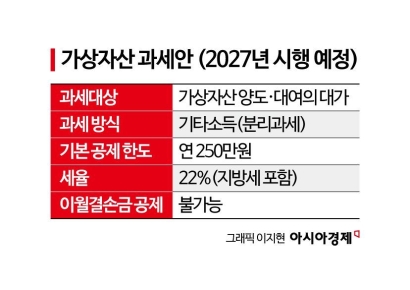 "Stocks Are Not Taxed, but Annual Crypto Gains Over 2.5 Million Won to Be Taxed Next Year... Investors Push Back"
- "Not Jealous of Winning the Lottery"... Entire Village Stunned as 200 Million Won Jackpot of Wild Ginseng Cluster Discovered at Jirisan
- "Even With a 90 Million Won Salary and Bonuses, It Doesn’t Feel Like Much"... A Latecomer Rookie Who Beat 70 to 1 Odds [Scientists Are Disappearing] ③
- "Jeong Yu-kyung Is a Neighbor"...Itaewon Standalone House with Record 23.2 Billion Won Appraisal Up for Auction [Real Estate AtoZ]
- "How Did an Employee Who Loved Samsung End Up Like This?"... Past Video of Samsung Electronics Union Chairman Resurfaces
Meanwhile, crude oil prices and the 10-year US Treasury yield follow a consistent inverted U-shaped pattern annually. This is analyzed to be because crude oil significantly affects inflation and determines the 10-year yield. Researcher Moon said, "We need to pay attention to Saudi Arabia's future moves," adding, "The Aramco initial public offering (IPO) indicates that Saudi Arabia is facing difficulties in financing, which could cause volatility in the crude oil market." Saudi Arabia has a precedent of increasing production by 2 million barrels immediately after Aramco's listing in 2019. Additionally, there are important variables in US immigration policy, which determines employment, and the Senate elections. Senator Manchin has left the Democratic Party and may run as an independent in the future. This could change the dynamics of the presidential and Senate elections, so it is necessary to continuously track related news.
© The Asia Business Daily(www.asiae.co.kr). All rights reserved.