Swiss National Bank Governor: "Too Early to Judge Neutral Interest Rate Increase, Europe's Low Growth a Major Issue" (Comprehensive)
Thomas Jordan, Swiss National Bank Governor, Keynote Speech at Bank of Korea Conference
'Natural Interest Rate as a Benchmark for Monetary Policy from the Perspective of Policy Practitioners'
Claims It Is Too Early to Judge Whether Neutral Interest Rate Has Risen

Lee Chang-yong, Governor of the Bank of Korea, and Thomas Jordan, Chairman of the Swiss National Bank, are having a discussion at the '2024 BOK International Conference' held on the 30th at the Bank of Korea in Jung-gu, Seoul. Photo by Kang Jin-hyung aymsdream@
View original imageAmid active global discussions on adjustments to the neutral interest rate, claims have emerged that it is still too early to determine whether the neutral interest rate will rise.
Thomas Jordan, President of the Swiss National Bank, made this remark during his keynote speech titled "The Natural Interest Rate as a Benchmark for Monetary Policy from the Perspective of a Policy Practitioner" at the 'BOK International Conference' held on the morning of the 30th at the Bank of Korea Conference Hall in Jung-gu, Seoul.
President Jordan noted that interest has been growing on whether the natural interest rate (neutral interest rate) will rise or return to the low levels seen before the COVID-19 pandemic, as real interest rates (nominal interest rate minus inflation rate) have increased due to tightening monetary policies in major countries following the pandemic.
The neutral interest rate refers to the appropriate interest rate level that can achieve economic growth at the potential growth rate without overheating or recession. It also plays an important role in central banks' decisions on benchmark interest rates.
Controversy over Whether Neutral Interest Rate Rises with Real Interest Rate Increase, Still Too Early to Judge
President Jordan explained, "Over the past 40 years, real interest rates in major countries have continuously declined, falling to slightly below zero after the global financial crisis, then rising slightly above zero interest rates over the past two years since the COVID-19 pandemic."
The long-term downward trend in real interest rates is attributed to factors such as declining potential growth rates, increased savings for retirement, and rising demand for safe assets. On the other hand, the recent two-year increase in real interest rates is mainly due to tightening monetary policies in response to high inflation in major countries.
He emphasized, "The rebound in real interest rates over the past two years has also sparked debate on whether the neutral interest rate is structurally rising or will revert to the low levels before the pandemic."
He continued, "It is still too early to judge whether the neutral interest rate is rising again. This is because factors that lower real interest rates, such as low potential growth rates and increased life expectancy, coexist with factors that raise real interest rates, such as a decline in savings rates due to an increase in the non-working population, large fiscal deficits, productivity improvements from new technologies, and large-scale investments related to the green transition."
He further argued, "The neutral interest rate functions as an important benchmark for evaluating the stance of monetary policy, so it is crucial to accurately predict its direction of change and understand its structural determinants." However, he also noted, "The neutral interest rate is unobservable and must be estimated through various data and models, so its estimation inherently involves considerable uncertainty."

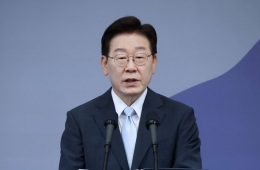
Thomas Jordan, President of the Swiss National Bank, is delivering the keynote speech at the '2024 BOK International Conference' held on the 30th at the Bank of Korea in Jung-gu, Seoul. Photo by Jinhyung Kang aymsdream@
View original imageTo overcome the uncertainty in estimation and utilize the neutral interest rate in policy, he stated that deriving a reliable estimate of the neutral interest rate is important. A trustworthy neutral interest rate estimate should not be mechanically averaged from various model estimates but should also be based on expert judgment that can assess the impact of structural factors not captured within models.
He added that a reliable neutral interest rate can be usefully applied to the long-term evaluation of monetary policy stance and the assessment of inflation outlook and pressures, but it should be noted that short-term changes in monetary conditions can be explained solely by changes in real interest rates, independent of the neutral interest rate.
President Jordan said, "When using a reliable neutral interest rate in monetary policy, it is advisable to keep open the possibility that the figure may be underestimated or overestimated and to pursue a robust monetary policy strategy under various scenarios." He added, "If the neutral interest rate is underestimated or overestimated, inflation risks of rising or falling may materialize under a given interest rate path, so it is best to prepare for all possible paths."
Volatility of Neutral Interest Rate Varies Depending on Each Country's Economic Situation
During the policy dialogue following President Jordan's keynote speech, Lee Chang-yong, Governor of the Bank of Korea, asked about the high volatility of the Bank of Korea's neutral interest rate estimation model and ways to address this issue. He also inquired about improvements regarding the fact that Korea's neutral interest rate level considering financial stability is higher than the neutral interest rate considering only price stability.
In response, President Jordan said, "Since each country has different interest rates, exchange rates, and levels of trade development, the volatility of the neutral interest rate is also large," adding, "It is a very difficult question to advise on."
Hot Picks Today
 "Stocks Are Not Taxed, but Annual Crypto Gains Over 2.5 Million Won to Be Taxed Next Year... Investors Push Back"
- "Don't Throw Away Coffee Grounds" Transformed into 'High-Grade Fuel' in Just 90 Seconds [Reading Science]
- Signed Without Viewing for 1.6 Billion Won... Jamsil and Seongbuk Jeonse Prices Jump 200 Million Won in a Month [Real Estate AtoZ]
- [Breaking] President Lee: "Sharing operating profit before taxes are deducted?... I don't understand"
- "Even With a 90 Million Won Salary and Bonuses, It Doesn’t Feel Like Much"... A Latecomer Rookie Who Beat 70 to 1 Odds [Scientists Are Disappearing] ③
Governor Lee also asked for his opinion on the situation where Europe's growth rate is lower than that of the United States. President Jordan explained, "The European Union (EU) is Switzerland's largest trading partner, so from Switzerland's perspective, a decline in Europe's potential growth rate is a significant problem," and added, "Europe is facing difficulties due to the Ukraine war and high energy prices."
© The Asia Business Daily(www.asiae.co.kr). All rights reserved.