Hwang Sok-yong's 'Cheoldowon Samdae' Misses Booker Prize... Winner is 'Kairos' (Summary)
Novelist Hwang Sok-yong's 2020 published novel "Cheoldowon Samdae" (English title Mater 2-10) failed to win the Booker Prize.
The Booker Prize committee announced on the 21st (local time) at the Booker Prize ceremony held at Tate Modern in London, UK, that German novelist Jenny Erpenbeck's 2021 work "Kairos" was selected as this year's International Booker Prize winner.
"Cheoldowon Samdae," along with "Kairos," was shortlisted with ▲ Selva Almada (Argentina)'s "Not a River," ▲ Jente Posthuma (Netherlands)'s "What I'd Rather Not Think About," ▲ Ia Genberg (Sweden)'s "The Details," and ▲ Itamar Vieira Junior (Brazil)'s "Crooked Plow," but did not make it past the final hurdle. The Booker Prize committee reviewed 149 translated novels published in the UK and Ireland since May last year, announcing 13 longlisted works in March and 6 shortlisted works in April.
![Novelist Hwang Sok-yong [Photo provided by Changbi]](http://www.asiae.co.kr/news/img_view.htm?img=2024052206505479665_1716328255.jpg)
The winning work "Kairos" tells the story of two men and women set against the turbulent backdrop of European contemporary history, specifically the fall of the Berlin Wall in the late 1980s. Erpenbeck was born in East Berlin, East Germany in 1967 and is a versatile artist working as an opera director, playwright, and novelist.
The Booker Prize is recognized as one of the most prestigious literary awards in the world, alongside the Nobel Prize in Literature and the French Prix Goncourt.
Compared to the Nobel Prize in Literature established in 1901 and the Prix Goncourt established in 1903, the Booker Prize has a shorter history. It was established in 1969 by the Booker Group, a British food distribution company, with sponsorship from the independent fund Book Trust to promote publishing and reading.
Unlike the Nobel Prize in Literature, which evaluates an author's entire body of work, the Booker Prize evaluates individual works to select winners. In South Korea, novelist Han Kang was the first to receive this award in 2016 for "The Vegetarian," which was also the first win for an Asian author.
When Han Kang won, the prize was sponsored by the financial investment company Man Group and was called the Man Booker Prize. Man Group sponsored the Booker Prize from 2002 to 2019.
Han Kang was again shortlisted in 2018 for "White" but did not win. Subsequently, in 2022, writer Jeong Sora's "The Cursed Rabbit" and last year novelist Cheon Myeong-kwan's "Whale" were also shortlisted for the Booker Prize but failed to win. Hwang Sok-yong was shortlisted in 2019 for "At Dark." At that time, it was selected for the longlist but did not make the shortlist.
Hot Picks Today
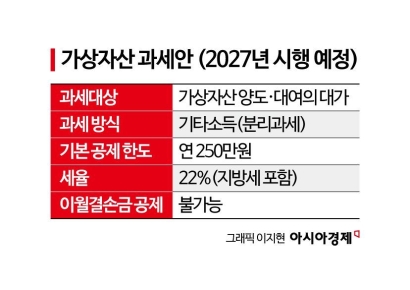 "Stocks Are Not Taxed, but Annual Crypto Gains Over 2.5 Million Won to Be Taxed Next Year... Investors Push Back"
- "Not Jealous of Winning the Lottery"... Entire Village Stunned as 200 Million Won Jackpot of Wild Ginseng Cluster Discovered at Jirisan
- "Even With a 90 Million Won Salary and Bonuses, It Doesn’t Feel Like Much"... A Latecomer Rookie Who Beat 70 to 1 Odds [Scientists Are Disappearing] ③
- General Strike D-1: Final Negotiations Between Samsung Electronics Labor and Management Over One Key Issue
- "How Did an Employee Who Loved Samsung End Up Like This?"... Past Video of Samsung Electronics Union Chairman Resurfaces
The Booker Prize is awarded annually in two categories: the main prize and the International Prize. Until 2004, the prize was awarded only to English-language novels written within the UK, Ireland, and other Commonwealth countries. From 2005, the International Prize was established for works by authors from non-Commonwealth countries, awarded separately from the main prize. Initially, the International Prize was awarded biennially, but since Han Kang's win in 2016, it has been awarded annually. To be eligible for the International Prize shortlist, works from non-English-speaking regions must be translated into English and published in the UK.
© The Asia Business Daily(www.asiae.co.kr). All rights reserved.