[Life Chapter 3 Business] "150 Houses Touched by My Hands... The Key to Senior-Friendly Interior Design Is 'This'"
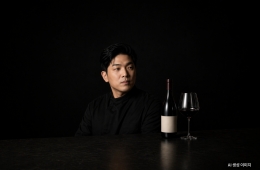
Lee Yong-min, CEO of Naejip Research Institute
![[Life Chapter 3 Business] "150 Houses Touched by My Hands... The Key to Senior-Friendly Interior Design Is 'This'"](http://www.asiae.co.kr/news/img_view.htm?img=2024051413490571968_1715662145.jpg)
"I have participated in home repairs for over 150 elderly households. Just by installing safety handrails, replacing flooring materials, and removing level differences, a 'barrier-free' environment for seniors can be created to a considerable extent."
Lee Yong-min, CEO of Naejip Research Institute, is an expert who has studied senior housing for 20 years at school. Majoring in housing environment, he has written books related to senior-customized housing and participated in research projects on housing plans and renovations for the elderly and disabled for many years. He founded Naejip Research Institute, a consulting company for senior-customized home repairs and an interior design firm, in 2021 because "it was necessary but did not exist."
Since then, with on-site expertise accumulated from repairing over 150 elderly households, he has been advising the government and local governments. Recently, he contributed to the Ministry of Land, Infrastructure and Transport's study on remodeling plans for housing for vulnerable residents and created a housing renovation manual for vulnerable residents in Gyeonggi Province. In an interview with Asia Economy on the 13th, CEO Lee said, "I want to contribute to creating environments for 'people who want to age in their own homes' in the upcoming aging society."

Lee Yong-min, CEO of NaeJip Research Institute, is an expert who has been studying senior housing environments at schools for 20 years. Photo by NaeJip Research Institute
View original image- What kind of work did you do before starting your company?
▲ I have been researching senior housing from my university days through to earning my doctorate. It wasn't started out of a tremendous sense of mission. My advisor had conducted related research in the U.S. 30 years ago and continued in Korea, so naturally I became interested in this field. Thanks to that, I earned my doctorate studying the housing planning process for the baby boomer generation's old age. Afterward, I worked as a research professor at Konkuk University's Institute of Industrial Technology.
- I'm curious why you started your own company.
▲ I felt a gap between theory and practice. While working on government and local government R&D projects related to senior housing, I always emphasized the need for national systems and market activation, but these were not well reflected. So I thought about starting a construction and design company myself. I began the business through a government startup support program.
- How many houses have you repaired in total? What kinds of houses have you worked on?
▲ Through senior-customized housing repair projects supported by local governments in Incheon, Seoul, and others, I have repaired over 150 households. Since these projects are publicly supported, there are income restrictions. The houses vary from old villas, detached houses, to apartments, mostly under 66 square meters (about 20 pyeong). I have also done some private commissions.
After visiting the house, I first provide consulting on how to repair it. I carefully observe the seniors' behaviors and pay close attention to details such as the appropriate placement of handrails to be installed.
- What are the three essential things for senior-customized home repairs?
▲ First, safety handrails are essential. There are various types and forms such as mounted, adhesive, and handle types. Second is replacing slippery flooring materials, such as bathroom tiles that are prone to falls. Third is removing level differences to even out floor levels. Since many old houses have thresholds, this is essential for those with back or knee problems or poor balance while walking. Changing just these three things makes the house close to 'barrier-free.'

Lee Yong-min, CEO of NaeJip Research Institute, is showing the grandmother living in the house to be repaired the interior design that will change after the repair. Photo by NaeJip Research Institute
View original image- How much does it cost to repair a house like that?
▲ It is difficult to give a unified answer because the appropriate level varies by house. However, repairing all three items costs about 4 to 5 million KRW in Incheon. Especially for those living in aging houses, repairs must also be viewed from the perspective of old house maintenance, so costs can be higher. Those with long-term care insurance grades who can receive home care benefits can get additional support for welfare equipment.
- Are there enough products in the market to make homes senior-friendly?
▲ Currently, the market for senior-friendly housing renovation products is almost non-existent outside the home care benefit market where welfare equipment can be purchased through long-term care insurance. The welfare equipment market available through benefits has only 18 limited items, and the standards are strict, so even slightly new or differently functioning products are hard to be recognized as welfare equipment covered by the National Health Insurance Service. For example, products like bathtub-mounted safety handrails or chairs are needed, but such products find it difficult to enter the welfare equipment market. The problem is that these products are not produced in Korea. We had no choice but to import Japanese products for construction. Japanese products have a much wider variety.
- Japan is advanced in senior housing. While there are things Korea should learn, are there also differences that make benchmarking difficult?
▲ First, there is a difference in housing types. In Japan, detached houses are common. There is a developed culture of building and maintaining one's own home. The culture of customizing and managing one's own home is well developed. So, when people become elderly, repairing and remodeling their homes is natural. This is why remodeling projects for aging society housing are active and can develop into a market.
However, in Korea, houses are already built and supplied when purchased. People move into given spaces, and residential stability is lower. The perspective on houses is often skewed toward asset appreciation and trading. Although a self-interior market is gradually developing, it mainly focuses on aesthetics and is far from aging response. So even when repairs are needed to fit aging bodies, people first worry, "What if it doesn't sell after repair?" For this reason, during consultations, I have seen cases where children advise their parents not to remodel their homes.
- What are your future goals?
▲ While earning a lot of money is good, I want to be a company that connects research and the field. Like in Japan, where housing remodeling for seniors is active, Korea's market should also develop and grow. Everyone ages, and even while living comfortably in their familiar homes, they can face safety accidents. I hope more people think that their homes should be tailored to them.
Hot Picks Today
 "I Just Want to Sleep": Prime Minister Takaichi...
- "You Can Only Have This in Korea": Which National Museum Cafe Menu Is Captivatin...
- The Quoted 800,000 Won, the Bill Was 5 Million... Bereaved Families of 'No-Funer...
- "Looks Fun, But..." Chinese University Student Kidnapped While Enjoying Songkran...
- "Never Hike Alone as a Woman" "Even Two Are at Risk"... Growing Fear of Crime on...
However, the concept of senior-friendly home repairs is still unfamiliar, and seniors have to find information on their own. Many children spend time and effort repairing homes themselves because they cannot find manuals. In the future, I want to play a platform role that easily provides information to seniors who want to create 'homes where they can live safely even as they age.'
© The Asia Business Daily(www.asiae.co.kr). All rights reserved.