South Korea's Gender Wage Gap Ranks Last Among 33 OECD Countries, Even Lower Than Mexico
"Korea Must Utilize Female Workforce to Prevent Decline in Working Population"
PwC Releases 'Women Employment Environment Index' Report on 'International Women's Day'
Slowest Progress in Closing Gender Wage Gap, Expected to Take Over Half a Century to Resolve
The wage gap between men and women ranks the lowest among 33 OECD countries, revealing that the employment environment for women in South Korea remains poor. As South Korea is aging at the fastest rate in the world, there are growing calls to actively utilize female labor to address the decline in the working-age population caused by low birth rates.

Global accounting and consulting network PwC announced on the 8th, in celebration of 'International Women's Day,' the 'Women’s Employment Environment Index' report, which measures and evaluates the employment performance of women in 33 OECD countries.
The 'Women’s Employment Environment Index' is published annually by PwC since 2011, based on five indicators related to workplace gender equality to track changes in OECD countries. The five indicators include ▲gender wage gap (difference in median hourly wages between men and women) ▲female labor force participation rate ▲gender labor participation gap ▲female unemployment rate ▲female regular employment rate. This year’s report was prepared using 2022 statistical data, covering 33 countries out of 38 OECD members, excluding Colombia, Costa Rica, Latvia, Lithuania, and Turkey.
Over the past decade, the average scores of the five indicators have steadily increased, with the 2022 average score (68 points) slightly rising from the previous year (66 points). This improvement is attributed to the increase in female labor force participation (70.8% in 2021 → 72.1% in 2022) and the decrease in female unemployment rate (6.4% in 2021 → 5.3% in 2022).
On the other hand, improvement in the gender wage gap was the slowest among the indicators. Between 2011 and 2022, the average gender wage gap across OECD countries decreased by 3 percentage points; however, in 2022, the gender wage gap was 13.5%, which is 0.3 percentage points higher than the previous year. This indicates that despite an overall increase in women’s economic activity, women are still more vulnerable than men in terms of labor market returns, as they are crowded out of high-quality, high-paying jobs. The report predicts that at the current pace, it could take more than half a century to reduce the average gender wage gap across all OECD countries.
In particular, South Korea’s gender wage gap was the most severe among the 33 OECD countries surveyed. The 2022 gender wage gap was 31.2% (meaning if the average wage of male workers is 1 million won, the average wage of female workers is 688,000 won), ranking last in the OECD. This is nearly twice as high as Mexico’s gender wage gap (16.7%), which ranked 33rd in the Women’s Employment Environment Index including the five indicators.
Yoon Hoon-soo, CEO of Samil PwC, stated, “The fact that South Korea ranks lowest among OECD countries in both the Women’s Employment Environment Index and birth rate indicates a correlation between these two indicators. Given that women’s participation in economic activities can be a key solution to the decline in the labor force caused by low birth rates and aging, companies should strive to foster an inclusive organizational culture that encourages women’s development and promotion.”
Related Articles
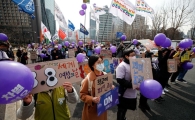 "South Korea Still Faces Inequality"…'Gender Equality' Resonates on International Women's Day
Meanwhile, Luxembourg ranked highest in the Women’s Employment Environment Index, followed by Iceland and Slovenia. Luxembourg improved in all indicators compared to the previous year and had the lowest gender wage gap among OECD countries at -0.2%, meaning the median wage for women was actually higher than that for men. Australia showed the greatest progress, rising seven places from 17th in 2021 to 10th in 2022, while the UK dropped four places from 13th in 2021 to 17th in 2022, marking the largest decline. Mexico ranked lowest in the Women’s Employment Environment Index, followed by South Korea, which has held 32nd place for five consecutive years.
© The Asia Business Daily(www.asiae.co.kr). All rights reserved.