Lee Jun-seok, Dongtan Candidacy Rumors Stir... Synergy with Yang Hyang-ja and Lee Won-wook
Operation of Semiconductor Specialized Complex to be Advanced by 3 Years
TK Candidacy Possibility Still Left Open
On the 27th, Lee Jun-seok, leader of the Reform New Party, visited the southern Gyeonggi region and unveiled a strategy for the advanced industrial belt in Hwaseong and Yongin, where there are rumors of his candidacy for the general election.
Lee and floor leader Yang Hyang-ja announced at the Gyeonggi Provincial Assembly in Suwon City that morning, "The success of the Yongin semiconductor specialized complex is Korea's hope," and added, "The government will directly establish the infrastructure for the K-Chips Act specialized complex to advance the factory operation period by more than three years." Previously, the government designated the Namsa and Idong areas of Yongin, where the world's largest semiconductor mega cluster is to be built, as a national advanced strategic industry specialized complex last year.
The Reform New Party plans to expand residential conditions in the southern Gyeonggi area based on the Yongin semiconductor specialized complex. Specifically, they will build transportation networks northward to Giheung, westward to Dongtan, eastward to Wonsam-myeon, and southward to Pyeongtaek. Additionally, they proposed plans including △priority allocation of local government grants adjacent to the specialized complex △expansion of advanced industry investment tax credit rate from 15% to 25% △connection of semiconductor expressways in the specialized complex and railway networks in southern Gyeonggi △establishment of advanced technology educational institutions in southern Gyeonggi.

Lee Jun-seok, leader of the Reform New Party, is speaking at the Supreme Council meeting held at the National Assembly on the 26th. Photo by Kim Hyun-min kimhyun81@
View original imagePolitical circles analyzed that the Reform New Party leadership's visit to the Hwaseong area on the same day has given momentum to rumors of Lee's candidacy in Dongtan New Town. The core of Lee's Dongtan candidacy rumor lies in the fact that the average age of voters in the area is in their 30s, aligning with Lee's key support base (men in their 20s and 30s). Furthermore, if floor leader Yang Hyang-ja, a former Samsung Electronics executive, runs in Yongin City Gap, a national industrial complex area, and Representative Lee Won-wook runs in Hwaseong, their joint candidacies could create a wave in southern Gyeonggi alongside Lee.
In fact, the possibility that Dongtan New Town will be divided into Hwaseong and Jeong electoral districts in the current general election district delimitation plan is favorable for the Reform New Party. In this case, Lee could run in Hwaseong and Representative Lee Won-wook in Hwaseong Jeong, potentially creating a synergistic effect. The multi-party competition could complicate voter sentiment in the traditionally two-party dominated landscape, making it a key battleground in the general election. The crucial factor will be how much Lee can absorb conservative and progressive votes between the Democratic Party's stronghold and the People Power Party's attempt to reclaim the area.
Hot Picks Today
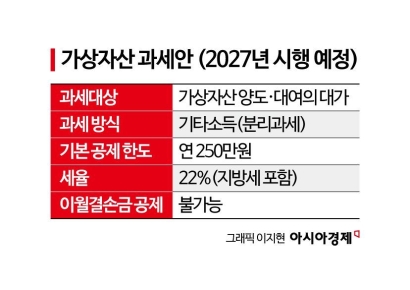 "Stocks Are Not Taxed, but Annual Crypto Gains Over 2.5 Million Won to Be Taxed Next Year... Investors Push Back"
- "Not Jealous of Winning the Lottery"... Entire Village Stunned as 200 Million Won Jackpot of Wild Ginseng Cluster Discovered at Jirisan
- "Even With a 90 Million Won Salary and Bonuses, It Doesn’t Feel Like Much"... A Latecomer Rookie Who Beat 70 to 1 Odds [Scientists Are Disappearing] ③
- General Strike D-1: Final Negotiations Between Samsung Electronics Labor and Management Over One Key Issue
- "How Did an Employee Who Loved Samsung End Up Like This?"... Past Video of Samsung Electronics Union Chairman Resurfaces
On the other hand, Lee's candidacy in Daegu and North Gyeongsang Province (TK) instead of Dongtan is also emerging as an alternative. Kim Jong-in, the Reform New Party's nomination committee chairman, said the day before, "TK is the most advantageous region for Lee Jun-seok to revive and for the people to revive Lee Jun-seok." Lee himself said, "It seems to be an intention to face off directly with the idea of judging the regime or as the rightful heir of conservatism," leaving open the possibility of running in TK as well.
© The Asia Business Daily(www.asiae.co.kr). All rights reserved.