[Column] Medical School Expansion, Fight with 'Facts' Instead of 'Claims'
![[Column] Medical School Expansion, Fight with 'Facts' Instead of 'Claims'](http://www.asiae.co.kr/news/img_view.htm?img=2024021507534963981_1707951291.jpg)
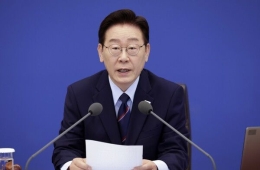
"You (the government)..." After a brief silence, Kim Taek-woo, the Emergency Committee Chairman of the Korean Medical Association, hastily corrected himself to say "the government" and continued his remarks. The press conference of the Korean Medical Association Emergency Committee Chairman held at 2 p.m. on the 14th. Kim, who was raising his voice criticizing the government, was so angry that it led to a slip of the tongue. His expression, saying "We will take collective action at the most efficient and powerful time to fight," was filled with emotion, but there was no calm explanation of the justification for the struggle.
Since the announcement of increasing medical school admissions by 2,000, the government and the medical community have continued a 'strong versus strong' confrontation. Amidst harsh criticism and claims against each other, there is no concrete evidence or data to help the public understand the criticisms and claims.
The government announced the need to increase admissions by 2,000 based on research by the Korea Development Institute and others, which predicts a shortage of about 15,000 doctors by 2035. However, it does not explain the basis for calculating that five times more than the 400 increase announced in 2020, which was later scrapped, is needed in just four years. Therefore, it fails to quell the medical community's backlash calling it a "massive increase for the general election." The medical community is similarly pushing claims without verified data. The Korean Medical Association insists only on "resolving the causes of avoidance of essential medical care," but does not provide a logical explanation of why an increase in medical school admissions is unnecessary if that is the case, nor does it explain the appropriate scale of increase if it does not reject the increase itself.
The government pushing for the increase must present stronger and more objective evidence. In response to the medical community's concern that a rapid increase in the number of doctors would overwhelm the National Health Insurance finances, Park Min-soo, the 2nd Vice Minister of Health and Welfare, rebutted, saying "The induced demand theory has been academically proven to be false." However, he did not present academic evidence. The medical community argues that supplier-induced demand is an academically established theory in health economics and demands that the government provide evidence if it claims it does not apply in Korea. The controversy over medical student education is similar. Vice Minister Park said, "We will not spare policy support to increase professors in subjects such as basic medicine and to strengthen essential medical and practical education," but his remarks remained general without specific explanations.
Hot Picks Today
 "Stocks Are Not Taxed, but Annual Crypto Gains Over 2.5 Million Won to Be Taxed Next Year... Investors Push Back"
- "Don't Throw Away Coffee Grounds" Transformed into 'High-Grade Fuel' in Just 90 Seconds [Reading Science]
- Signed Without Viewing for 1.6 Billion Won... Jamsil and Seongbuk Jeonse Prices Jump 200 Million Won in a Month [Real Estate AtoZ]
- [Breaking] President Lee: "Sharing operating profit before taxes are deducted?... I don't understand"
- "Even With a 90 Million Won Salary and Bonuses, It Doesn’t Feel Like Much"... A Latecomer Rookie Who Beat 70 to 1 Odds [Scientists Are Disappearing] ③
In the absence of discussions based on objective evidence, combative remarks such as "collective action" and "strict response" abound. Medical policy, which affects the health of the entire nation, should not be decided emotionally. Even if the government and the medical community fight, they must do so rationally based on evidence.
© The Asia Business Daily(www.asiae.co.kr). All rights reserved.