"Create a Korean Version of Temasek to Provide Seed Investment for Private Investment in Advanced Industries"
Sangui and Korea Institute for Industrial Economics and Trade Seminar on Redesigning Growth Strategies for Korean Industry
As global competition for advanced technology supremacy intensifies, a proposal has emerged to create a Korean version of Temasek (Singapore's sovereign wealth fund; see keyword) to activate investment in advanced industries. To secure advanced technologies that are difficult to develop in the short term and involve high risks, the government must share business risks and create an environment where large-scale funds can be stably supplied over the medium to long term.
On the 20th, the Korea Chamber of Commerce and Industry (KCCI) and the Korea Institute for Industrial Economics & Trade (KIET) held a "Korean Industry Growth Strategy Redesign Seminar" at the KCCI building in Jung-gu, Seoul, attended by about 60 experts from industry, academia, and research institutes. The seminar was organized to discuss public-private cooperation measures related to the "Industrial Transformation Proposals" delivered to the government by the "Industrial Transformation Forum," which was composed of about 80 private experts from the economic and research sectors last September, and to urge government authorities to implement them.
The Industrial Transformation Forum was launched in November last year at the suggestion of the Ministry of Trade, Industry and Energy. Kang Seok-gu, head of the KCCI Research Department, emphasized the establishment of a national investment holding company, one of the industrial transformation proposals, stating, "A government fully funded investment holding company like Temasek will share the intrinsic risks of advanced industries and serve as a catalyst to activate private investment." He added, "With major countries implementing technology and resource weaponization industrial strategies such as the U.S. Inflation Reduction Act (IRA) and the European Union (EU) Critical Raw Materials Act, supply chain instability is increasing and predictability is decreasing, making it difficult for companies to invest."

Over the past five years (2018?2021), the domestic investment growth rate remained at 0.2%, the lowest in 21 years since the foreign exchange crisis. Foreign direct investment in domestic manufacturing halved from $10 billion in 2018 to $5 billion in 2021. The domestic sovereign wealth fund managed by Korea Investment Corporation (KIC), which operates assets entrusted by the government and the Bank of Korea, tends to invest mainly in safe assets under the Korea Investment Corporation Act. To compensate for these limitations, Singapore operates Temasek separately from the Government of Singapore Investment Corporation (GIC). In other words, Korea also needs to establish an investment company like Temasek to solve the low returns problem of sovereign wealth funds. Gu Ja-hyun, director of the Daejeon Science and Industry Promotion Agency, said, "Private finance has limitations in enduring the high risks and long timeframes involved in developing innovative technologies," adding, "Establishing a Korean-style Temasek would enable the proactive discovery and nurturing of game-changing technologies with significant impact."
Meanwhile, at the seminar, KIET presented measures to activate new businesses that would complement the Korean-style Temasek. Choi Hyun-kyung, head of KIET's Industrial Policy Research Department, introduced activation plans for new businesses such as digital healthcare, alternative foods, space industry, and artificial intelligence (AI) and robotics. Choi proposed incorporating digital healthcare into the health insurance fee system or creating a new category, suggesting adding a management component to the current fee system based on medical acts. The digital healthcare market is expected to grow at an average annual rate of 19% until 2027 as the boundaries between traditional medical services and information and communication technology (ICT) converge. However, domestic regulatory frameworks have not been established due to entrenched vested interests.
The alternative food market, including alternative proteins, is also expected to grow rapidly due to the global food crisis and the spread of sustainable consumption culture, projected to account for 11% of total protein consumption by 2035. However, in Korea, ecosystem formation is hindered by inadequate systems and regulatory uncertainties. Choi pointed out that to foster the alternative food industry, related research and development should be expanded and new material and manufacturing standards established.

Kang Seok-gu, Head of the Korea Chamber of Commerce and Industry, is giving a presentation on the topic "Measures to Revitalize Investment for Fostering Advanced Strategic Industries" at the "Redesigning Korea's Industrial Growth Strategy Seminar" held on the 20th at the Korea Chamber of Commerce and Industry in Jung-gu, Seoul. Photo by Kang Jin-hyung aymsdream@
View original imageOverseas, private participation and investment in the space industry are expanding. Morgan Stanley forecasts the space economy to reach about $1 trillion by 2040. In contrast, Korea's space industry is maintained by government investment. The number of space companies increased slightly from 300 in 2015 to 428 in 2021. Choi suggested that market creation through expanding public demand and building related ecosystems should be pursued, and investment should be induced by prioritizing technology transfer to the private sector in areas where space capabilities have been secured.
Korea leads the world in robot density by focusing on robots in key industries such as automobiles, semiconductors, and displays, but industrial competitiveness remains stagnant. As of 2021, the localization rate of robot parts was only 44.4%. In particular, dependence on imports for drive components such as reduction gear servo motors approaches 80%. A servo motor is a controllable motor that operates only as much as specified, not continuously. Choi pointed out that to activate the robot industry, public market acceptance of robots should be greatly expanded, standards for robot safety and reliability should be promptly established, and robots should be included in national advanced industries.
Hot Picks Today
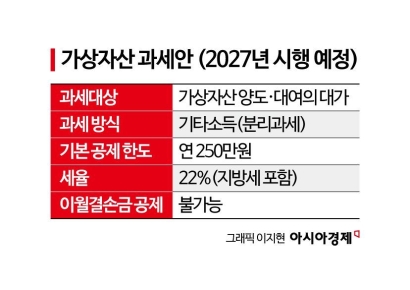 "Stocks Are Not Taxed, but Annual Crypto Gains Over 2.5 Million Won to Be Taxed Next Year... Investors Push Back"
- "Not Jealous of Winning the Lottery"... Entire Village Stunned as 200 Million Won Jackpot of Wild Ginseng Cluster Discovered at Jirisan
- "Even With a 90 Million Won Salary and Bonuses, It Doesn’t Feel Like Much"... A Latecomer Rookie Who Beat 70 to 1 Odds [Scientists Are Disappearing] ③
- "Rather Than Endure a 1.5 Million KRW Stipend, I'd Rather Earn 500 Million in the U.S." Top Talent from SNU and KAIST Are Leaving [Scientists Are Disappearing] ①
- "How Did an Employee Who Loved Samsung End Up Like This?"... Past Video of Samsung Electronics Union Chairman Resurfaces

Temasek = An investment holding company wholly owned by the Singapore Ministry of Finance. Established in 1974. It is subject to company law and pays taxes to the government. The Ministry of Finance only exercises shareholder rights. It aims for high risk and high returns. Temasek's average annual return over the past 20 years has reached 8%. It is characterized by a relatively high proportion of alternative investments such as private equity and real estate. The proportion of unlisted stocks is 52%, more than half. It mainly invests in domestic companies (27%, based on last year). Temasek's total assets amount to about 639 trillion won, ranking 9th in the world. This is three times the size of Korea Investment Corporation's domestic sovereign wealth fund (about 220 trillion won, ranked 15th).
© The Asia Business Daily(www.asiae.co.kr). All rights reserved.







