[News Terms] Is the US Monitoring Currency Manipulation? 'Currency Watch List Countries'
South Korea has been removed from the United States' 'currency watch list' for the first time in over seven years since April 2016. In the '2023 Second Half Currency Report' announced by the U.S. Department of the Treasury on the 7th (local time), South Korea and Switzerland, which were previously on the watch list, were excluded, while Vietnam was newly included.
The currency watch list refers to countries that need to be closely monitored for intervening in exchange rates to gain favorable trade conditions against the U.S. From the U.S. perspective, it is to determine whether a specific country is manipulating exchange rates in a way that benefits itself. This term first appeared in the U.S. Department of the Treasury's 'Report on Major Trading Partners' Exchange Rate Policies' published on April 29, 2016. According to the Trade Facilitation and Trade Enforcement Act enacted in 2015, the Treasury submits economic and policy reports twice a year (April and October) to Congress on the top 20 countries with the largest trade volume with the U.S., and prepares in-depth analysis reports on 'suspected currency manipulators.'
![[News Terms] Is the US Monitoring Currency Manipulation? 'Currency Watch List Countries'](http://www.asiae.co.kr/news/img_view.htm?img=2019080616151585063_1565075715.jpg)
The U.S. Treasury evaluates each country's exchange rate policy based on three criteria. ▲Whether the country has a trade surplus of $20 billion or more in goods and services against the U.S. over the past year, ▲Whether the current account surplus exceeds 3% of the country's Gross Domestic Product (GDP), and ▲Whether there has been persistent and one-sided intervention in the foreign exchange market by net purchasing dollars exceeding 2% of GDP for at least 8 out of 12 months. These three criteria are used to determine the status. If a country meets two of these criteria, it is designated as a watch list country, and if it meets all three, it is designated for in-depth analysis. Being on the watch list means the country is under the U.S. Treasury's surveillance, and those designated for in-depth analysis may be listed as 'currency manipulators' or face direct sanctions from the U.S. government.
The Treasury also stipulates that these countries be requested to correct undervalued exchange rates and excessive trade surpluses. If no improvement is made after one year of the request, specific sanctions can be imposed, including ▲restrictions on investments by U.S. companies in the country, ▲prohibition of the country's companies from entering the U.S. procurement market, ▲pressure through the International Monetary Fund (IMF), and ▲evaluation of foreign exchange market intervention when concluding trade agreements.
In the report released this time, the Treasury stated, "No country met all three criteria over the past year until June." It designated six countries as watch list countries, including Vietnam, China, Germany, Malaysia, Singapore, and Taiwan.
South Korea had been continuously designated as a watch list country from April 2016 until June this year. Except for the first half of 2019 (when only one criterion applied), it consistently met two criteria. In the first half of this year's report, it only met one criterion related to trade surplus again, leading to expectations that it could be removed from the watch list this time. This is because if a country meets only one or fewer criteria for two consecutive reports, it is removed from the watch list. The Treasury stated, "South Korea only meets the trade surplus criterion ($38 billion) among the three criteria."
Related Articles
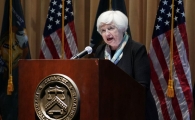 US Removes South Korea from Currency Watchlist After 7 Years... Six Countries Including China and Germany Designated (Comprehensive Report 2)
Meanwhile, separate from the Trade Facilitation and Trade Enforcement Act, the Treasury classifies countries as currency manipulators or non-manipulators based on the Comprehensive Trade Act. The Treasury also stated that no country was classified as a currency manipulator this time. China was designated as a currency manipulator on August 5, 2019, but was later removed from the list.
© The Asia Business Daily(www.asiae.co.kr). All rights reserved.







