Sharp Rise in US Long-Term Interest Rates Expands Risk of Korean Household Debt... No Easy Solution
Rising US Treasury Yields Put Upward Pressure on Korean Loan Rates
Structural Causes Like Fiscal Deficit Suggest Prolonged High Rates
South Korea's Large Household Debt Risk Means Greater Impact
Academics Advocate Rate Hikes but Challenges Remain

As U.S. long-term Treasury yields continue their high ascent, uncertainty in global financial markets, including South Korea, is increasing. When U.S. Treasury yields rise, bank bond and loan rates in neighboring countries also face upward pressure with a time lag. South Korea, having one of the largest and fastest-growing household debt levels among major countries, is expected to experience a greater economic shock as a result. Consequently, voices from academia are calling for additional base rate hikes by the Bank of Korea even now to reduce household debt, but due to sluggish growth and weak domestic demand, such measures are considered difficult.
Market Shock from Rising U.S. Treasury Yields... 'Prolonged' Outlook
The U.S. 10-year Treasury yield entered the 5% range last week, reaching its highest level in 16 years since 2007, before slightly declining. However, as of the 22nd (local time), it still remains at a high level around 4.94%. The market anticipates that this high interest rate environment in the U.S. could persist for a long time. The rise in the U.S. 10-year Treasury yield is mainly due to the robust U.S. economy and chronic fiscal deficit structure, issues that cannot be resolved or eliminated in the short term.
The U.S. Federal Reserve (Fed) shares a similar view on the possibility of a prolonged period. In a speech at the New York Economic Club on the 19th (local time), Fed Chair Jerome Powell explained the recent rise in long-term yields by stating, "It is clear that this is not due to rising inflation expectations or short-term monetary policy actions," and added, "It is mainly attributable to an increase in the term premium, which compensates for holding long-term bonds, specifically because investors are demanding higher yields on long-term securities amid continued strong economic conditions."
Chairman Powell noted, "Some factors driving the rise in long-term yields are short-term, while others are long-term," pointing out that "concerns about fiscal deficits and changes in the correlation between bonds and stocks are long-term factors." Due to the Russia-Ukraine war, the Israel-Hamas conflict, climate change, and welfare issues, the U.S. government will need to issue more Treasury bonds to raise funds. As concerns about fiscal soundness grow, investors will inevitably demand higher compensation (interest rates).
Another issue is that despite the Fed's aggressive tightening monetary policy since last year, U.S. employment and domestic demand remain robust. The market expects that once this tightening cycle ends, the U.S. reshoring policy (return of overseas companies to domestic operations) and increased investment will push the neutral interest rate higher, causing the Fed to maintain high interest rates for a considerable period. Domestic securities firms also believe that for the upward trend in U.S. long-term yields to reverse, clear signs of economic recession must first appear in the indicators.

Korean Interest Rates Likely to Follow... Household Debt Risk Expands
The rise in U.S. long-term yields has a significant impact on global markets. When U.S. Treasury yields, considered a representative safe asset, rise, global capital flows into the U.S., forcing other countries to offer higher interest rates, which in turn raises global government and corporate bond yields. This is why the U.S. 10-year Treasury yield serves as a benchmark for global bond yields. According to the financial sector, mortgage loan rates at commercial banks have already exceeded 7% per annum, and some forecasts suggest they could rise above 8% due to the recent increase in U.S. Treasury yields.
This poses a major risk for South Korea, where household debt is rapidly increasing. Although the Bank of Korea recently reported in a BOK Issue Note that the synchronization between U.S. Treasury yields and Korean government bond yields has significantly weakened, this mainly applies to short-term yields, while long-term yields still show high synchronization. As household loans, including mortgages, continue to grow this year, rising interest rates will increase interest burdens, potentially shrinking private consumption and increasing the risk of non-financial sector defaults.
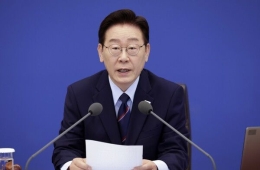
![Lee Chang-yong, Governor of the Bank of Korea, is speaking at a press conference on the interest rate decision of the October Monetary Policy Committee held on the 19th at the Bank of Korea in Jung-gu, Seoul. <br>[Photo by Yonhap News]](http://www.asiae.co.kr/news/img_view.htm?img=2023102214365723905_1697953016.jpg)
Lee Chang-yong, Governor of the Bank of Korea, is speaking at a press conference on the interest rate decision of the October Monetary Policy Committee held on the 19th at the Bank of Korea in Jung-gu, Seoul.
[Photo by Yonhap News]
Academia Calls for Rate Hikes... Bank of Korea Negative
Accordingly, academia is also voicing the need for interest rate hikes to reduce household debt risks. At the 'Economy and Justice Forum' held on the 20th at Seoul National University's Woosuk Economics Hall, hosted by the 'Center for Distribution Justice' of Seoul National University's Economic Research Institute, Professor Kang Kyung-hoon of Dongguk University's Department of Business Administration said, "Looking at China's case, prolonged debt growth eventually becomes problematic," adding, "South Korea also needs deleveraging, and ultimately, raising interest rates is the only answer." Professor Han Jae-jun of Inha University's Department of Global Finance remarked, "The Bank of Korea has been skillfully enduring the rate hike period with low rates," but added, "If I were the Bank of Korea governor, I would want to raise rates. Deleveraging is necessary."
Hot Picks Today
 "Stocks Are Not Taxed, but Annual Crypto Gains Over 2.5 Million Won to Be Taxed Next Year... Investors Push Back"
- "Don't Throw Away Coffee Grounds" Transformed into 'High-Grade Fuel' in Just 90 Seconds [Reading Science]
- Signed Without Viewing for 1.6 Billion Won... Jamsil and Seongbuk Jeonse Prices Jump 200 Million Won in a Month [Real Estate AtoZ]
- [Breaking] Lee Targets Samsung Electronics Union: "Collective Bargaining Should Not Be Abused... There Is an Appropriate Limit"
- "Even With a 90 Million Won Salary and Bonuses, It Doesn’t Feel Like Much"... A Latecomer Rookie Who Beat 70 to 1 Odds [Scientists Are Disappearing] ③
However, many opinions suggest that considering the current economic situation, additional rate hikes are practically difficult. Professor Song Soo-young of Chung-Ang University's Department of Business Administration said, "Although interest rate hikes are needed to address household debt, doing so amid low economic growth would destabilize the economy." Bank of Korea Governor Lee Chang-yong is also negative about addressing household debt through interest rates. At a press conference following the Monetary Policy Committee meeting on the 19th, Governor Lee said, "To adjust household debt through interest rates, rates would have to be raised or lowered significantly," adding, "We are not at that stage yet."
© The Asia Business Daily(www.asiae.co.kr). All rights reserved.